Collector's Guide: The Rolex “Zenith” Daytona
By Hal Harris
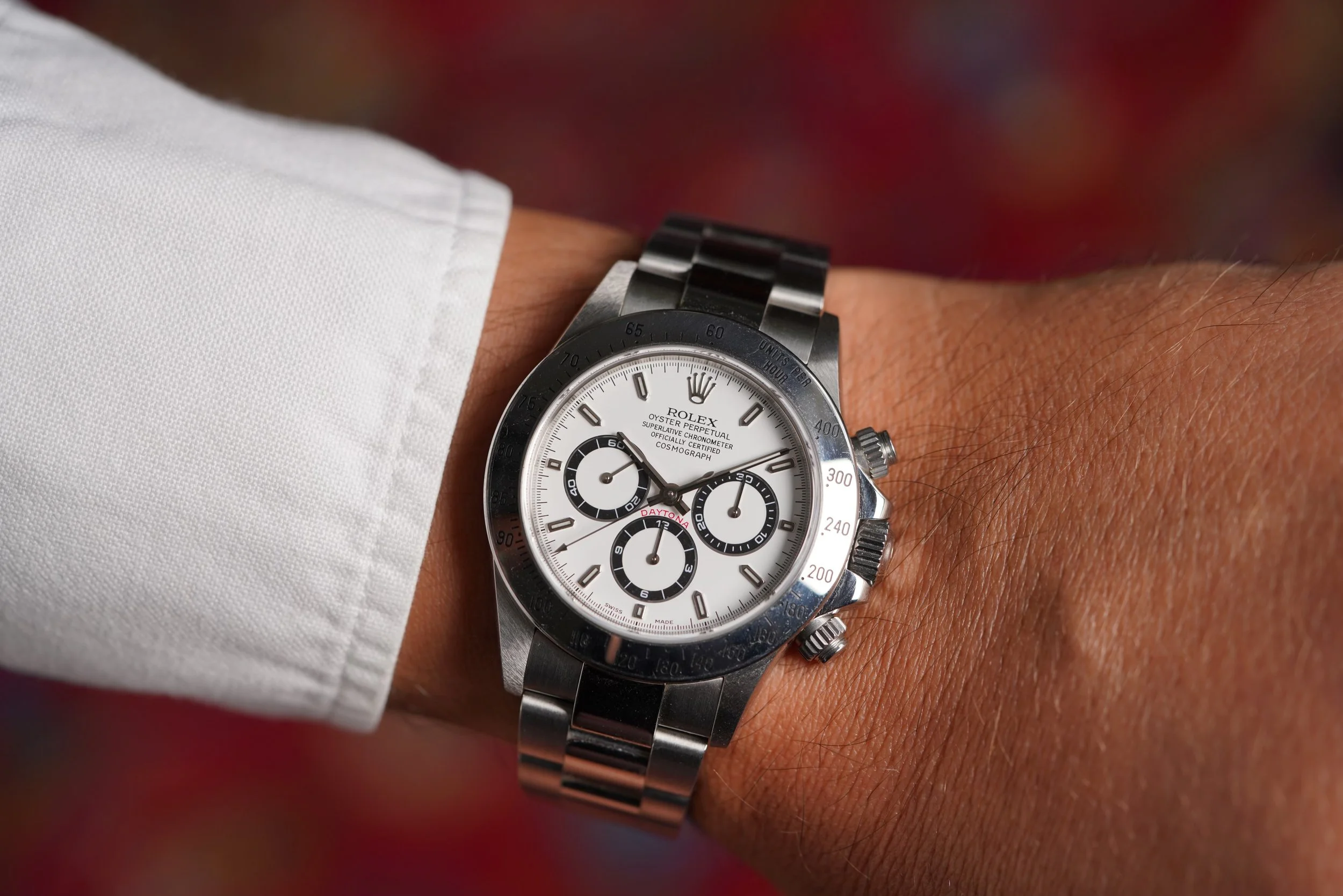
Rolex entered automatic chronograph game late - extremely late compared to competitor manufacturers. In 1969 The "Project 99" Consortium released the first automatic chronographs through Hamilton, Breitling and Dubois Depraz introduced the Calibre 11, as well as the Zenith El Primero movement. It was nearly two decades later when in 1987-1988 Rolex released their first release an automatic version of the Daytona chronograph. These models were fitted with the calibre 4030 - a modified version of the Zenith El Primero calibre 400. However, Rolex would go an extra step to submit these movements for chronometer certification - a rare attribute within the automatic chronograph world. These watches were produced until circa 2000 - an approximate 12 year run and these so called “Zenith Daytonas” have appreciated significantly the last few years, as the movement that Rolex used within the first automatic Daytonas.
Collecting Daytonas is often seen as its own discipline within disciplines, and it’s a daunting subject indeed when looking for watches that are original. The Zenith Daytona has a few attributes, such as dial/bezel variants, and case metals, which warrant attention. To many the Zenith Daytona is more approachable than the predecessor 4 digit references (and a much more attractive price point). These watches display a healthy balance of vintage charm and modern watch practicality.
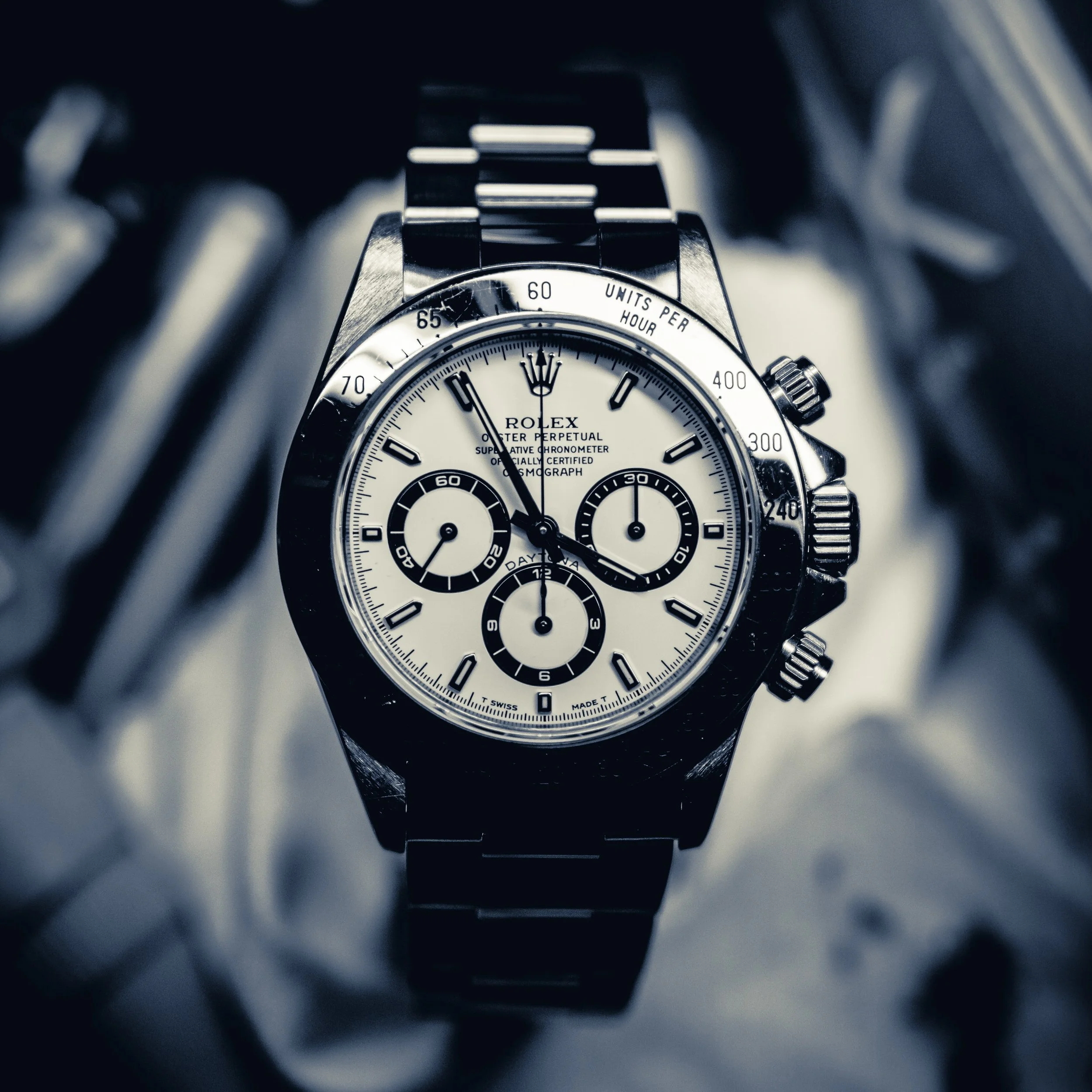
Image credit: @rwrwatches
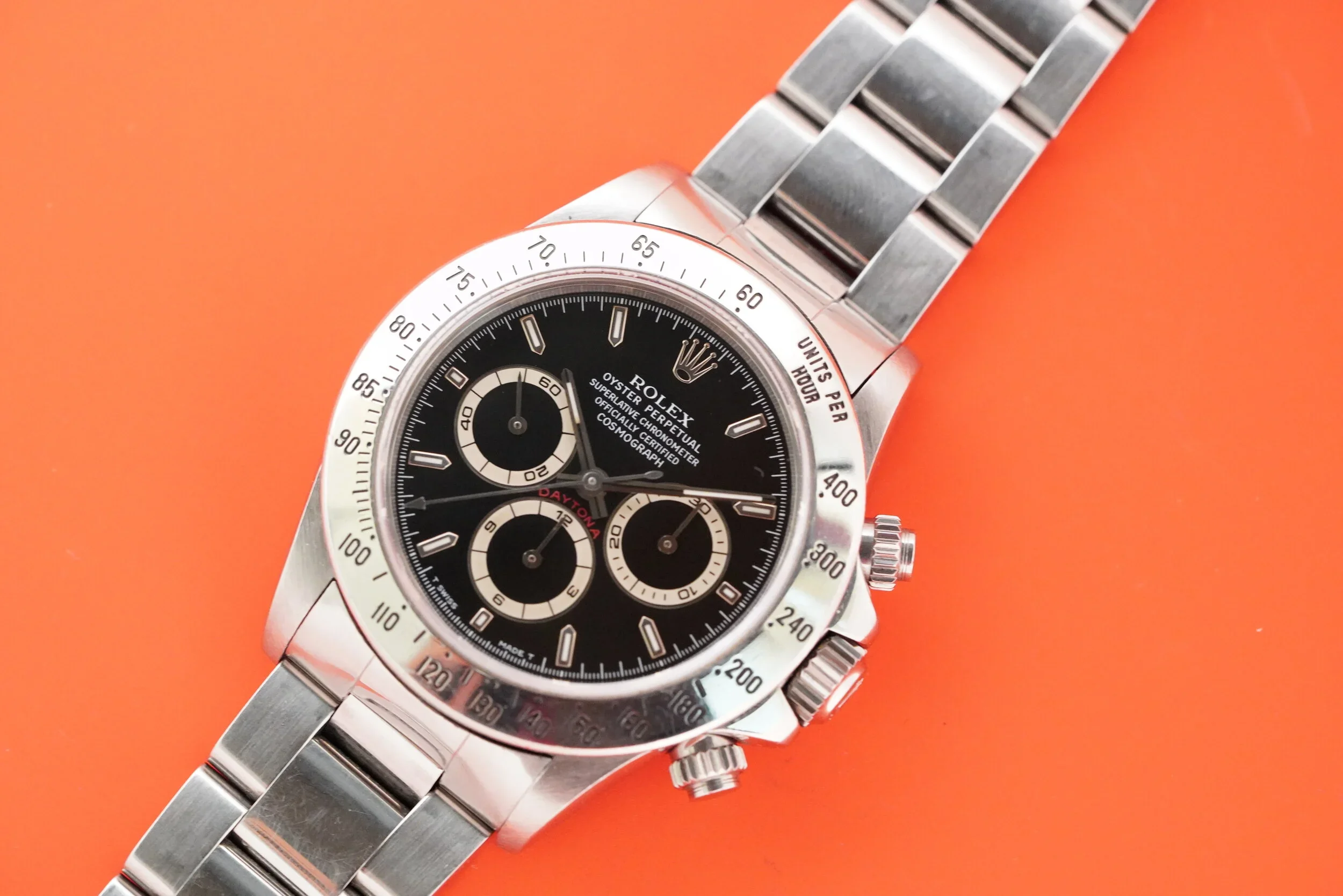
The Movement: Calibre 4030
“In house” It’s the proud phrase boasted by nearly every watch manufacturer to newbie collectors. It wasn’t always that way. From 1988 to 2000, on a model that is possibly the most recognized watch, Rolex were using an adapted Zenith movement. Why? In circa 1963, the Rolex Daytona was officially introduced - known then simply as the Rolex Cosmograph. Every single Rolex wristwatch chronographs from the 1930s until 1988 were powered by outsourced manufacturers. These manual-wind movements are formidable calibres used by nearly every manufacturer. They have stood the test of time as reliable movements, however like all vintage chronographs, they will bring the occasional headache and need for service.
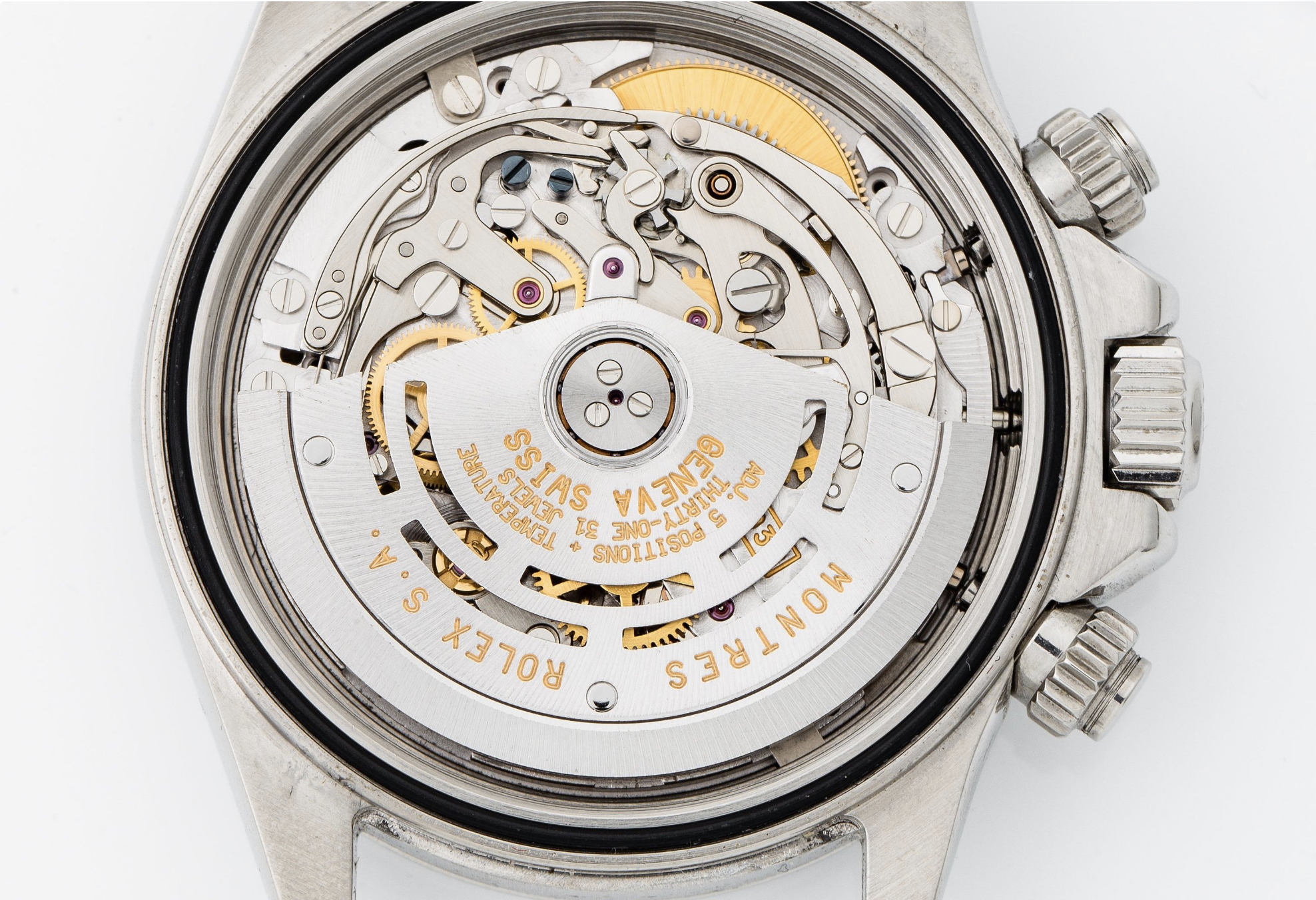
A Rolex Calibre 4030 movement. – image by Millenary Watches

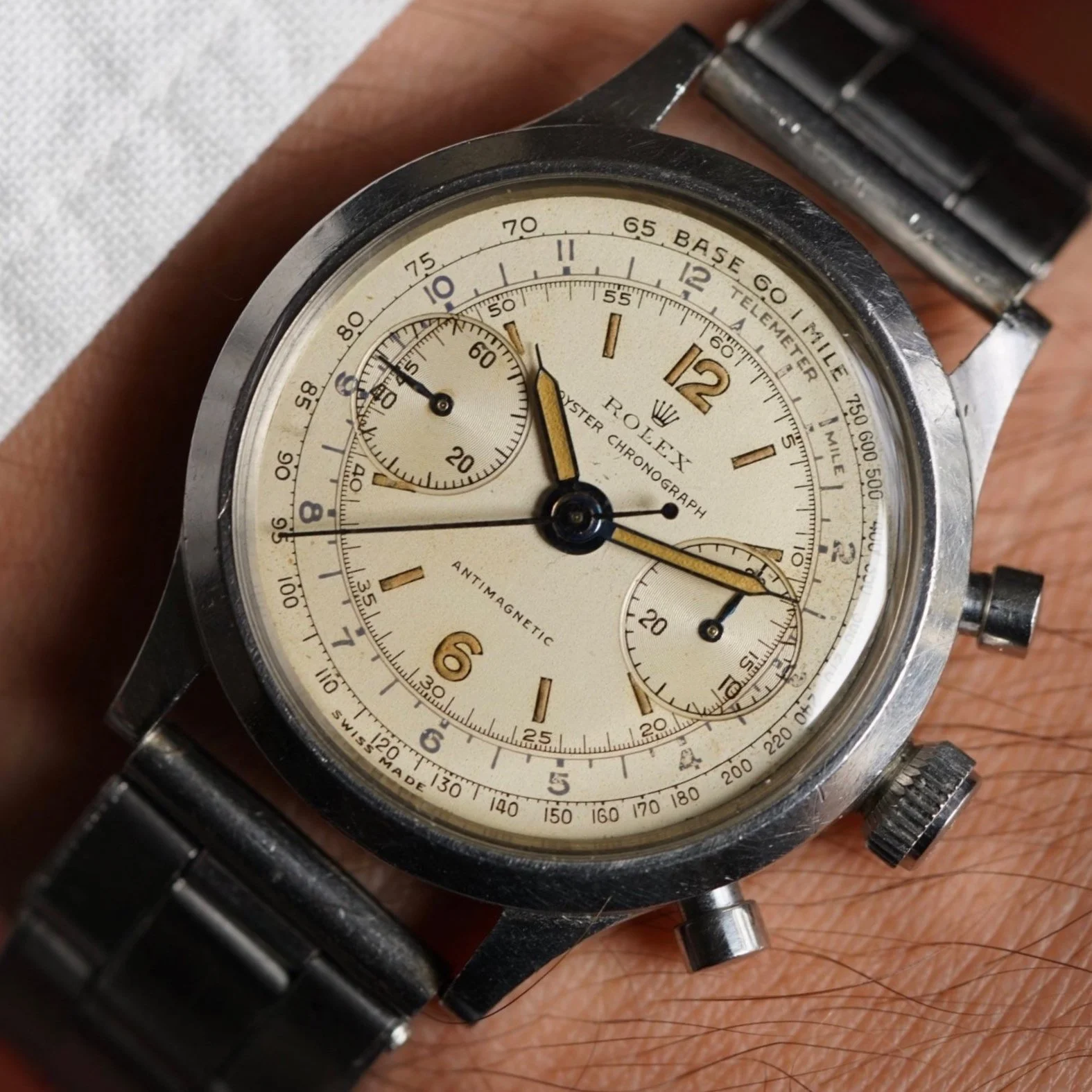
Some early Rolex chronographs. Left: a Ref. 3525 ‘Monoblocco P.O.W.’ ca. 1942, Right: a Ref. 4062 ‘Monete’ ca. 1947
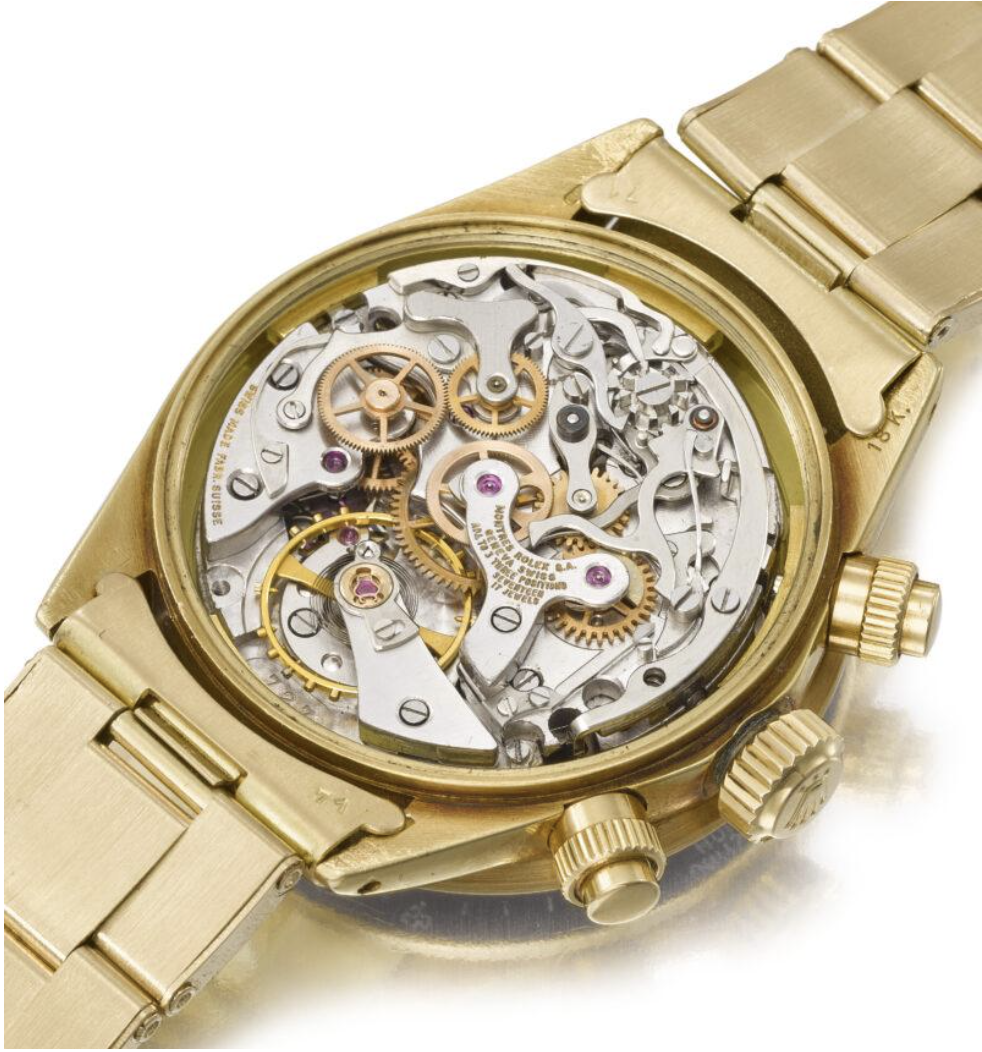
Valjoux 72 movement Christie’s
From the its conception, the Daytona has been aligned with automotive racing. The flagship models for Rolex such as the Day-Date, Datejust, GMT-Master, and Submariner significanlty outperformed watches like the Daytona and the Milgauss. Consequently, advertisements primarily for the Daytona were infrequent before 1988.
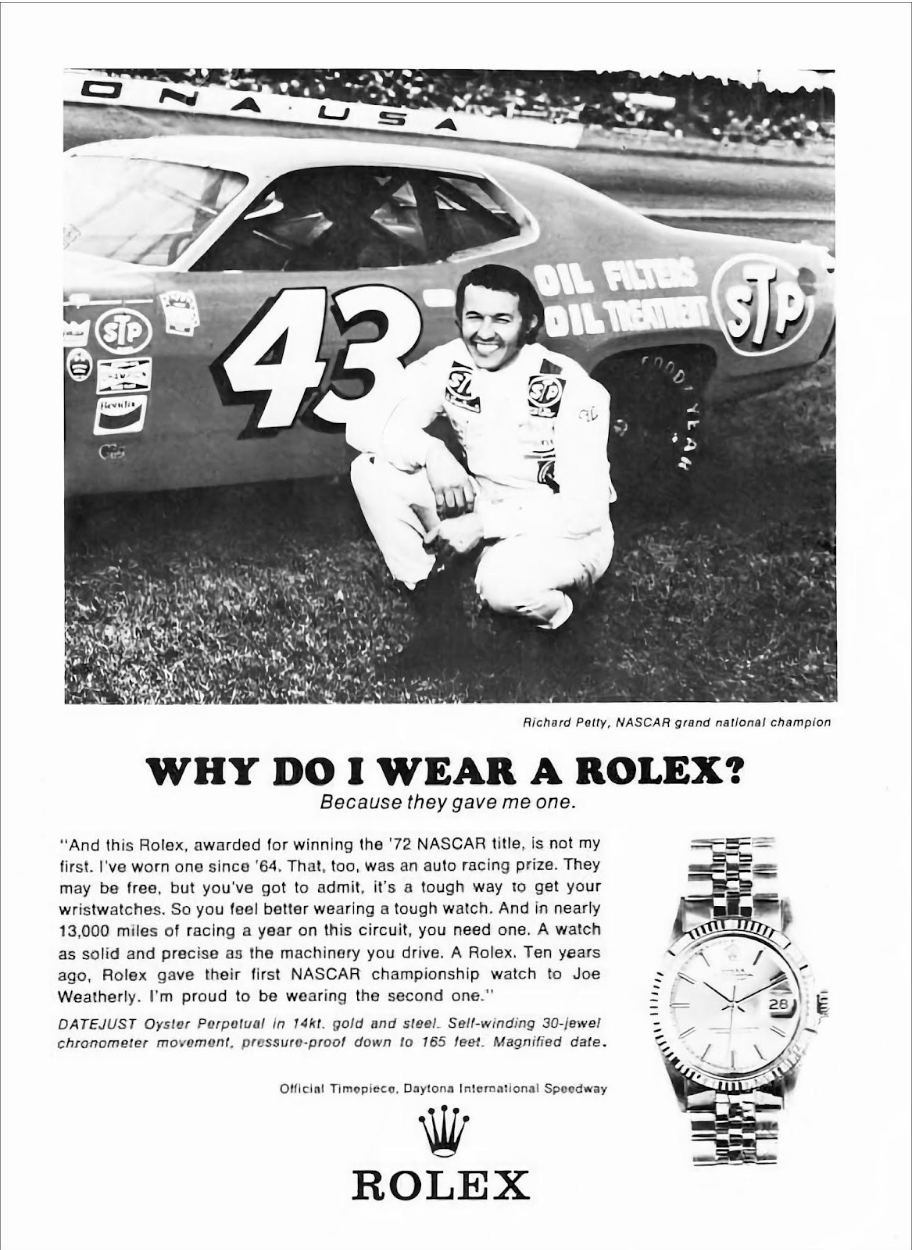
Image from Jake’s World
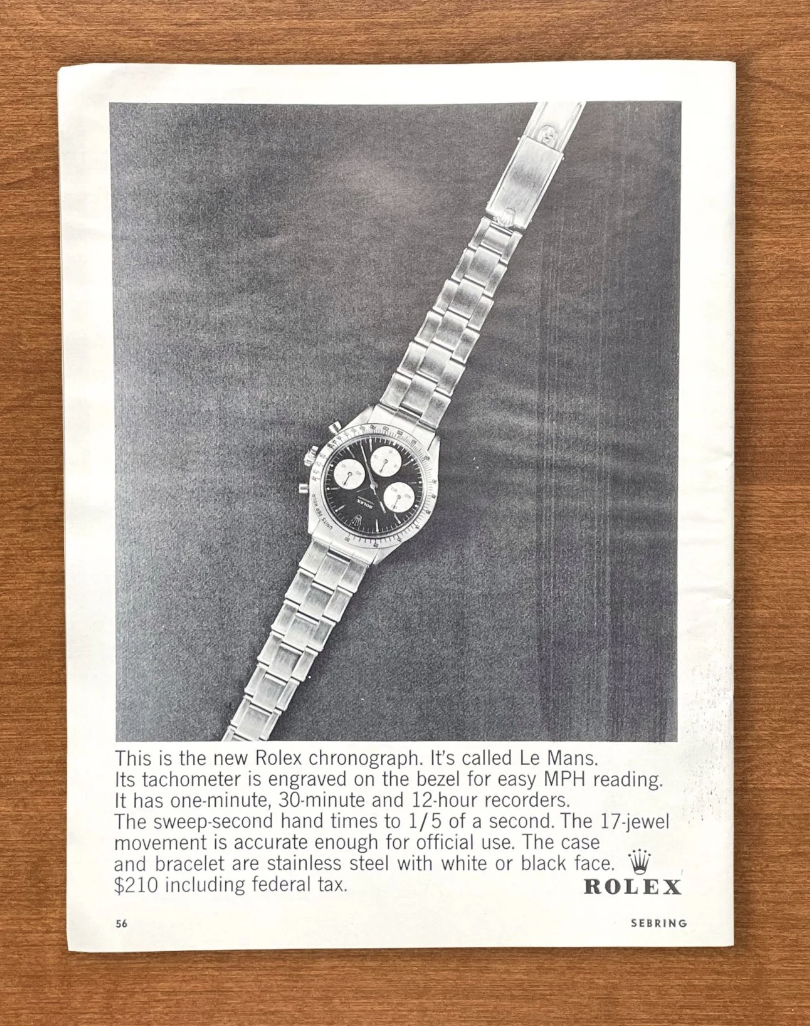
A Rolex Cosmograph advertisement from 1963. Note the lack of “Daytona” on the dial. – image from Ad Patina
In 1986, Rolex shifted towards the future of the Daytonawith the modified Zenith El Primero 3019PHC movement. As the name suggests, it was the first mass-produced automatic chronograph movement when it launched in 1969. At only 6.5mm thick, it was slim, boasted a 50-hour power reserve, and its balance frequency was a fierce 36,000 VpH/5hz, granting the ability to measure elapsed times down to a razor-sharp 1/10th of a second. This was a great achievement for 1969. Unsurprisingly, Rolex were not the first brand to try and secure the El Primero movement for their own, but by 1986, Rolex had prepared a ten-year contract with Zenith for use of their 3019PHC movements.
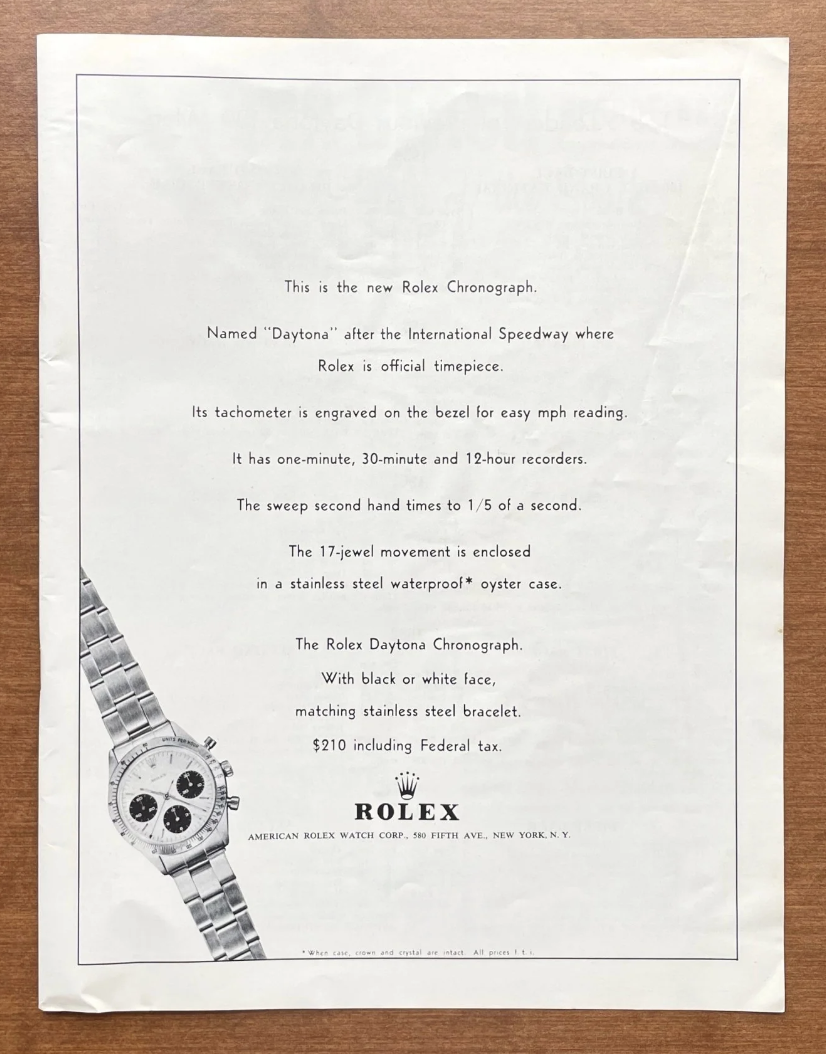
An early advertisement for the Rolex Daytona c. 1965 – image from Ad Patina
In typical Rolex fashion, the crown promptly radicalized every part of the newly acquired El Primero movement it to suit their own needs. The newly minted automatic 31-jewel Rolex Calibre 4030, adapted from the 3019PHC, featured Rolex branding, a removed date-wheel, and a Breguet overcoil escapement was equipped. Rolex would reduce the VpH to the standard 28,800, a lower frequency which also freed up room for a large, free-sprung Glucydur balance wheel supported by Rolex’s proprietary Microstella system. The lowered VpH and paired-back complications also helped enhance the power reserve to 54 hours. Take a minute to remember the Valjoux movements that the Daytona was previously using, and remember that they capped out at 21,000 VpH, so going up to 28,800 was a hell of a jump up for the quality of the movement.
All in all, more than half of the initial 354 Zenith components in the movement had been removed by the time the new Daytona hit the display cabinet. One immediate benefit of streamlining the movement to this extent was to cut down on service intervals, as well as finally granting the Daytona an automatic movement – the watches were, astonishingly, hand-wound until this point, and the new Calibre 4030 served as a replacement for the Valjoux 727 movement of the past.
We’ll likely never know the exact reason that it took nearly two decades for Rolex to switch to an automatic chronograph movement, but the results were clear: the Daytona took a great leap forward, becoming the first chronograph to be dubbed “Perpetual” in Rolex history.
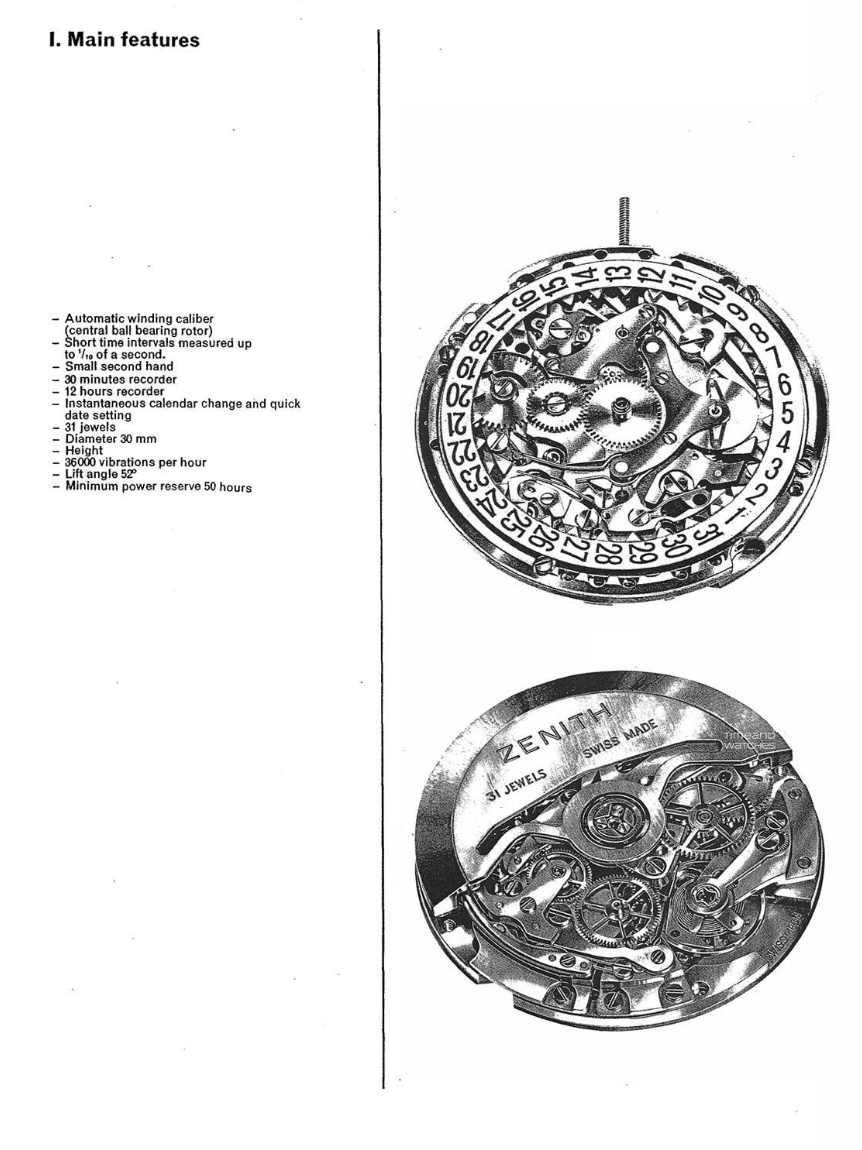
From a 1969 Zenith service manual for the Calibre 3019PHC
These movements require a specialized watchmaker to service. Like with OMEGA Speedmasters, a service on a Zenith Daytona can be on the expensive side - upwards of $1,000. While most people will opt for a cheaper service, we recommend using a competent watchmaker who will treat the movement with the respect it deserves.
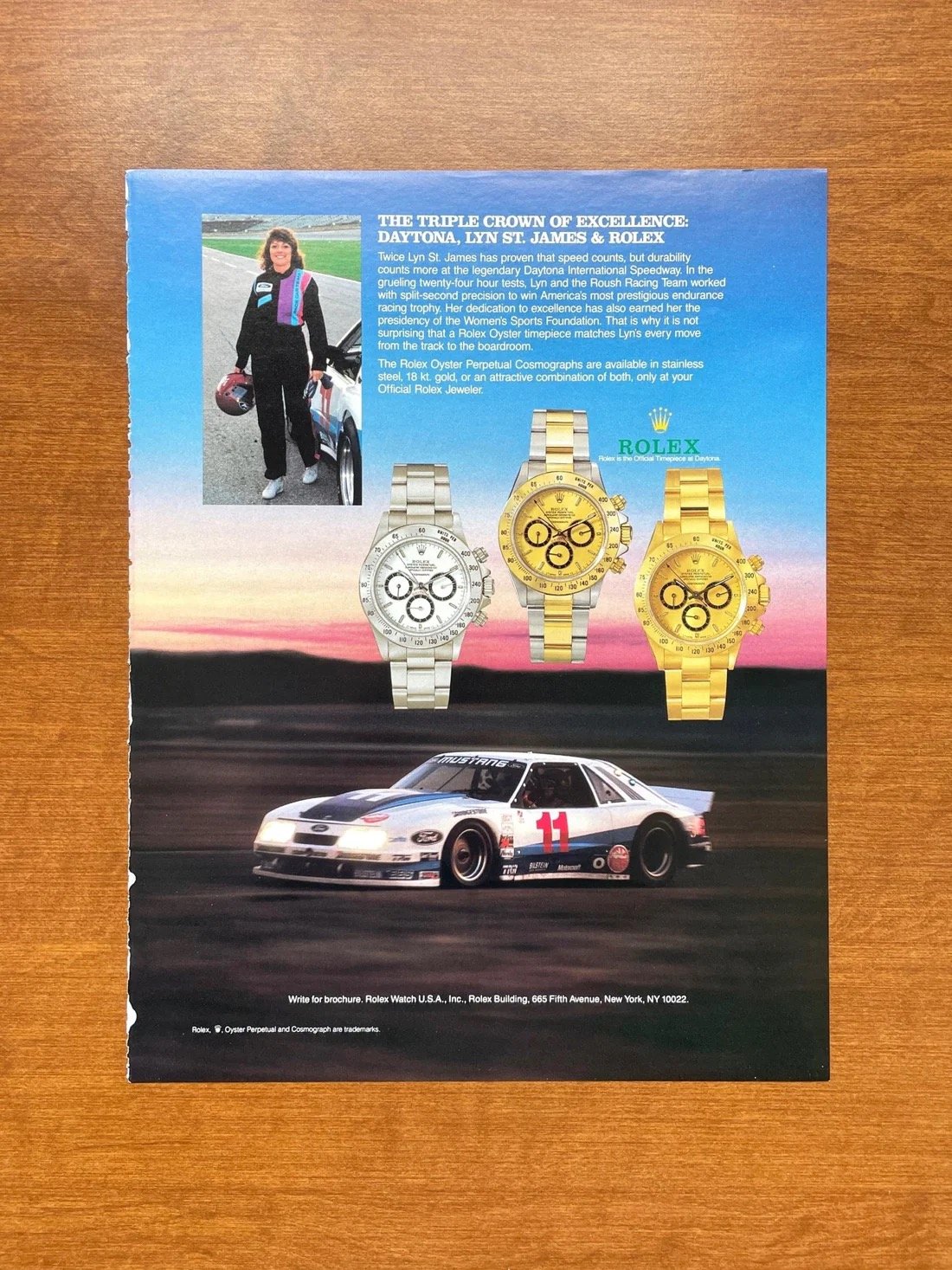
By 1992, Rolex became title sponsor of the 24 Hours of Daytona endurance race in Florida. Daytona awarded watches to race winners such as Scott Pruett, Andy Wallace and Richard Petty as seen in this 1973 ad below.,
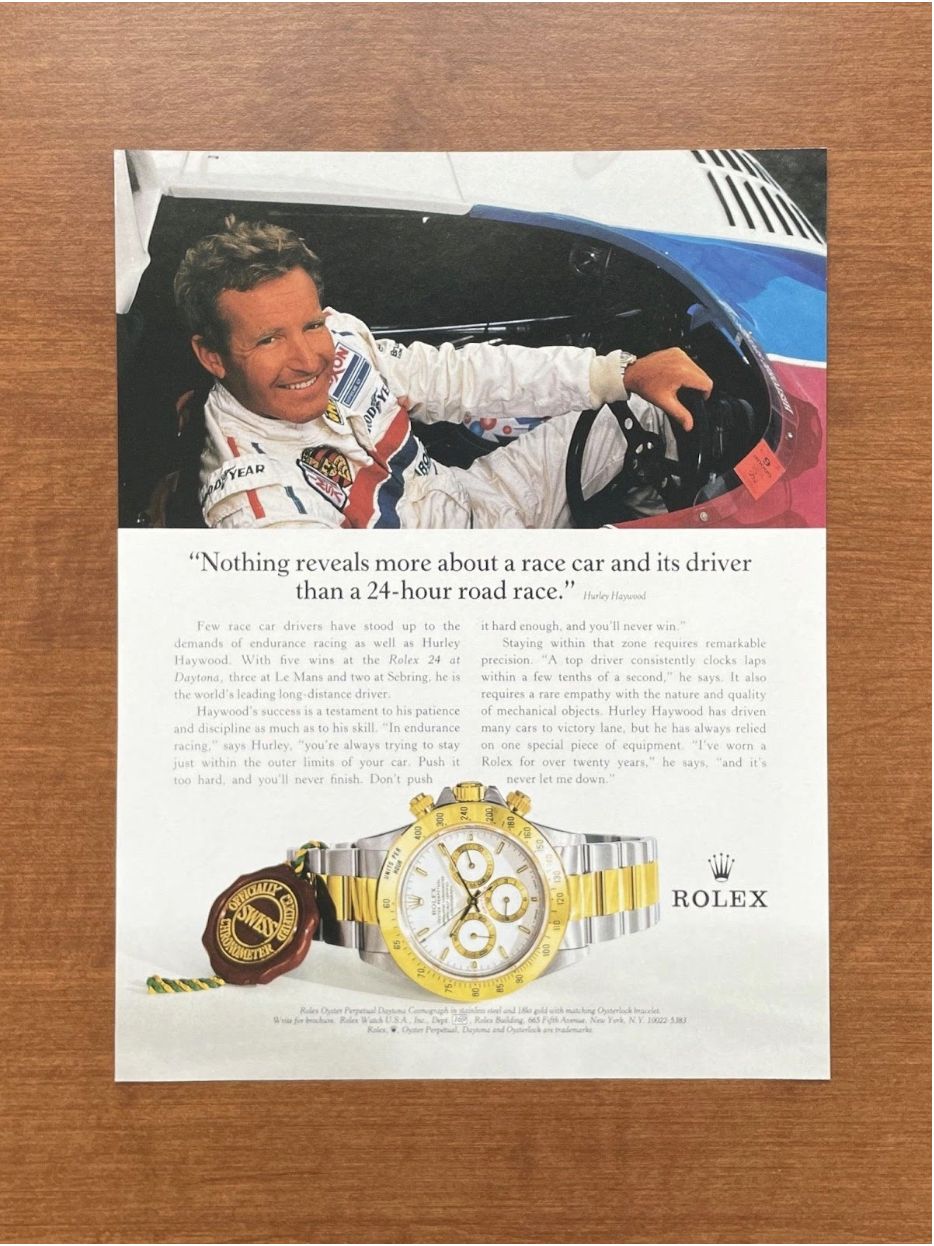
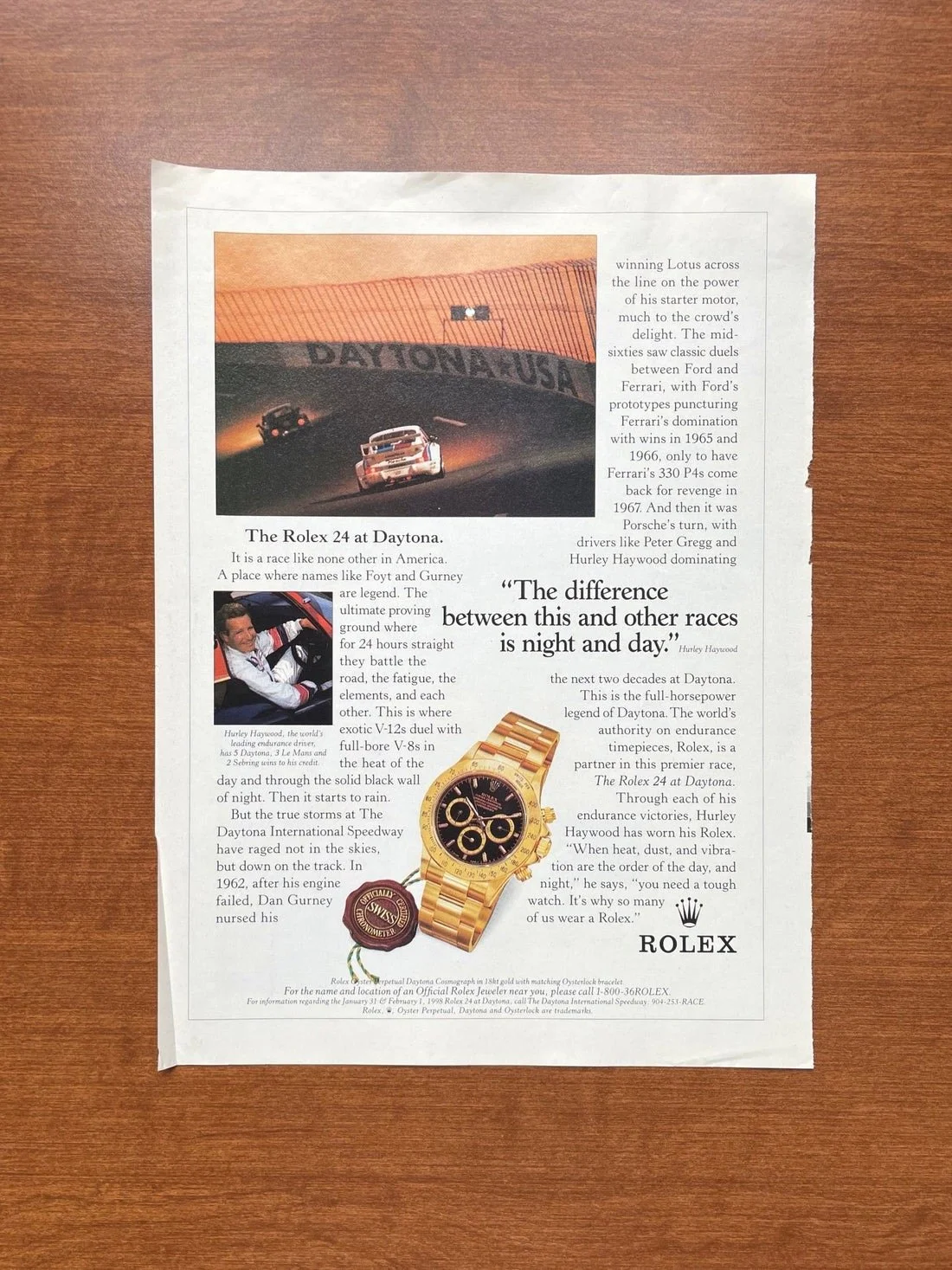
A 1996 Rolex ad – photo from AdPatina
The Beginning of Production: 1988
The Zenith Daytona increased the case size to a diameter of 40mm - much larger than the four-digit manual-wind models at 37.5mm. It was finally updated with crown guards, giving a more robust tool-like feel, as well as a sapphire crystal for a tidy low profile compared to its raised acrylic predecessor.
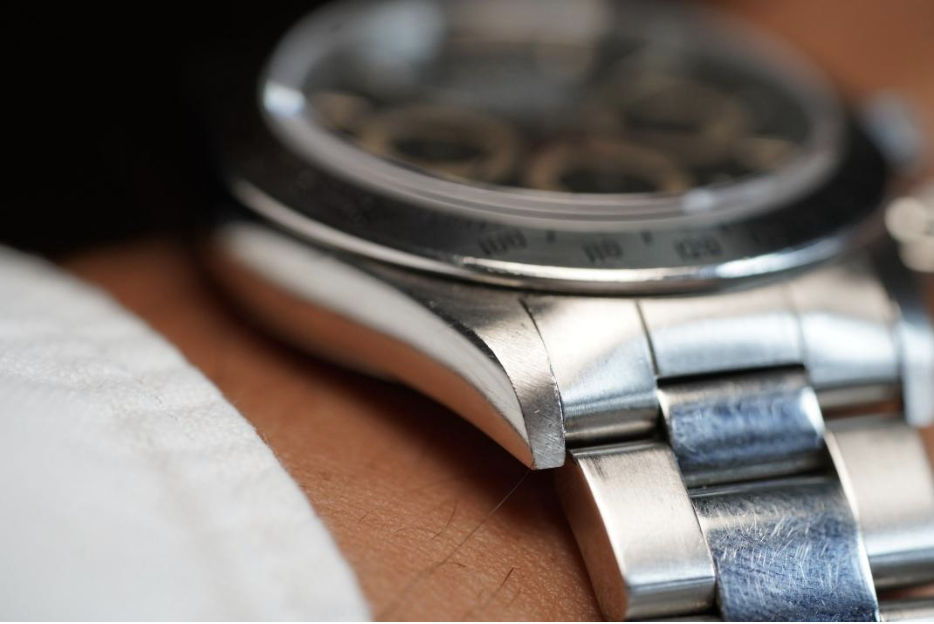
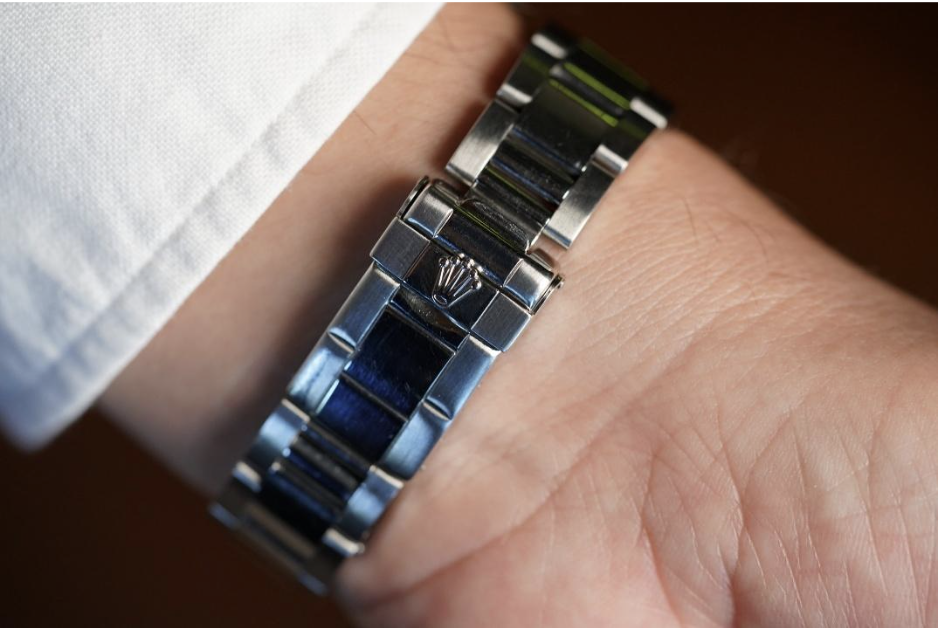
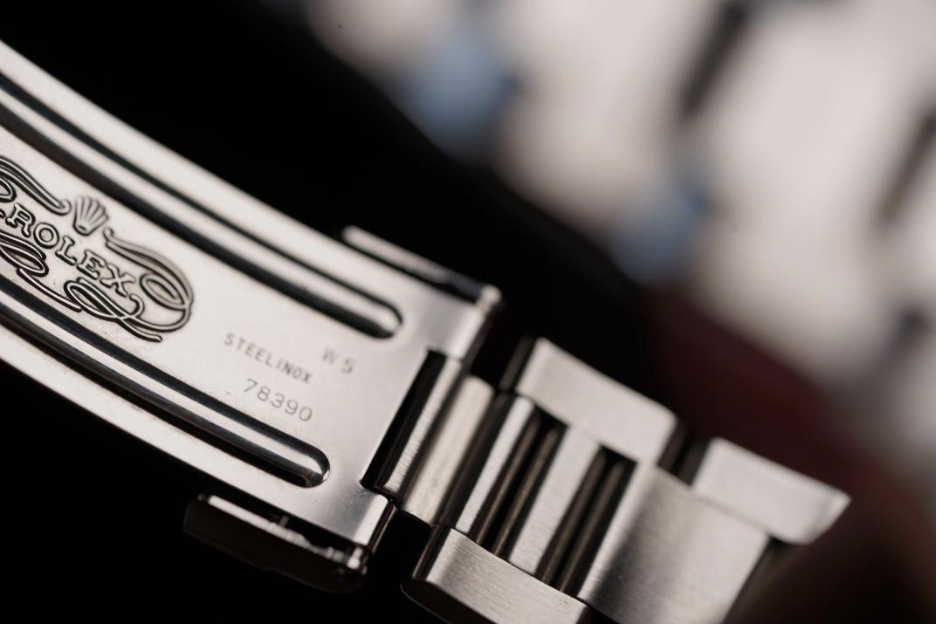
All Zenith Daytonas have a five-digit reference number beginning 165xx. 1988 was the first year Zenith Daytona. These watches from circa 1988 feature an R serial numbers. We do not suggest focusing on a date of production and serial as the first criteria on any watch purchase.These will feature the subdial with running seconds at nine o’clock. In the early 200’s, later Daytona models feature running seconds at six o’clock instead. This positioning serves as a convenient tell for a Zenith Daytona at a glance. As with most Rolex watches of its era, the Zenith Daytonas also came with hollow end links (until circa 1999) and stamped blades on the bracelet clasp.
The Basics
The Zenith Daytona launched with three main references:
1) The Daytona reference 16520 in stainless steel (black dial and white dial).
2). The Daytona reference 16528 in yellow gold (champagne dial, black dial and white dial).
3) The Daytona reference 16523 in the model’s first production-run two-tone watch (white dial, champagne dial, and black dial).
Reference 16520
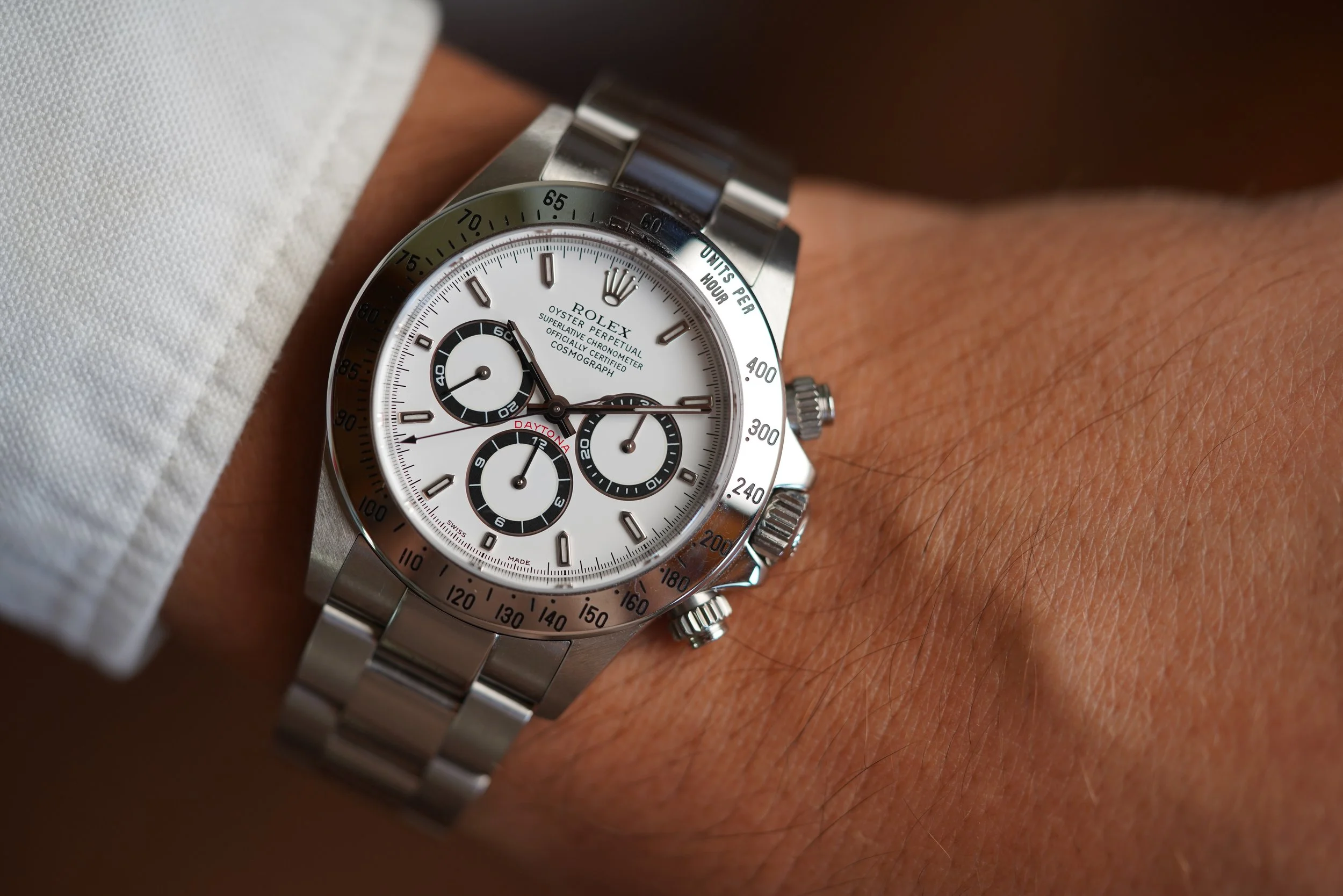
The reference 16520 makes up the majority of production and is certainly the most collectible reference within the Zenith Daytona catalog. Similar to Submariner 5512s/5513s, GMT-Master reference 1675s, the Daytona reference 16520 is a legacy reference with over 10 years of production accompanied by nostalgia amongst Rolex connoisseurs.
White Dial vs. Black Dial
Charlie Dunne: From my perspective, the Rolex “Zenith” Daytona is the quintessential Rolex of the late 1980s-1990s. If you look at the product line from Rolex throughout this era, there is no question there is some fantastic quality watches. The Air-King reference 14000 or 5-digit Datejusts offer incredible value. The Rolex Day-Date 18038 is the iconic watch. However, the Rolex Zenith Daytona is to many a grail watch that is looked at with nostalgia. People have a fondness for the tough characteristics of the automatic Daytona. I have had dozens of conversations with collectors about the legibility of this model’s saphire crystal and black dials. Many opt to sell their black dials as a result. If I were looking to purchase a Zenith Daytona, I would personally focus on case condition and a white dial. The minutia on dials is great, but box, papers, date of production, and dial variant are not as critical factors for my interest.
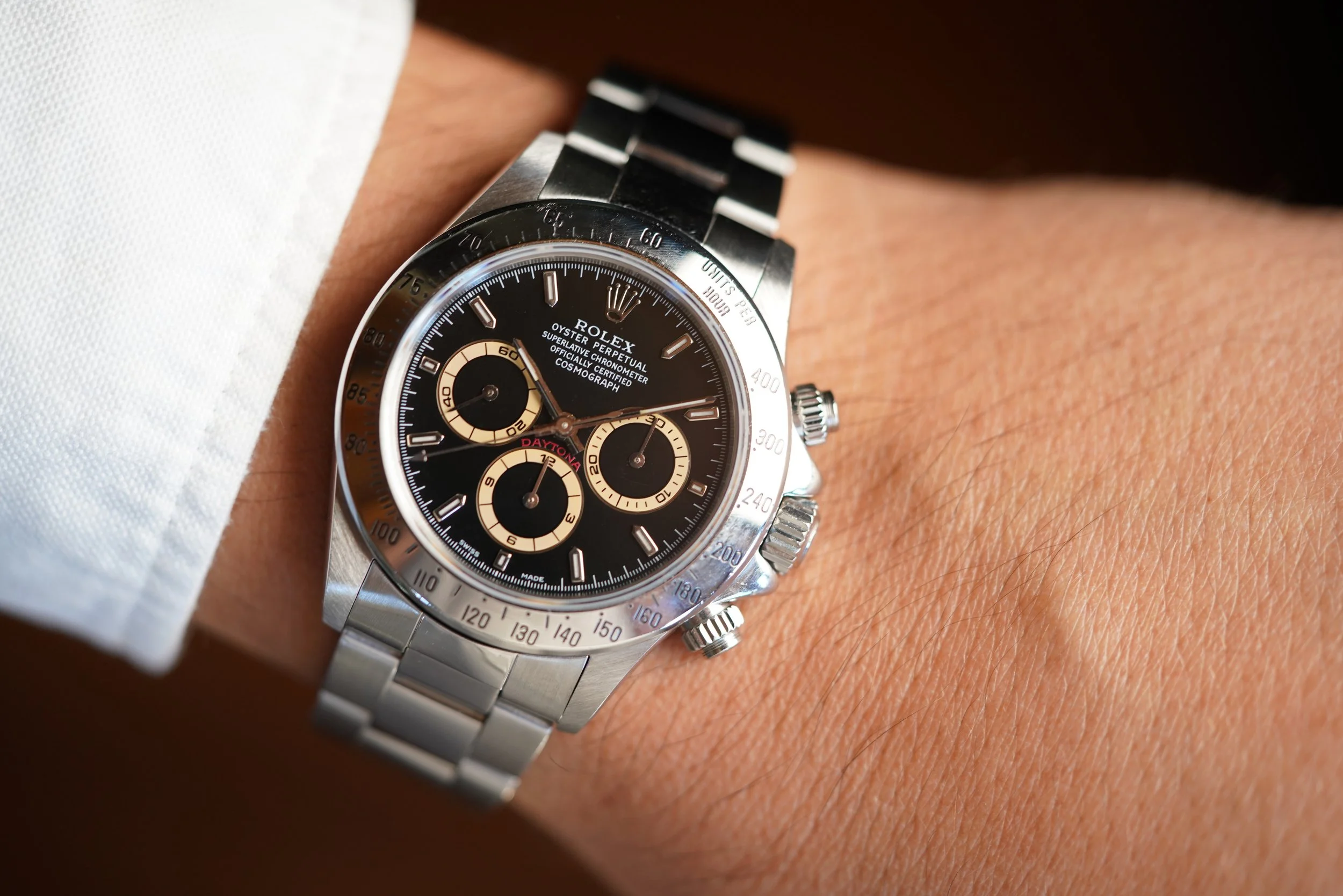
Gavin Galiardo: I’ve always had an affinity for the five digit Daytona’s from Rolex, particularly with a black dial. These watches mark the departure from the previous iconic case design, but remain extremely contemporary even by today’s standard. To me, this is when the Daytona really becomes a practical and robust sportwatch, and right before its transition into an exclusive object of luxury. The black dial zenith Daytona has always spoken to me as a slightly more subtle design with an array of different sub-dial patina over time. These watches combine some of the aspects of vintage watchmaking with many of the aspects of the modern. They are among the last Rolex watches with outsourced movements and tritium luminous material, but among the first generation to feature sapphire crystals and solid end-links.
Reference 16528
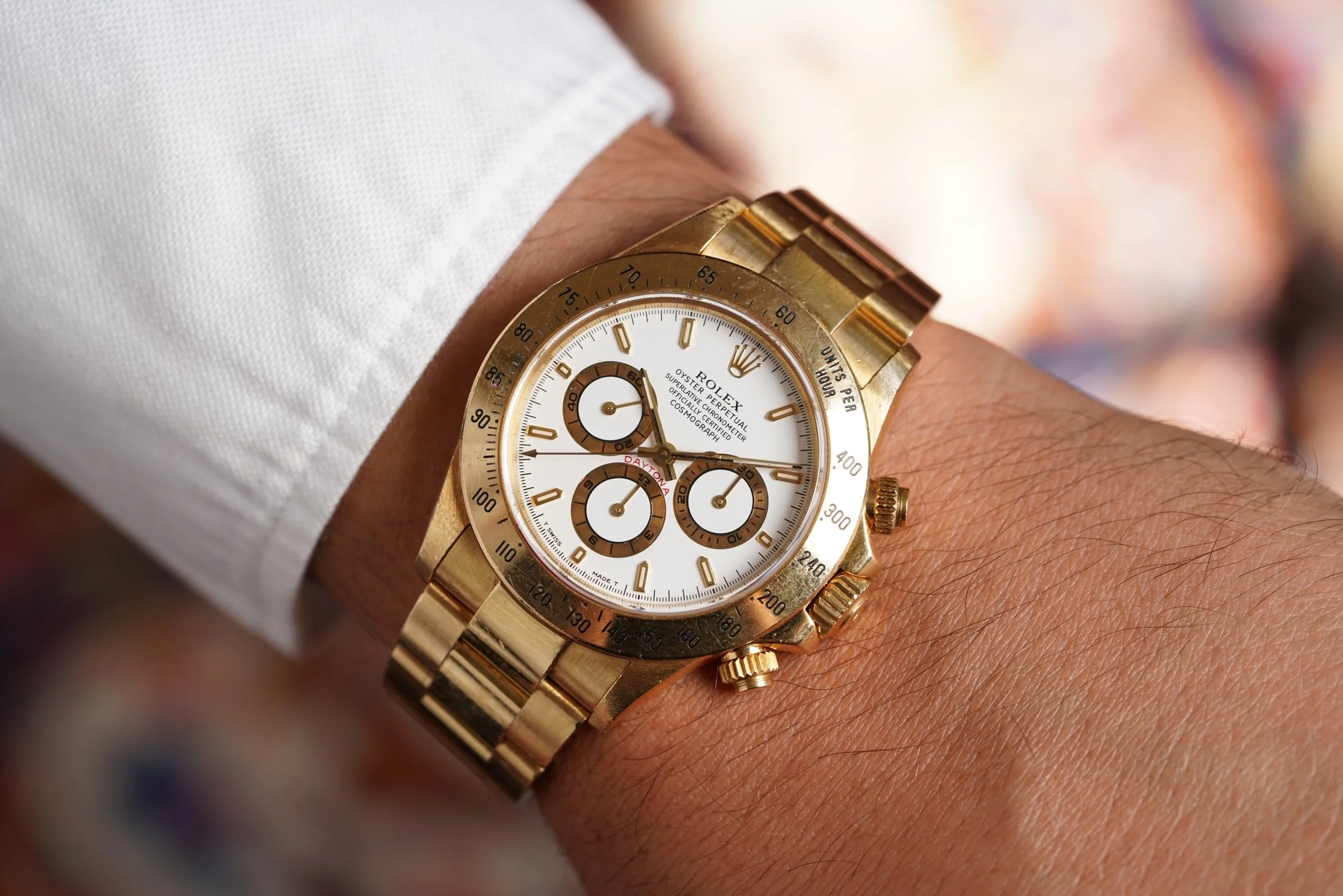
Rolex "Zenith” Daytona Reference 16528 white dial champagne subdials
The Daytona reference 16528 is the luxurious Zenith Daytona ……
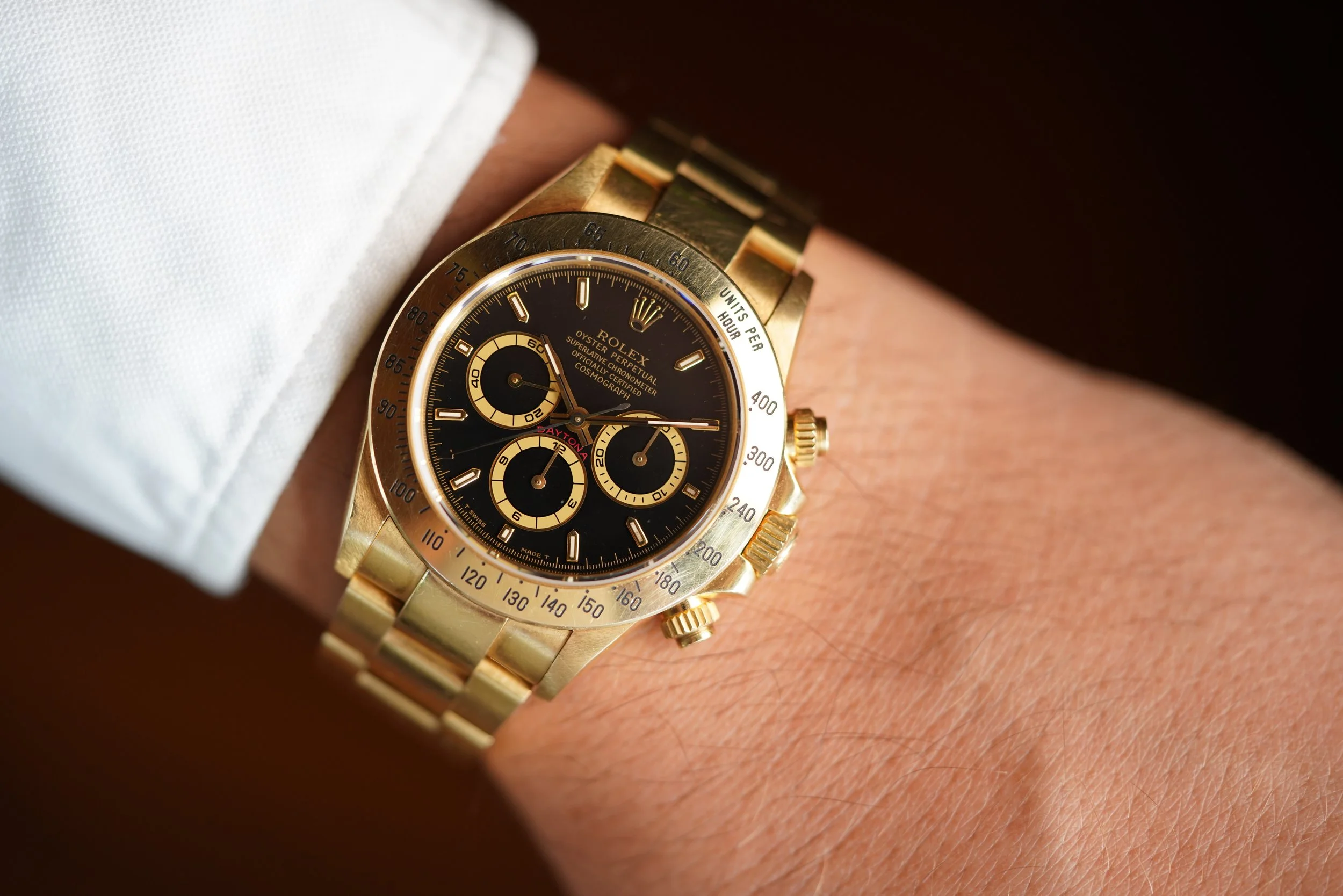
Rolex Black Dial Zenith Daytona 16528 in 18K YG with black dial champagne subdials
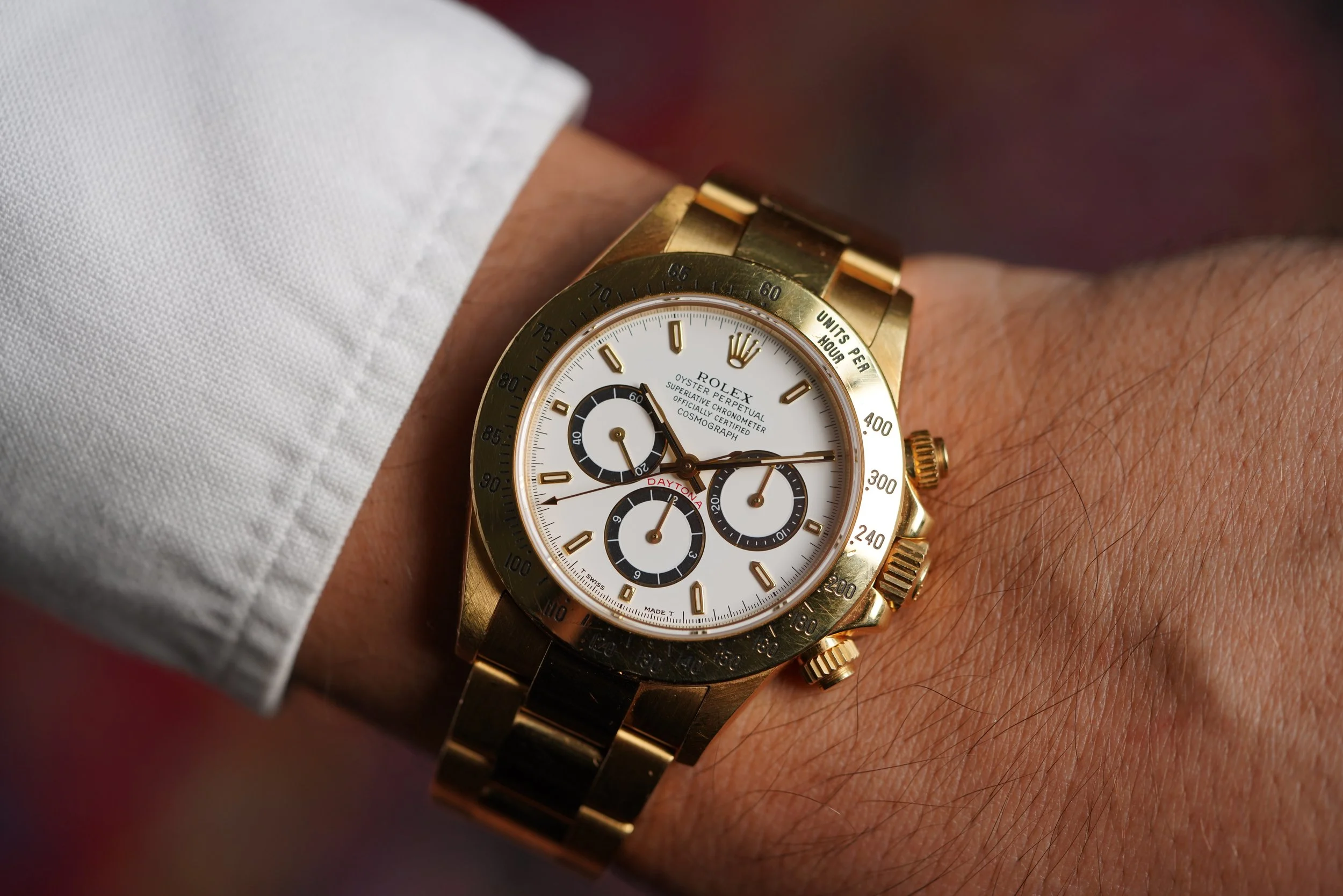
Rolex Zenith Daytona Reference 16528 in 18K Yellow Gold with white dial

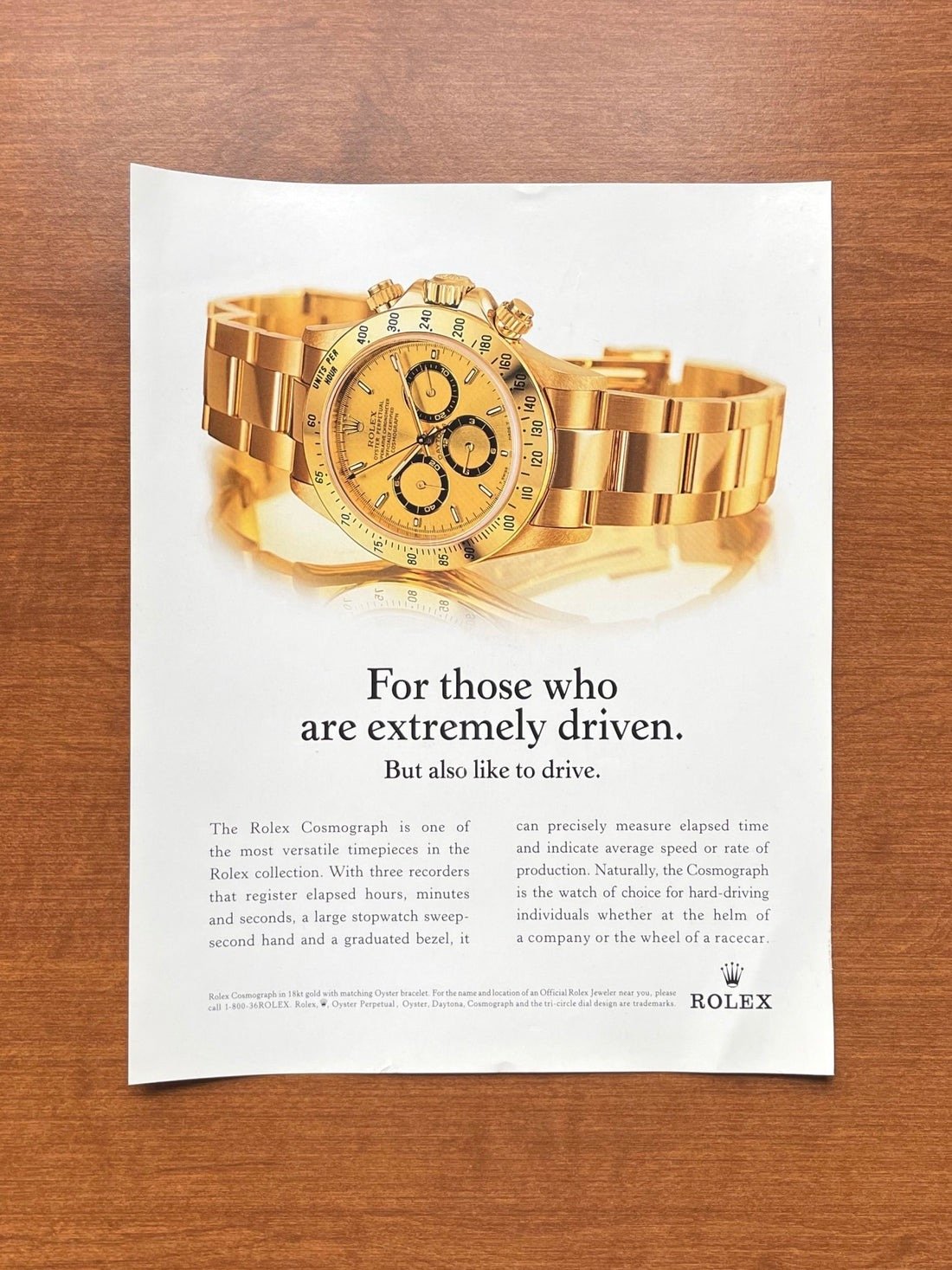
A ca.1988 ad for the gold Ref. 16528. – photo by AdPatina
Reference 16523
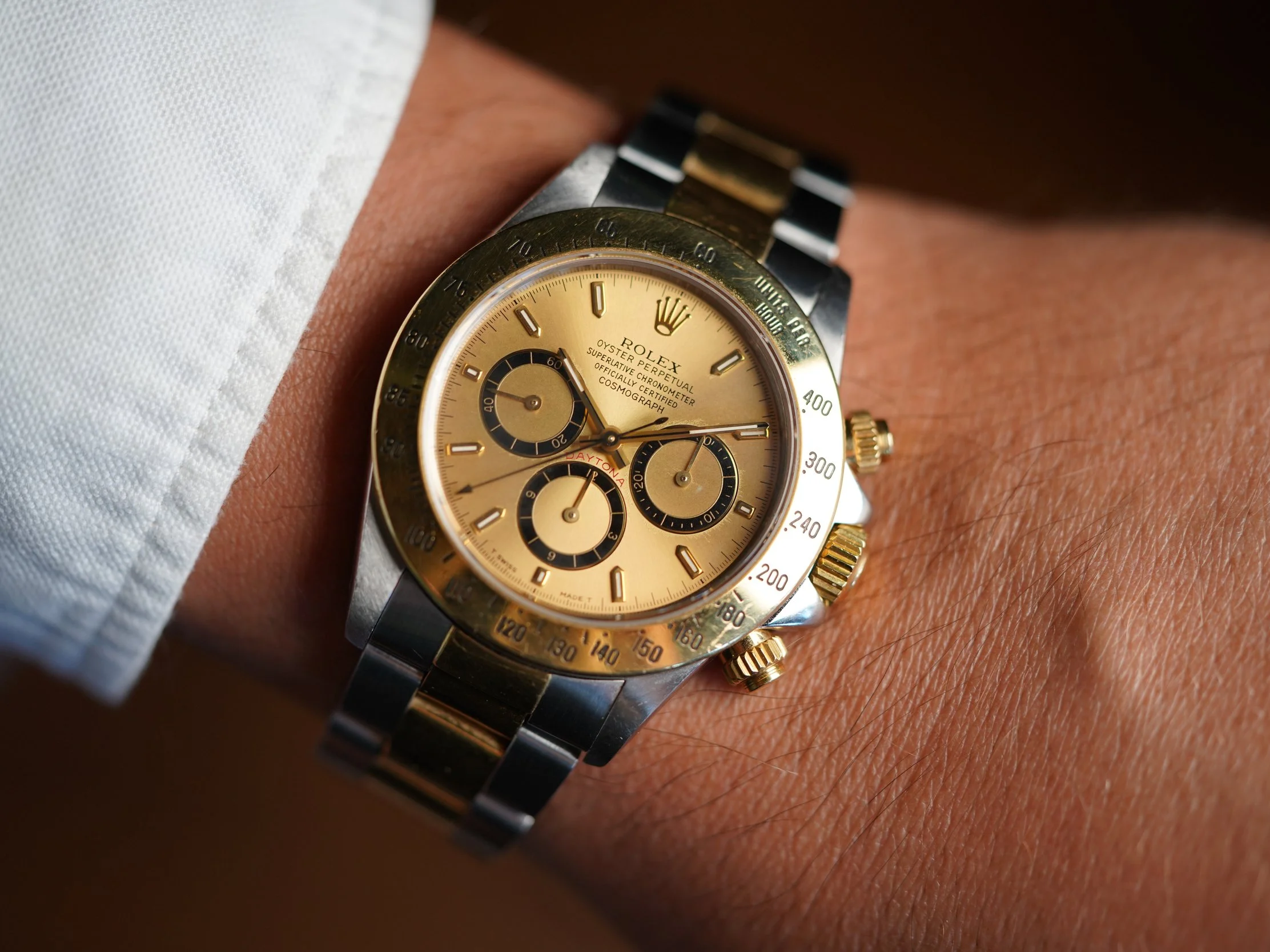
Rolex “Zenith” Daytona Two-Tone Champagne Dial Ref. 16523
Of the three main references, the two-tone reference 16523 is considered the most niche. These are extremely cool watches, however most collectors do not opt for the two-tone variants, and as such the models are often less liquid. If you love two-tone, then proceed. If you are not passionate, it is best to hold tight.
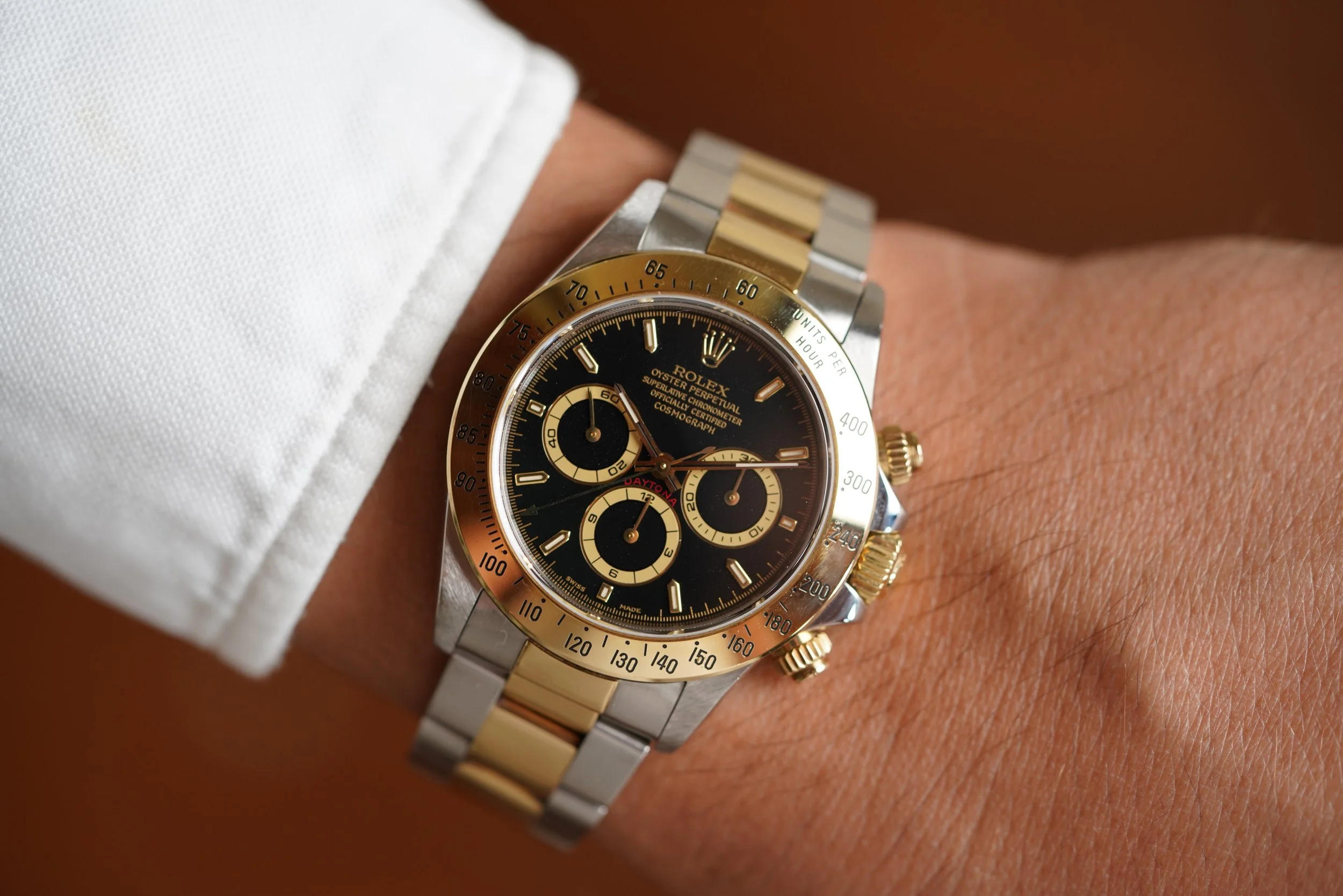
Rolex Black Dial Two-Tone Zenith Daytona Reference 16523 with P Serial

Rolex Two-Tone Zenith Daytona Reference 16523 white dial with champagne subdials.
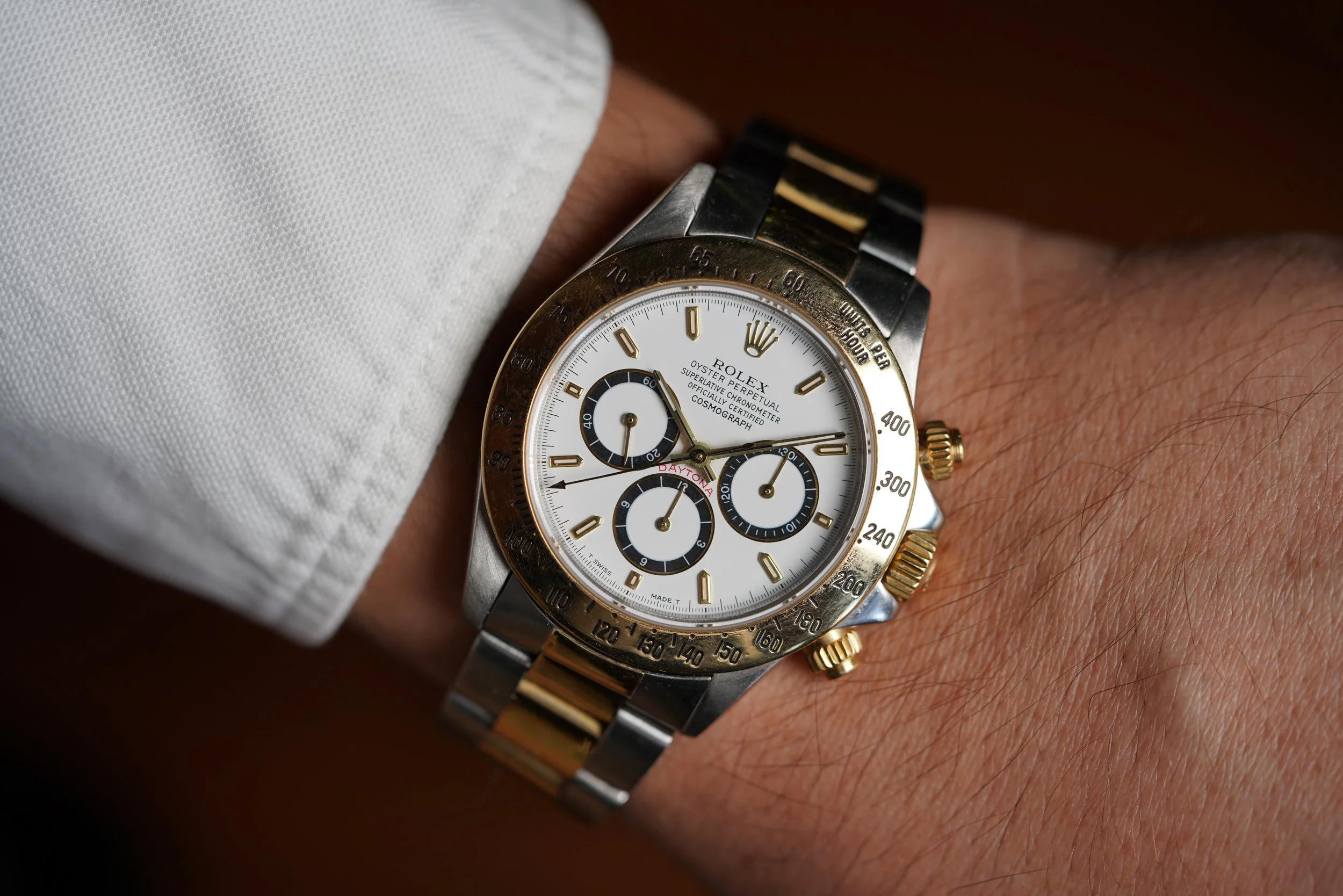
Rolex Two-Tone Zenith Daytona Reference 16523 white dial with black subdials.
At a broad view, the Zenith Daytona has undergone a decent amount of changes from 1988-2000. Whilst this does grant the watches some wonderful (and highly collectible) individuality, it can be intimidating for those not familiar with the model. The dials of the Zenith Daytona range may be separated into five separate Marks (MKs), and the bezels into three Marks. From Marks 1 through to 3, all dials had tritium-based lume, an inverted 6 on their six o’clock hour totalizer subdial, and four dashes on the inner subsections of the minute register subdials at three o’clock.

Rolex Inverted 6 White Dial Zenith Daytona Reference 16520 circa 1993-1994
Something important to keep in mind is that due to surplus manufacture, it is entirely possible to come across overlaps between serial numbers and a given dial variation. Rolex as a brand never inclined to comment on the scholarship, it is only the consensus of devoted collectors and archive-diving experts to ascertain certain variations.
“Floating Cosmograph”
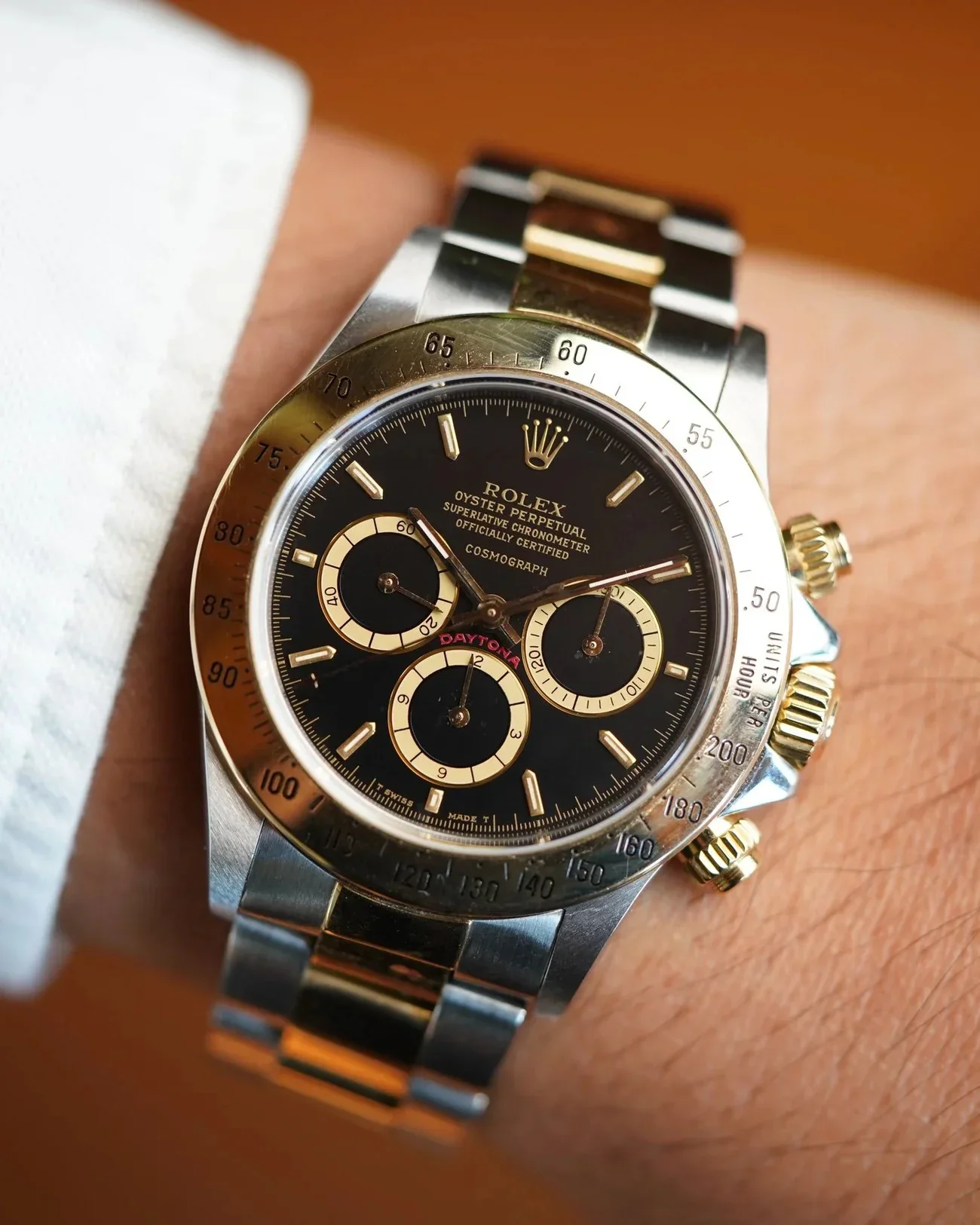
Starting with the Mark 1 - it is referred to as the “floating dial,” defined by the significant gap between “officially certified” and “Cosmograph,” which is now sitting as a neat bridge between subdials. These floating dials (sometimes referred to as 4+1 dials) were only produced for around a year, giving them considerable collectible value today.
One may also note the inverted 6 on the hour totalizer subdial at nine o’clock. This appeared on every Zenith Daytona dial until 1993, when it was finally changed to an upright position.
When it comes to R-serial Daytonas, something to be aware of is that their production actually began towards the end of 1987, despite the watch not being officially released until 1988. Due to a surplus of Daytona dials being produced by Singer over those two years, it’s not at all unheard of to come across a floating dial on a later L-serial model. But beware: less scrupulous sellers have been known to put earlier floating dials (and even bezels) onto later models for their own ends. Some owners then, opt to change their dials and bezels to the “correct” configuration of their serial range. The general consensus in which floating dials may be expected to be seen is from the R0XXXXX to L6XXXXX serial range.
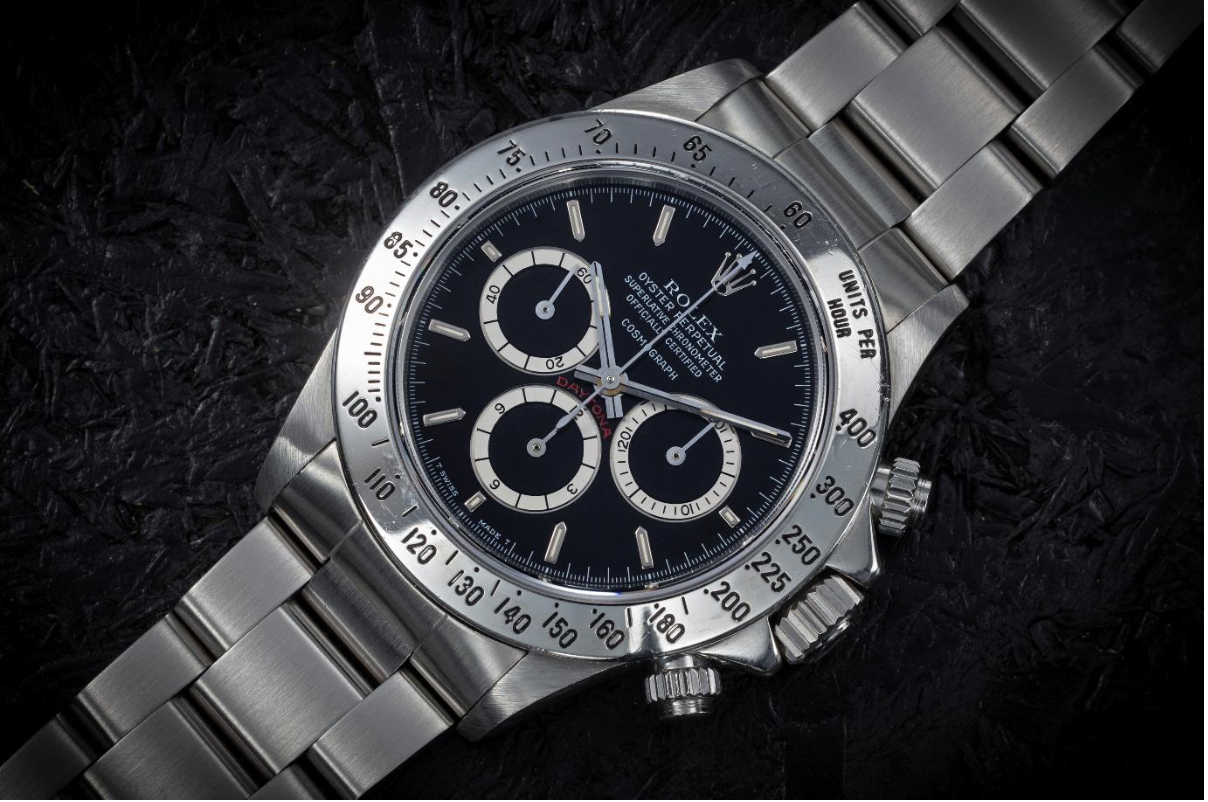
Photo by Christie’s
In the above example here, you might spot the different bezel. This is an example of a 1989 L-serial watch which has a floating dial. As mentioned earlier, the bezels of the Zenith Daytonas have their own Marks. The L-serial watches had bezels graduated from 400 to 60 units per hour, whereas earlier R-serial models had bezels graduated from 200 to 50 units. In other words, the bezel is contemporary for the serial, but the dial is ‘outdated’ in the sense that it was surplus from the previous year, 1988. In this particular case, that is perfectly organic to the watch and is nothing for a prospective buyer to worry about.
On the Mark 1 bezels fitted onto R-serial models, the “unit per hour” text is placed at three o’clock, but on all bezels thereafter, the “unit per hour” moved to one o’clock. To further confuse things, Daytonas between L25XXXXX and L5XXXXX bore a bezel graduated from 400 to 60, but with additional readings for 225 and 250 units per hour. All further bezels throughout the production of the Zenith Daytona omitted the readings at 225 and 250, and instead read from 200-240-300. Finally, the lattermost serials, A and P, changed the bezel only on the precious metal models. They slightly increased the kerning of the word “units” and added an underlining arrow and triangles, all in black inlay, to sit underneath the readings. This change was, in other words, more or less the birth of the modern Daytona bezel as we know it.
... You can see why some collectors just said screw it and bought a Daytona with a load of diamonds on the bezel!
This all gets easier to spot with time and practical experience. Due to the nature of how surplus components were applied to models at varying ages of production, it’s not uncommon to find older watches with newer components, not least of all because Rolex were known to update and replace components like bezels during services.
Porcelain Dial
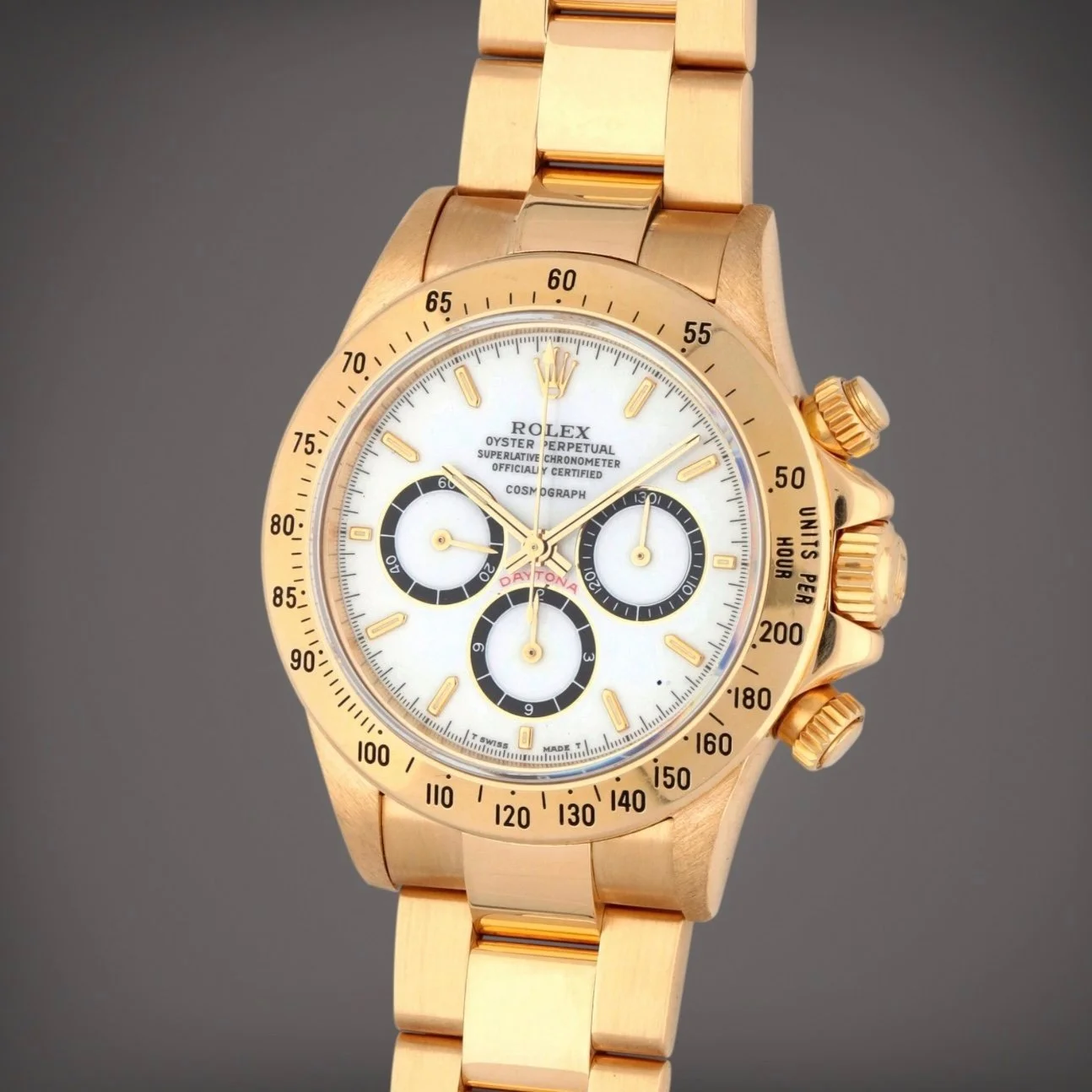
Daytona Porcelain dial Zenith Reference 16528 dating to circa 1988. image credit: Sotheby's
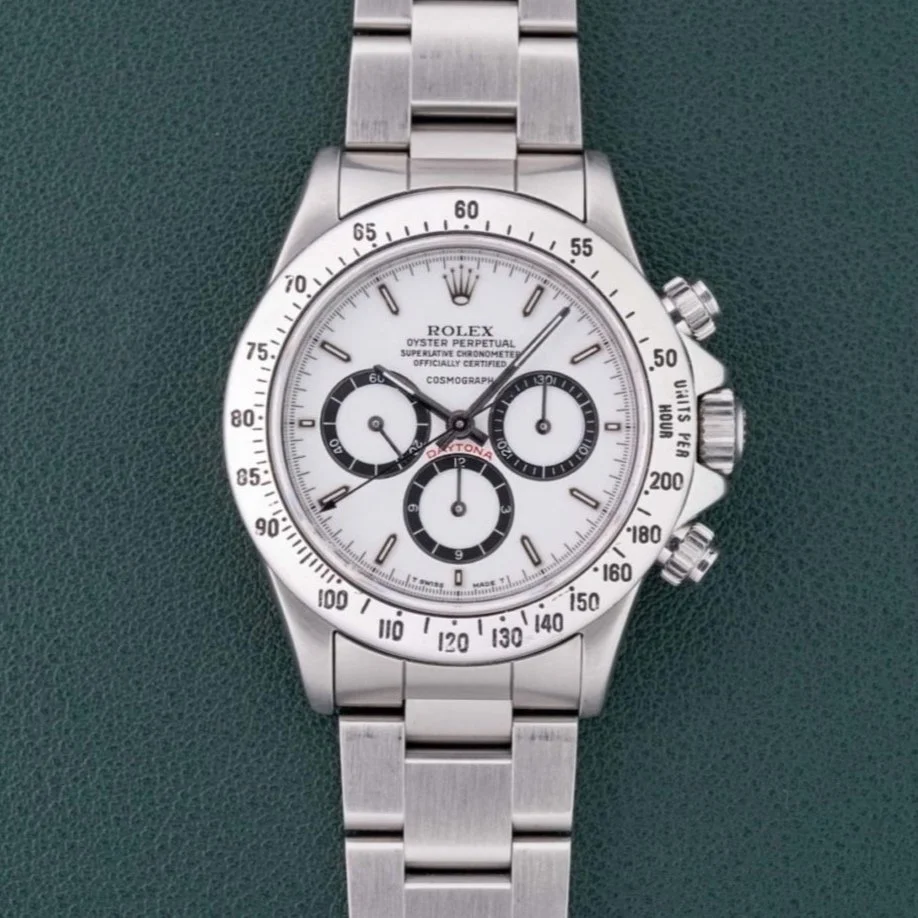
Alongside the floating dial came a much rarer variation: the ‘porcelain’ dial, which confusingly contained absolutely no porcelain whatsoever. These warm-tone dials are in fact made of lacquer, topped with a polished layer to create a beautiful floating effect underneath the lettering akin to porcelain, and hence the nickname. The lettering itself, as on other Mark 1 dials, has particularly elongated serifs on the five lines of text that are further accentuated by the “porcelain” effect. Naturally, only the white dials of this era are considered “Porcelain” dials.
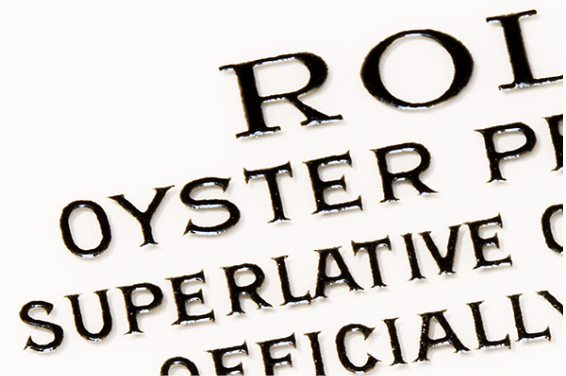
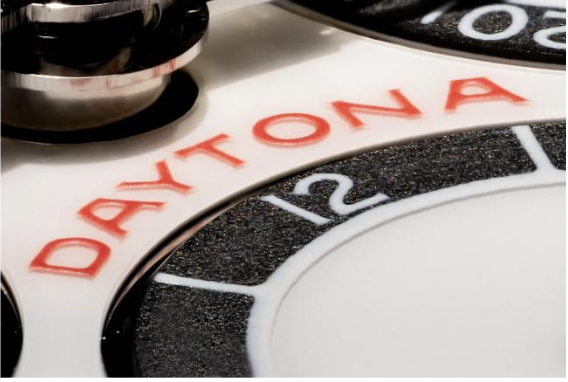
Photographs by Justin Koullapis
These dials were also exclusively floating, and mostly appeared in white, although examples have been reported in black. Originally, they were also always paired with a bezel graduated strictly from 50 to 200. Later lacquer dials were almost solely white and lacked a top layer of polished lacquer, resulting in a composition with less (but not zero) depth to it that you may occasionally see termed ‘semi-porcelain.’ But more on that later.
The floating and porcelain dials ultimately form what we refer to as the Mark 1 dial, defined by these traits as well as an inverted 6 on the hour totalizer subdial.
History and detailing aside, my humble opinion is that the clarity, tone, and overall effect of these wonderful dials make them my personal favorite out of all the variations that exist. And in the latter half of the 2010s, these porcelain dial Daytonas really began to take off with collectors.
Four-Line Daytona
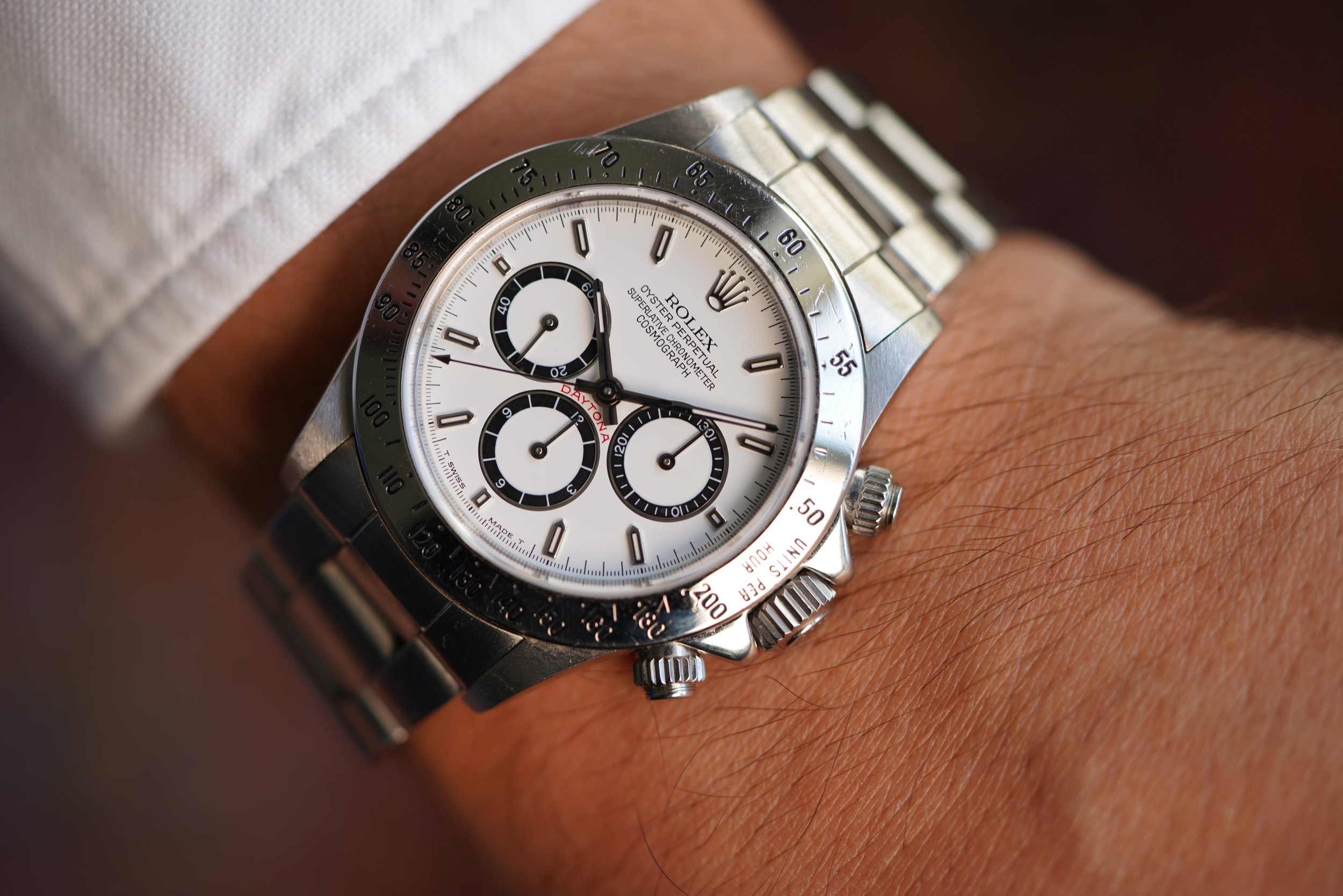
The Mark 2 dial is quite noticeable for its four lines of text. These are found solely on the models from circa 1988-1989 and named ‘Four-Line Daytonas”. These variants command a premium that can be 2X the value of a comparable model the following years if exceptional condition. While most people will not notice the difference on first impression, it is a nice flex in the Zenith Daytona world. These more spacious dials were produced for barely a year and are not known to be fitted on any watch produced from 1990 onwards, tying them firmly to the R and L-serial range and making them particularly collectible today. The four-line dial is a perfect meeting point of elegance, legibility, and true rarity – three points on the proverbial graph that are rare to see all in one place. That missing line of dial text is just the kind of discrete feature that would slip by most people, and the result is a dial with a little more breathing room than usual.
Singer was still producing the dials for Rolex at this time, and it’s been suggested by some collectors that the amount of text was getting tedious for the watchmaker, so they reduced it to the mere four lines of text. However, there is no official explanation as of yet for the omission. This change in aesthetic did not last, and they can be considered a rare mid-production design experiment by Rolex. One additional anecdote of interest is that “Four-Line Daytonas” are actually profiled in advertisements as late as 1990.
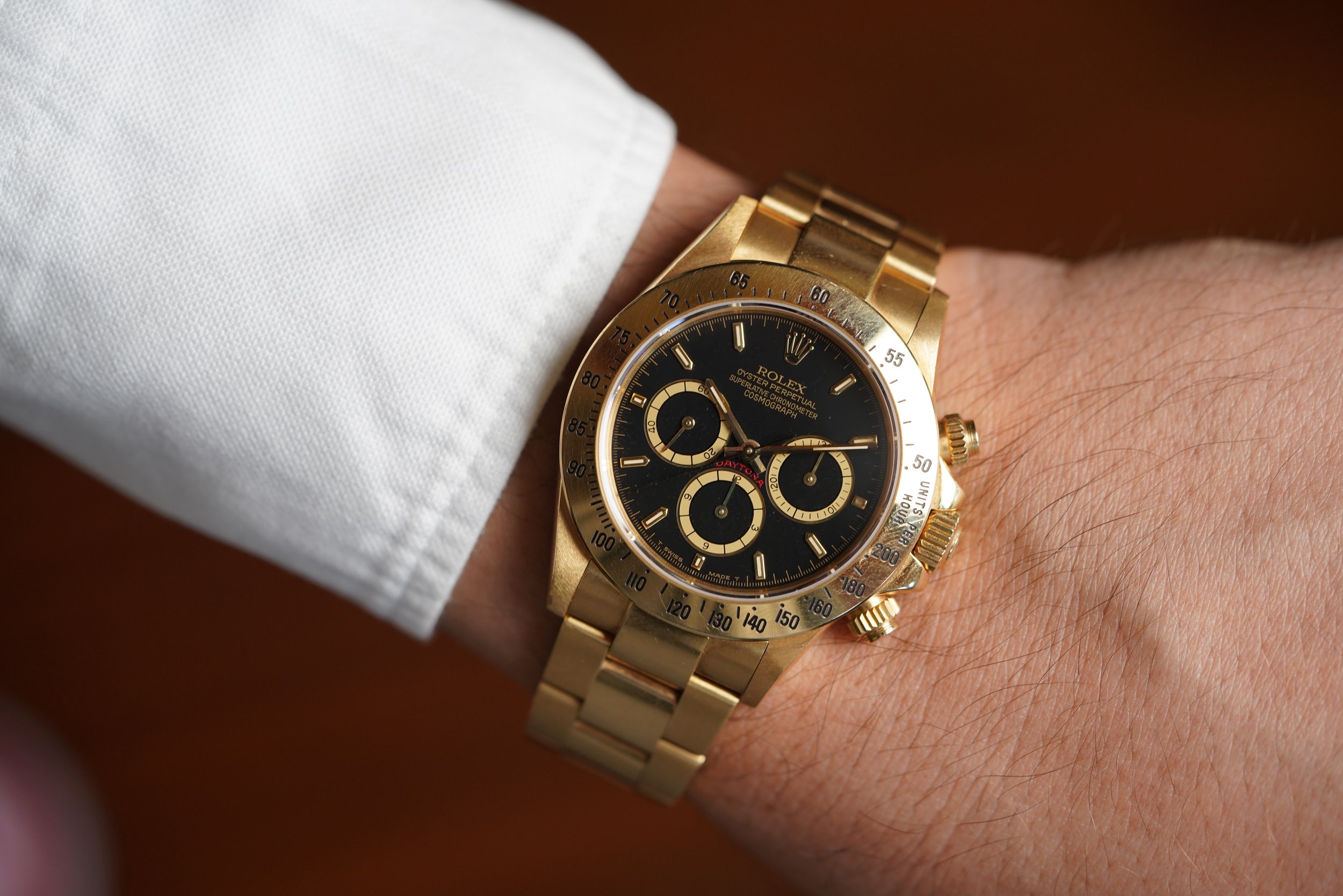

The advertisement above features the rare “Four-Line” variation from 1990.
In many of the earliest Zenith Daytonas, we see non-flip lock clasps. These are particularly interesting and quite uncommon to find. It is quite common that these bracelets were replaced during a service.

Early bracelet clasp (pre-fliplock).
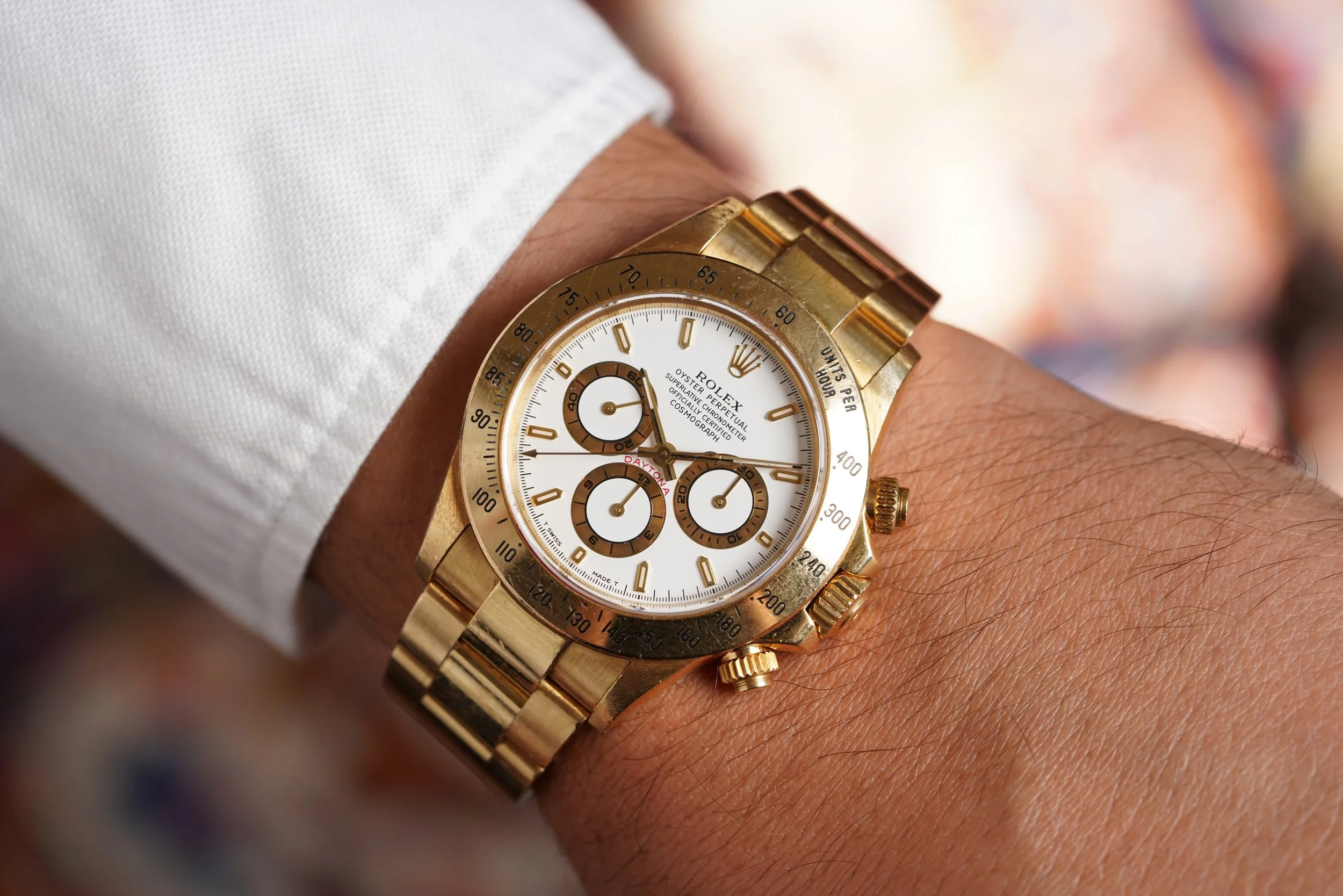
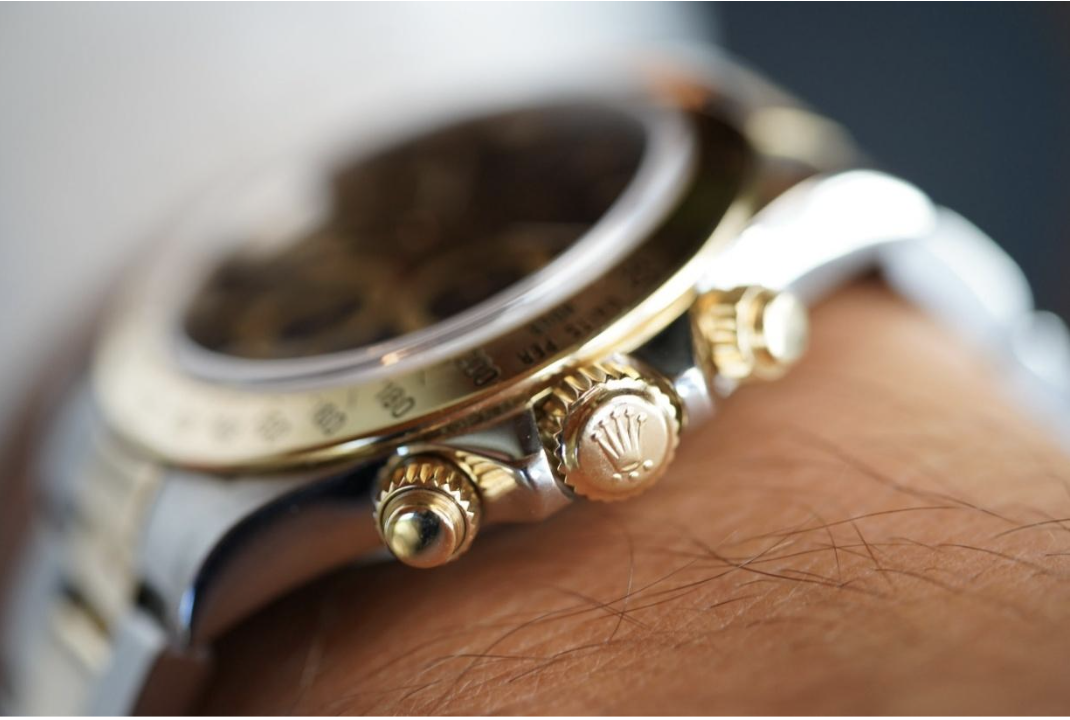
The new sapphire crystal also doubled the depth rating for the watch to 100m.
Note not only the inverted 6, but the black registers on the subdials. On steel Zenith Daytonas with a white dial, these registers were always black, whereas later models colored them silver.
Per porcelain dials, some speculation has been put to me by dedicated collectors that Rolex – or Singer, being the dial-maker – made an error in creating the four-line dial, and in a rush to fix things without disrupting the supply of dials, they reverted back to the five-lined lacquer dials they were previously making. Though made of lacquer, these dials lacked a polished top layer, and so over the years they became known as semi-porcelain. Again, this is only speculation, but it strikes me as at least plausible, especially considering that this dial had ceased production after just one year.
For Mark 2 dials, the fifth line is omitted and have the ‘floater’ trait of the Mark 1s but retained the hour totalizer’s inverted 6. Aside from the intrinsic rarity that comes from but one year of production, the discretely reductive quality of the four-line dials is a wonderful conversation piece at collector get-togethers, if only because it always takes people longer than they expect to spot what makes it unique, and once they do, it suddenly becomes all they can see when they look at the watch.
Models with these dials do well at auction, with the steel models generally selling for a ballpark $35,000 and the gold models for closer to $50,000.
From circa 1991-1993, the Mark 3 dial is seen. These dials present what was essentially a return to form, restoring the “officially certified” text on the dial whilst also bringing the “Cosmograph” back home from its low-dial orbit. As with the previous dials, it features an inverted 6 and four dashes on the inner subsections of the minute register subdial.
A super polished Daytona with end links that are on death’s door. Photo by Christie’s
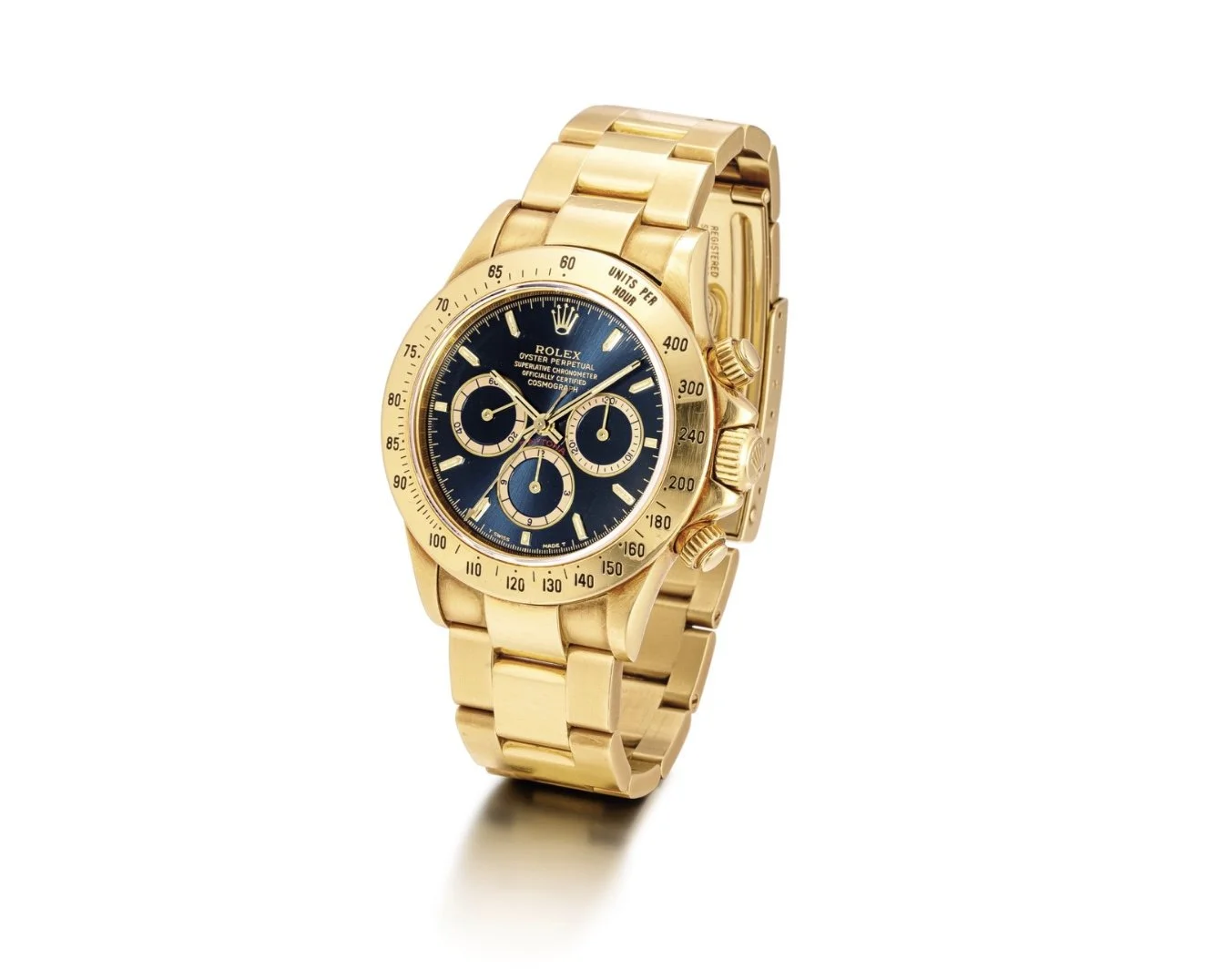
There are also blue dial variants referred to as “Chairman” models which are extremely expensive - oddly more expensive than many iconic Paul Newmans Daytonas. These purportedly did not have a great response upon their release (a common theme that is ironically consistent with almost Daytonas). The common narrative on Chairman Daytonas is that they were purportedly on Rolex executives/management.
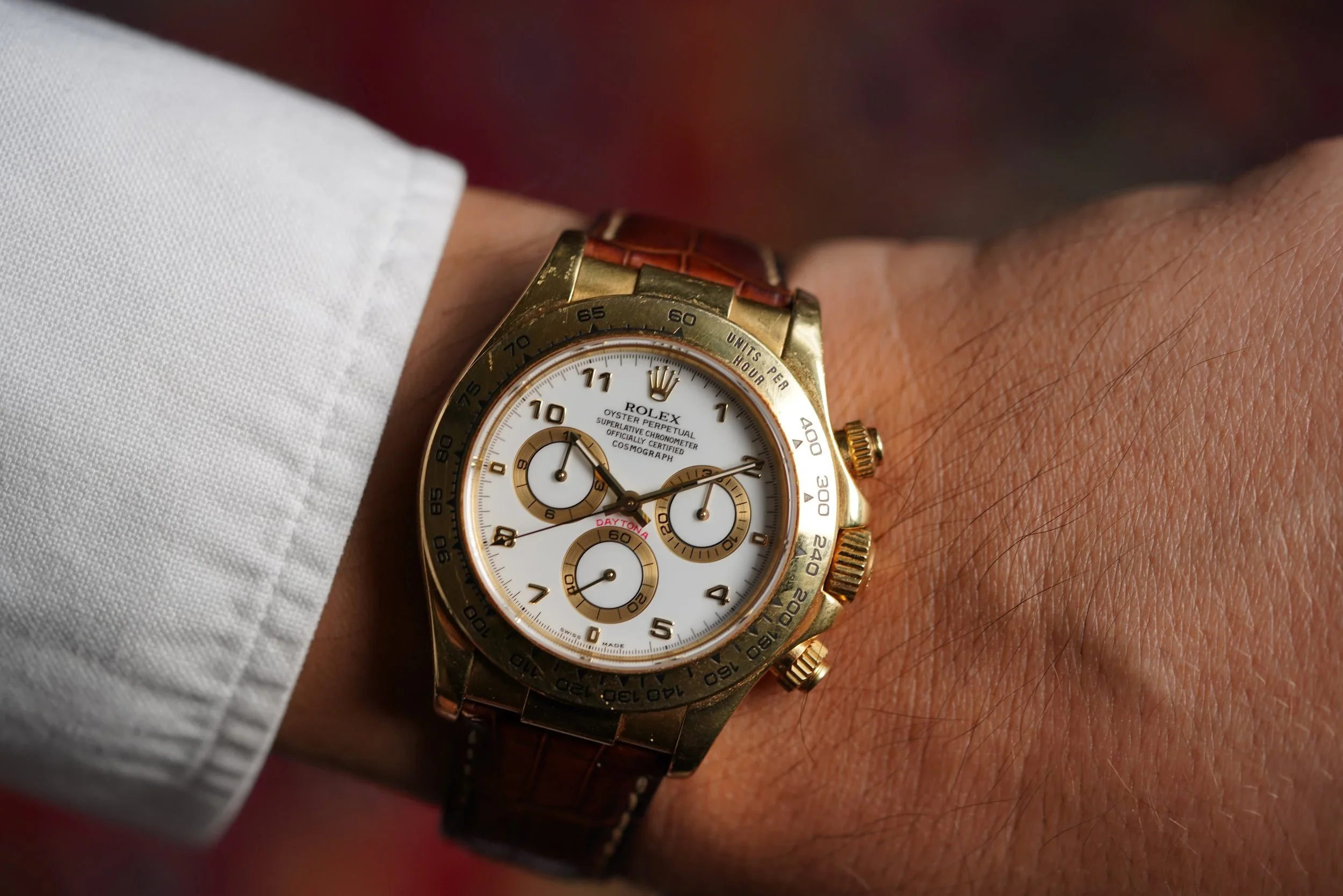
In circa 1992, The Daytona is introduced a leather strap for the precious metal models, a first for the Daytona, and these cases fitted for leather also came with fixed end links notably smaller than the end links found on bracelet compatible models. These include the white gold reference 16519 and yellow gold reference 16518. There are both diamond dial variants and Arabic-numeral variants within these references. Most collectors do not aspire to own these models. Most collectors want a Daytona on bracelet. These are much too formal for most, the hooded lugs do not permit a bracelet to be attached to the watch - although people have attempt to add bracelets.

Note the shorter end links.
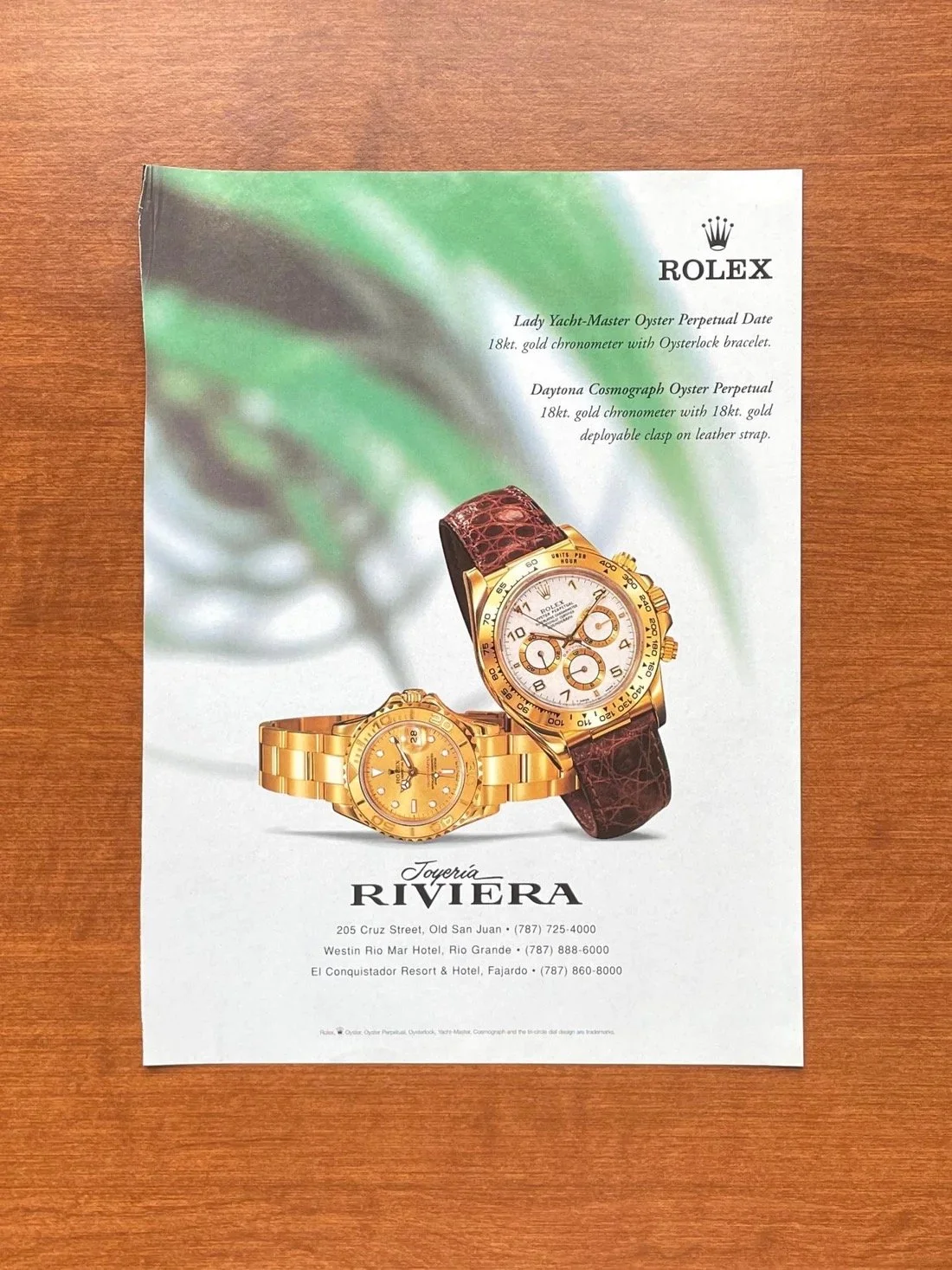
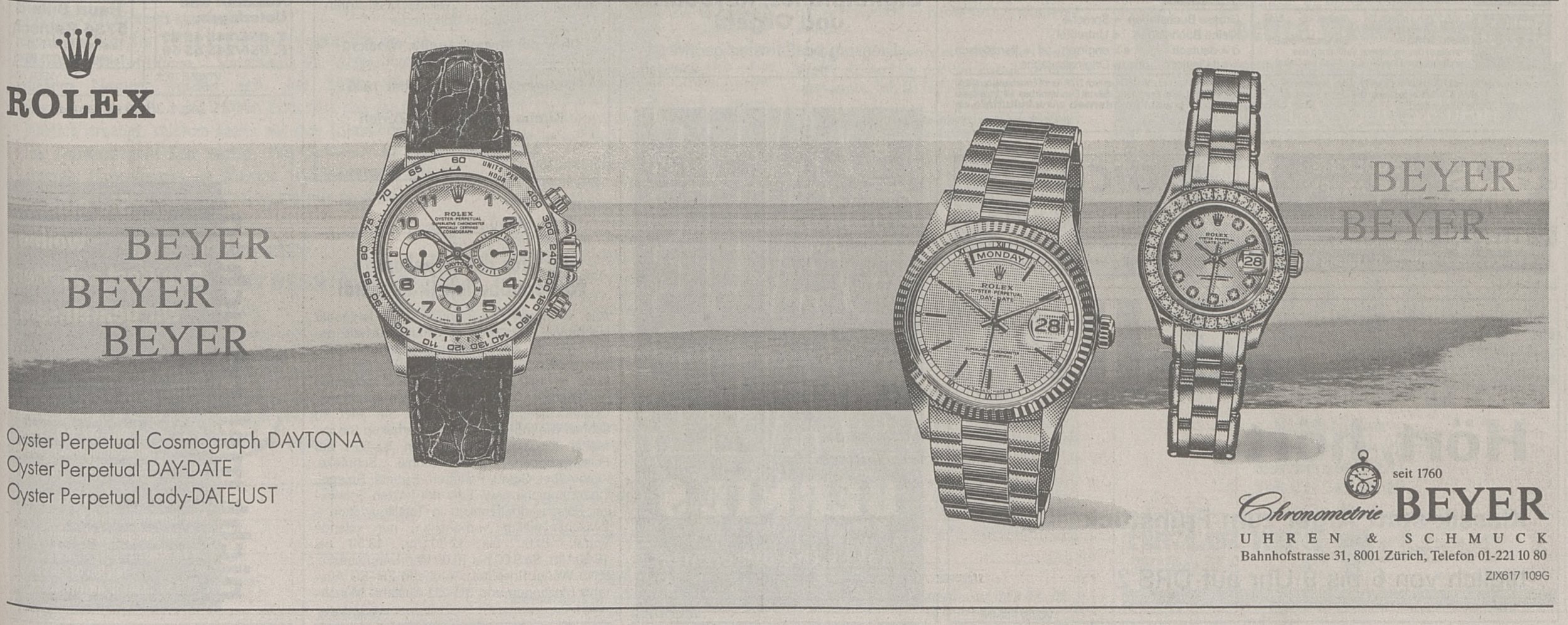
1996
To give some perspective on production of the Zenith Daytona model, it is estimated 3,000 watches had been made simply as a result of Zenith struggling to supply the El Primero movements at the rate the masses wanted. That’s quite hard to fathom today, in an age where we’re used to Rolex putting out exactly the amount of watches they wish to make. This estimation shines a light on the demand these watches have always enjoyed, as well as explaining how the Daytona became the first watch to require a waiting list. However, waiting lists back in those days were more like 3-to-6 months, rather than the 5-to-15 years and a mortgage’s worth of spending history.
Models with the Mark 3 dial enjoy the same approximate success at auction and among collectors as their predecessors, mainly characterized by their role as replacing the more limited four-liner Mark 2 and being the first Zenith Daytona dial to be what we now consider ‘normal.’
What came next was the subtly radical Mark 4 dial, launching mid-1993 on the S86xx serial and being produced all the way through to 1998, ending on the U-serial. The changes it brought to the watch were small, but still considerably altered the feel and legibility of the watch.
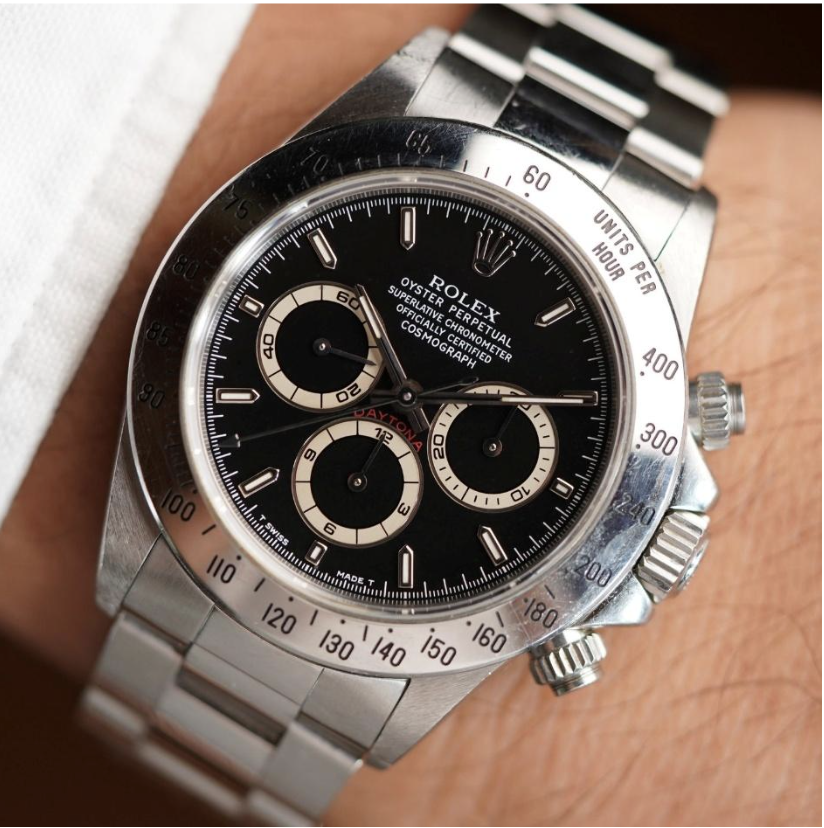
This dressy steel example is a perfect example of the Mark 4 dial. The 6 within the hour totalizer is finally upright, and if you go back and compare it to the previous dials, the typeface for all the subdials has been widened and put in bold. More subtly, that minute register subdial has gone down to three dashes on its inner subsections where it once wore four, and subtler still is the removal of serifs on the main five lines of dial text.
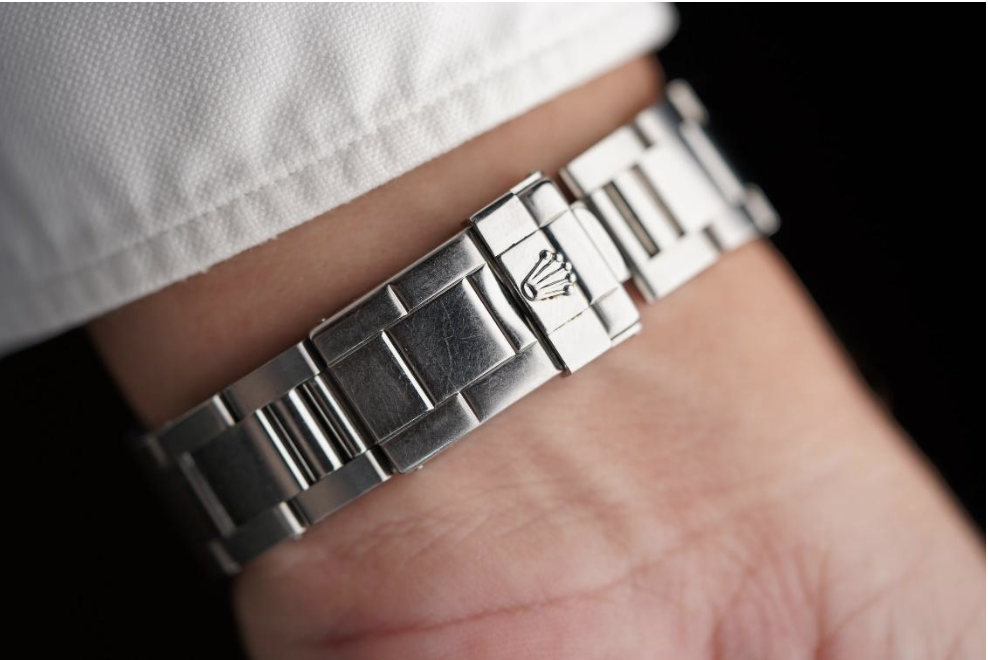
Some other changes include polished center links on the steel Oyster bracelets – a first for Rolex – and a shorter flip-lock clasp as found on the Submariner.
Also debuting in this era was the Ref. 16519, appearing in circa 1997 as the first ever white gold Daytona in regular production. It bore a dressy leather strap, just as its older sibling in yellow gold did.
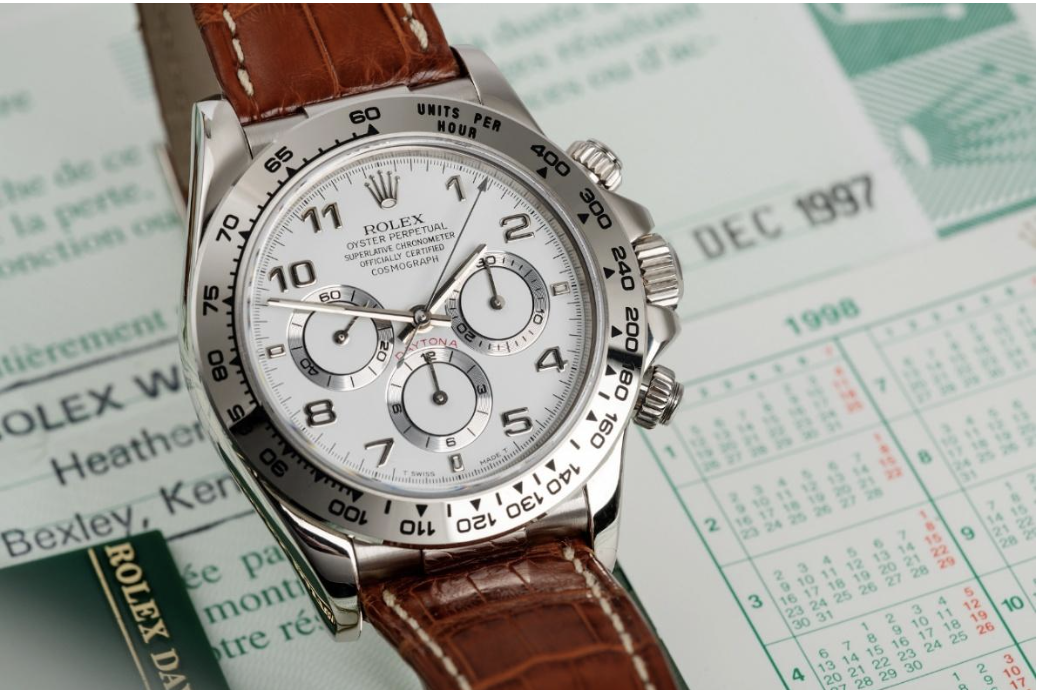
The Ref. 16519 was also the first Daytona to have Arabic numerals, and can be considered an early ‘racing’ dial as seen on later references. – photo by The Watch Club
The Patrizzi Dial

When it comes to the Mark 4 dial, frankly, the only thing that stayed as it was is the tritium lume applied to the hands and hour markers, and as with all tritium watches, the lume has patinated into a wonderful creamy color over the years.
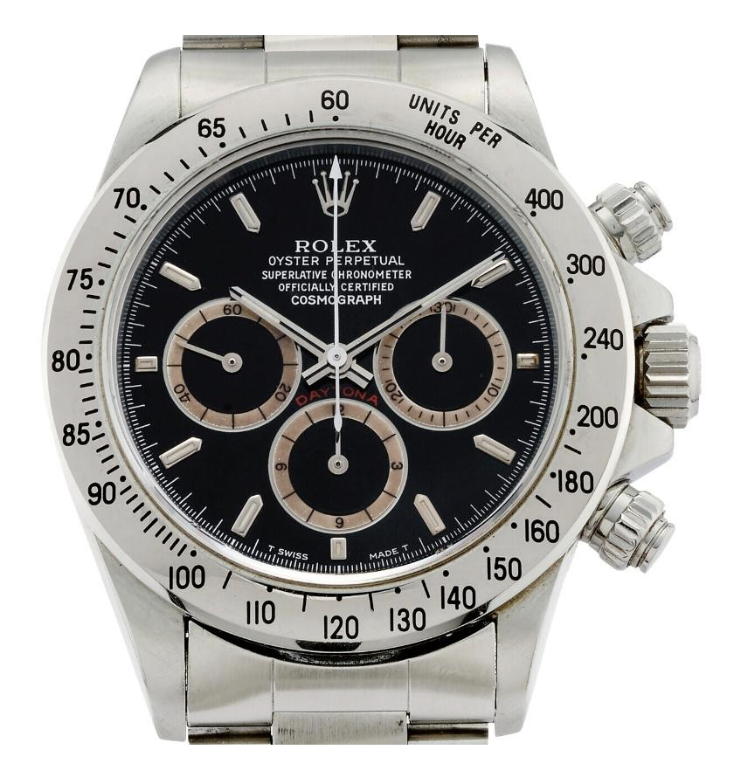
Named for Osvaldo Patrizzi, founder of Antiquorum, these dials can often be spotted from across the room for their handsome, often intensely colored inner registers on the subdials. Most Patrizzi dials have registers darker than cream but lighter than brown, however due to the nature of what causes the coloration, they can vary significantly. Uniformly colored dials are rare, and the phenomena can fundamentally only be found on black dials issued on Zenith Daytonas under the S and W-serials, the latter belonging strictly to the year 1995.
Patrizzi was the first to note the phenomena, when in 2005 he was preparing an auction of his personal Rolex collection and spotted developing patina on a Zenith Daytona he’d purchased about ten years earlier. Despite the youth of the watch, the subdial registers were a profound orange-brown tone. Intrigued, he put the watch up for sale, where it sold for twice its estimate. Evidently, the differences were proving desirable. He soon found collectors not only identifying the same localized patina on other Daytonas, but also referring to it by his surname, an honor seldom conferred.
So, what exactly causes all of this? From approximately 1993 to 1995, the black dials on the Zenith Daytona were purportedly treated with Zapon. This varnish was applied specifically to the subdial registers on those black dials with the intent of shielding them from ultraviolet light exposure over the lifetime of the watch. As those registers were made of aluminum, this varnish was a crucial part of preventing them from losing legibility and ensuring long-term aesthetic unity with the rest of the dial.
Much to the dismay of Rolex and the eventual glee of collectors, Zapon did not accomplish this. Some sources say the varnish itself, bearing a partially organic makeup, was insufficient at protecting against UV light, however the consensus of Rolex historians and experts is that the varnish was improperly applied to the dials, and that is what enabled the now favored patina. A similar phenomenon may also be found on earlier white dial Zenith Daytonas from the first year of release of so, some of which have aged beautifully into a rich cream color.
It will likely never be known if the lack of protection was due to a batch composition issue with Zapon, or due to it simply not being applied properly. Whatever the actual cause, the result is a remarkably attractive watch, now aged to perfection to enjoy not only desirable prices at auction but also a clear personality and feel that won’t be found on its contemporaries. And as this change in color is due to a fundamental exposure of a metal vulnerable to exposure, these dials possess two most unusual attributes: firstly, they will only continue to develop significantly over one’s ownership, and secondly, perhaps best of all, is that each dial will age entirely individually, creating a unique style for every lucky owner. Something I personally enjoy is that by virtue of their color, these dials are a perfect complement to the heritage tritium lume they also sport, accentuating the vintage feel of the watch and only adding to the pleasure of wearing one.
Ordinary Mark 4 dials do fine at auction, similar to the other Marks, but it will come as no surprise that among them the Patrizzi dials have proven highly collectible in the last twenty years, doing well on the market as well as being the subject of consistent appreciation amongst collectors.
Another occurs in circa 1998 for the Zenith Daytona, one last time before Rolex took the whole operation in-house a couple of years on. We arrive at the Mark 5 dial, found on the U-serial to the most ephemeral P-serial, of which a mid-year dial change in ‘98 made this another transitional variant. Where it maintained the sans-serif typeface and bolder subdials. Tritium lume is resigned by Rolex as its mainstay since the early-1960s.
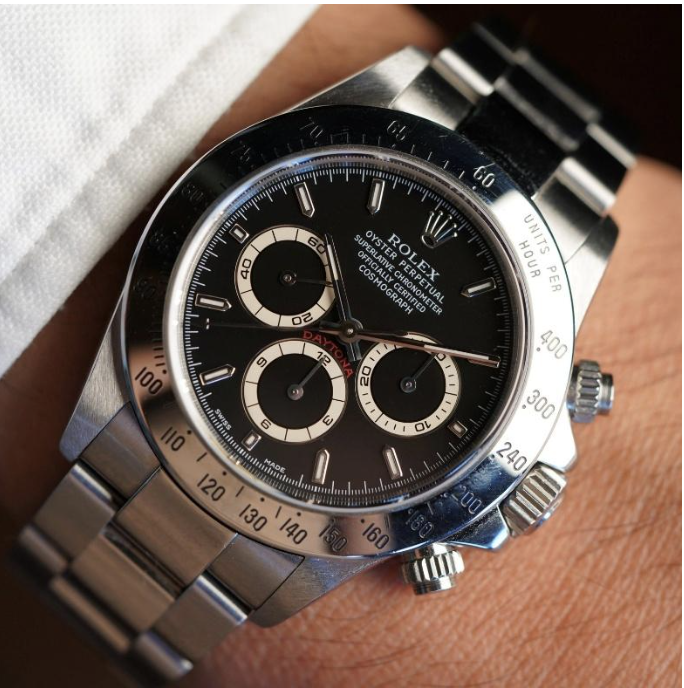
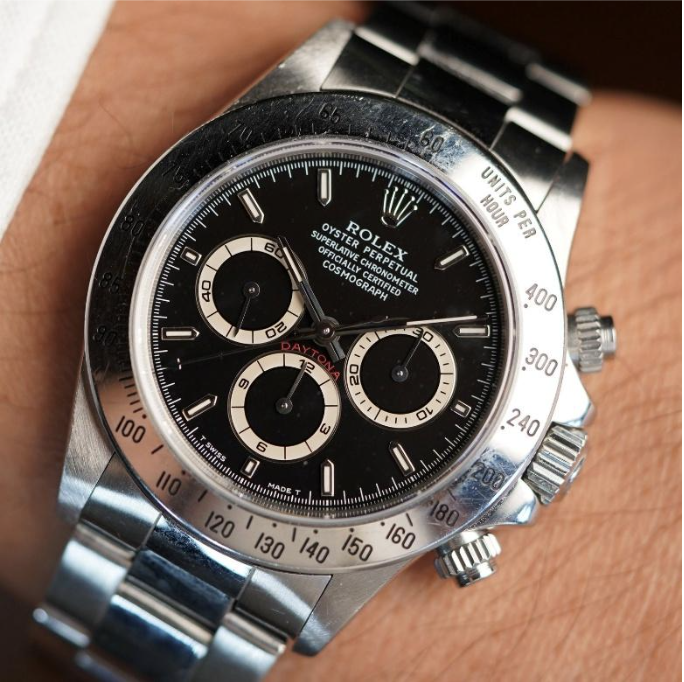
Two subtly different Daytonas. On the left: a 2000 Zenith Daytona from the P-serial run, and on the right: a 1999 Zenith Daytona which still has the T Swiss T signature,
The advent of Japanese Luminova lume a few years earlier in 1994 quickly established itself as superior to the tritium-based lume. Compared to the nuclear option, it was brighter, never faded, was totally nonradioactive, only glowed when it had to, and even served as an infinitely rechargeable battery: the strontium aluminate in the lume is ‘charged’ to a higher energy state by exposure to ordinary daylight. This energy is slowly released as visible light whenever the watch enters darkness. Whereas tritium-based lume would perpetually glow, fade in color, and eventually completely lose its luminescence entirely by virtue of its constant decay into beta particles.
All of Luminova’s characteristics were big ticks for a watchmaker always striving for the most practical solutions, and when the use of tritium in lume was outlawed entirely in 1998, Rolex – as well as every other watchmaker – were prepared.
The dial makers, though, less so. The loss of tritium-based lume also meant the loss of the “T Swiss T” signature, legally required by the ISO to be discretely signed at six o’clock on every other lume-bearing dial before this time. But some surplus Mark 4 dials meant for tritium were ultimately fitted with Luminova, hence the above Mark 5 dial on the right that’s still wearing T Swiss T down south.
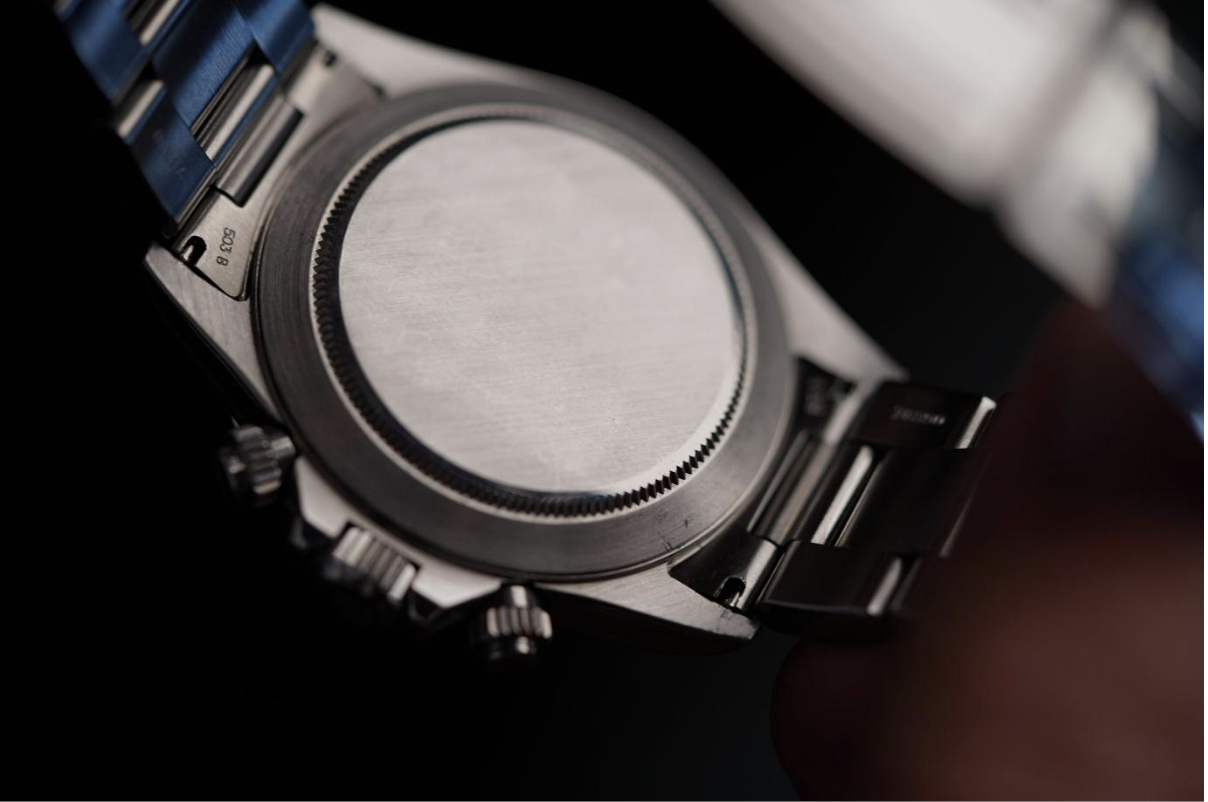
Seen above, another smaller change to the case structure of the watch came in 1999, when solid end links were fitted on the Daytona to heighten its solidity and security on a more day to day basis.
As mentioned earlier in regards to the bezels, the hands and hours of tritium-era Daytonas have been sometimes replaced with Luminova or even Super-LumiNova, an enhanced lume made 100% in Switzerland for direct use by Rolex et al. Naturally, this can make it hard to tell which dials have and haven’t had their parts updated, but I’ve been able to work out a few tells. For one thing, dials with a mere “swiss” signature at six o’clock were likely for Luminova and original to 1998-99, and their lume should be a light green glow.
However, if the signature reads “swiss made,” then it is likely Super-Luminova, which will have the same green glow, or (depending on the time of service) possibly even Chromalight, the proprietary Rolex lume from 2008 onwards that sports a bright blue glow. Such careful comparison of dials with their case serials forms part of one’s due diligence in examining a Daytona from these years.
The P-serial was only issued on Daytonas made in the year 2000, itself a fundamental year as the Zenith-based Calibre 4030 was replaced with a fully in-house movement…What sets the P-serials apart is the fact that barely two or three hundred Zenith Daytonas are believed to have been made in this serial before being replaced with an in-house movement on the same serial, making them uniquely collectible amongst an already considerably rare and collectible reference to begin with.
Even putting aside their highly finite nature, the P-serial Zenith Daytonas are a fine watch to have based simply on the capper they serve as for an important era of Rolex history; an era that played portent to the modern Daytona market, an era where Rolex was still depending on another maker to power their own chronographs. All said, however, it is ultimately the tiny amount of P-serial Zenith Daytonas out there which drives their market performance today.
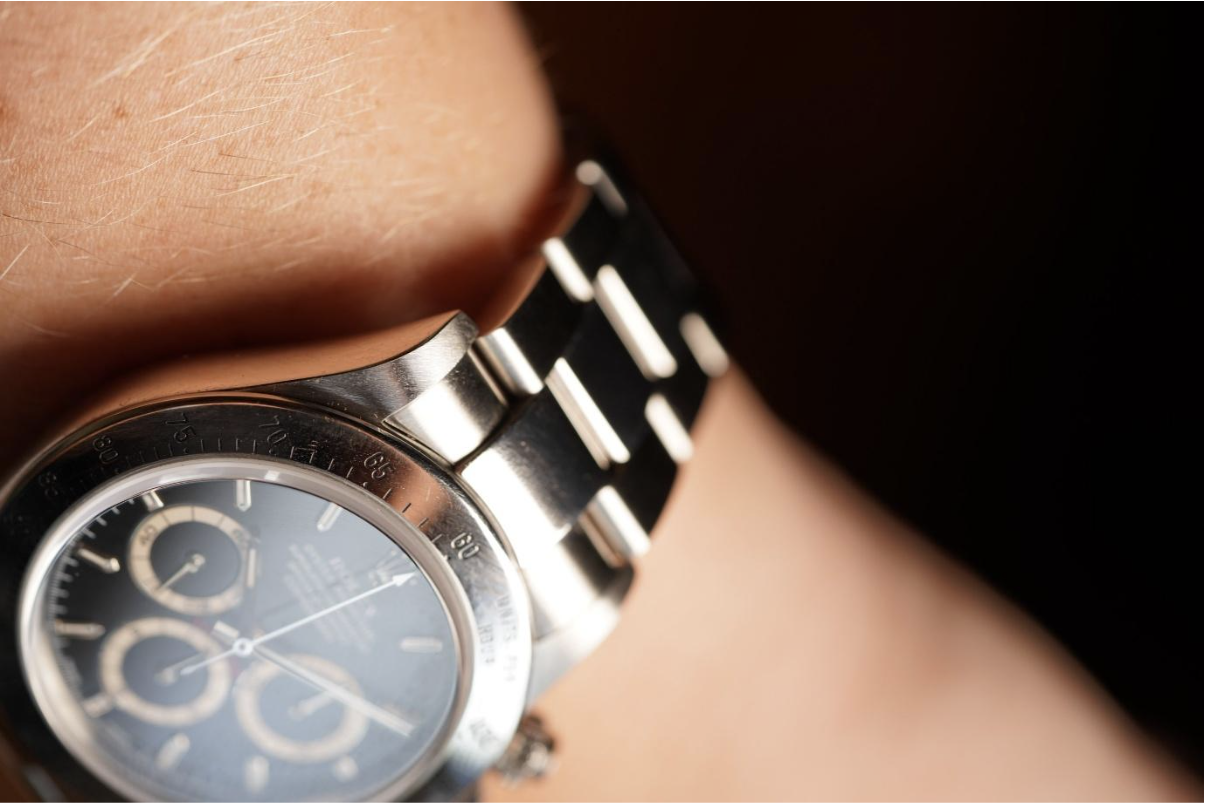
With this, we come to an end. The aforementioned transition that occurred in the middle of 2000 was the launch of the Calibre 4130, a breathtaking movement in its own right. Fully in-house, it could vaunt a 60% downsizing in components that reduced it to barely 200 individual parts, a Parachrom hairspring for heightened accuracy, a smooth vertical clutch chronograph (remember the lateral clutch?), and the power reserve went from 50 hours all the way up to 72 hours simply by combining the modules that powered the hour and minute subdials. A whole raft of exciting advances in microengineering had taken the Daytona into another great leap towards modernity.
… But this isn’t about modernity. After all, the resurgent popularity of these watches in the last ten years can in no doubt be down to the rediscovery and concomitant appreciation for their El Primero-based movements as an embodiment of horological history, not to mention the breadth of variety that can be found on the dial alone, that most important place that first meets your eye when you see a watch. There’s a kind of warmth to the subtlety of these details, a feeling we all get when we wear a watch that can only be spotted and appreciated by someone else who is ‘in the know,’ someone else who shares your passion for vintage watches. Indeed, to wear a Zenith Daytona today is to take a step towards a nostalgic orthodoxy, both for Rolex and for collecting watches. It is to tell the world that your appreciation, your passion, lies in an abstract essence of watchmaking beyond stroboscopic diamonds and planes of precious metal.
And the great majority of Zenith Daytonas, with their brushed steel bodies, hollow-link bracelets, and gracile hands all working together for a sportier, less luxurious feel for the watch, stand in sharp contrast to the glossier modern Daytonas that many view as a bracelet for the lucky, rather than a tool of the hardy. When you wear a Zenith Daytona, you’re wearing a part of those days since it passed, where a wristwatch was a machine to provide a utility before it did anything else.
Naturally, these historical watches had their own masterworks in gold and gemstones, but I consider those models as a important pieces of Rolex history. They speak to the beginning of a shift in the identity of the Daytona. By producing heavily bejewelled watches that sometimes rendered their complication useless by setting the bezel with baguette diamonds, the Daytona – and by extension Rolex – was starting to move away tool watches, heading more towards being an object of desire, something that took even more time and money to get your hands on. The immense popularity of these models from their release meant that for the first time, no longer could you just walk into a jeweller and buy one, and in time, no longer would you only see a Rolex on the wrists of diplomats, or those who could fly a jet, or climb a mountain, or operate a particle accelerator.
You’ll recall the quote at the very start of this article. It was written by Rolex themselves and appears on an advertisement from 1965. Rolex: it’s not just any Rolex you choose, it’s that Rolex. These are collectible watches, not only for the historical importance they hold but for the grace of their differences, subtly setting them apart from other models to the trained eye.