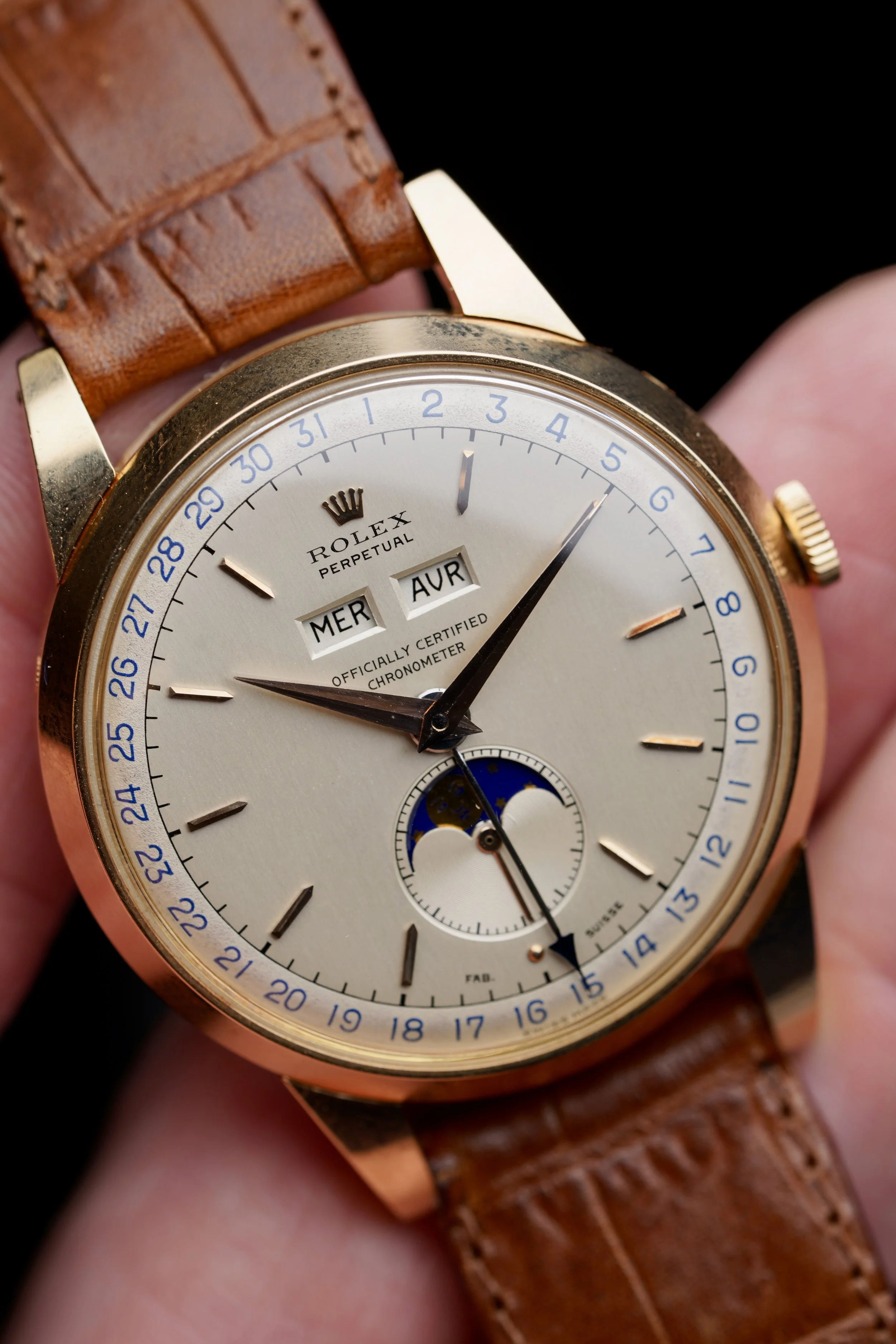
The Best Of The Best: A Rolex “Padellone” Reference 8171 in 18K Rose Gold
By Charlie Dunne & Eric Wind
The legendary Rolex reference 8171 (and sbling reference 6062) represents the Crown’s deepest foray into the art of haute horlogerie. Given the nickname “Padellone” or “large frying pan” in reference to it’s shape and size, Rolex produced the reference 8171 over the course of only a few years in the 1950s across an estimated 1,200 examples in steel, yellow gold, and rose gold, but far fewer survive today. We are excited to share an example in rose gold that is in spectacular condition and helps us understand and appreciate the reference and Rolex in that period.
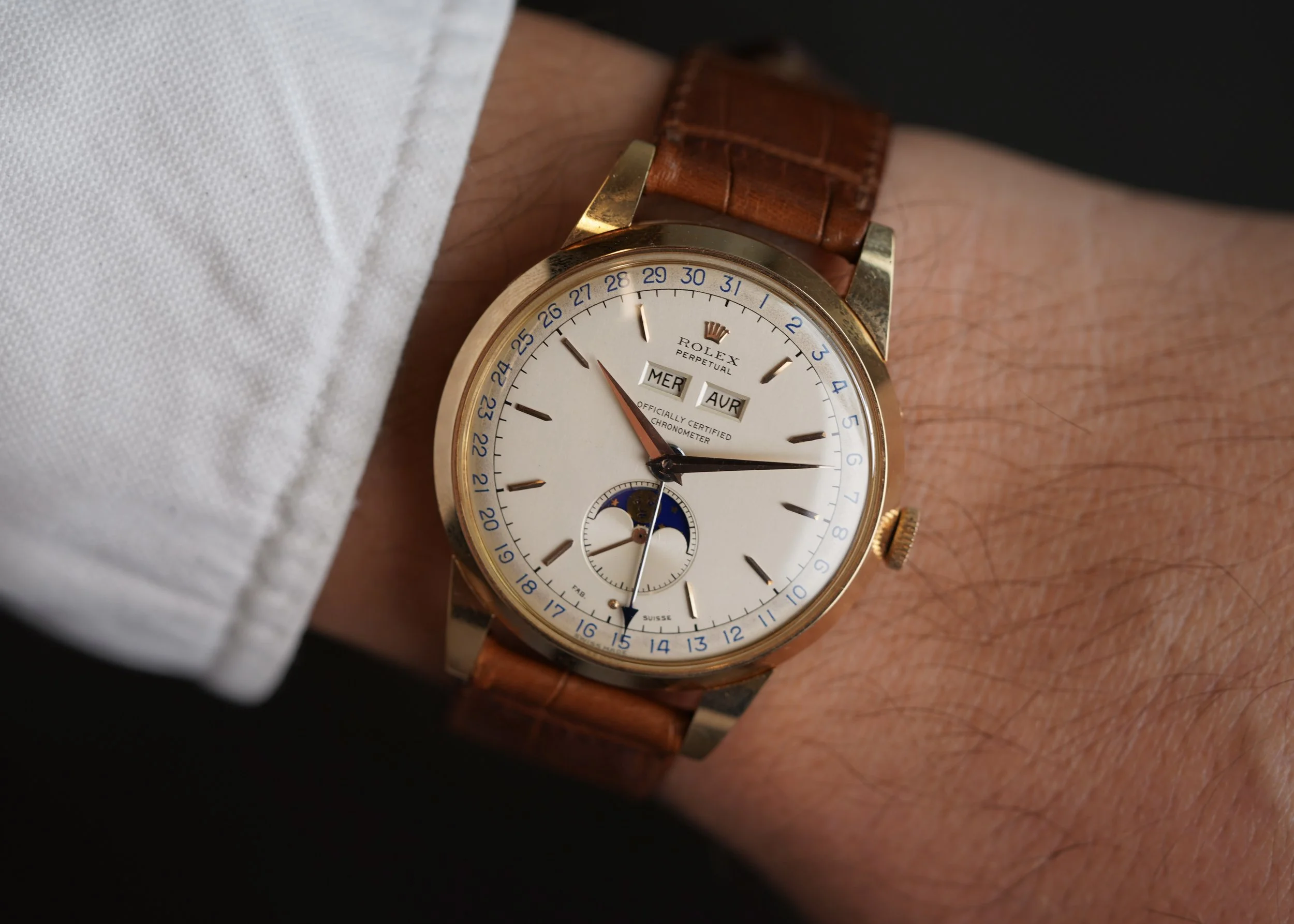
The Rolex Padellone reference 8171 was the most complicated in-house offering from the manufacturer in the 20th century. It came at a point when Rolex was at a fork in the road: pursue complicated automatic watches or focus on robust sport watches, which it eventually did as it introduced its series of iconic models in the 1950s: the Submariner, Explorer, and GMT-Master, with the great Day-Date also coming out in the 1950s.
In some ways, this watch is nothing you would expect from the Crown - one of only two vintage Rolex references to display the moon phase. Although some Patek Philippe collectors dismiss this model as not being a perpetual calendar, it was more advanced than Patek’s perpetual calendars in terms of being automatic. Patek introduced their own “Padellone” reference 3448 in circa 1962 and it was their first automatic perpetual calendar watch, no doubt partially inspired by the design of the reference 8171 and 6062.
The reference 8171 displays the complete or “triple” calendar with moon phase and introduced as the most complicated timepiece in the Rolex catalog alongside the reference 6062, which features an Oyster case. In a surprising manner, Rolex would choose the non-sports model to be the larger timepiece. The Padellone oozes class in every detail, yet as the robust large proportions, you would expect from a Rolex tool watch in the 1950s.
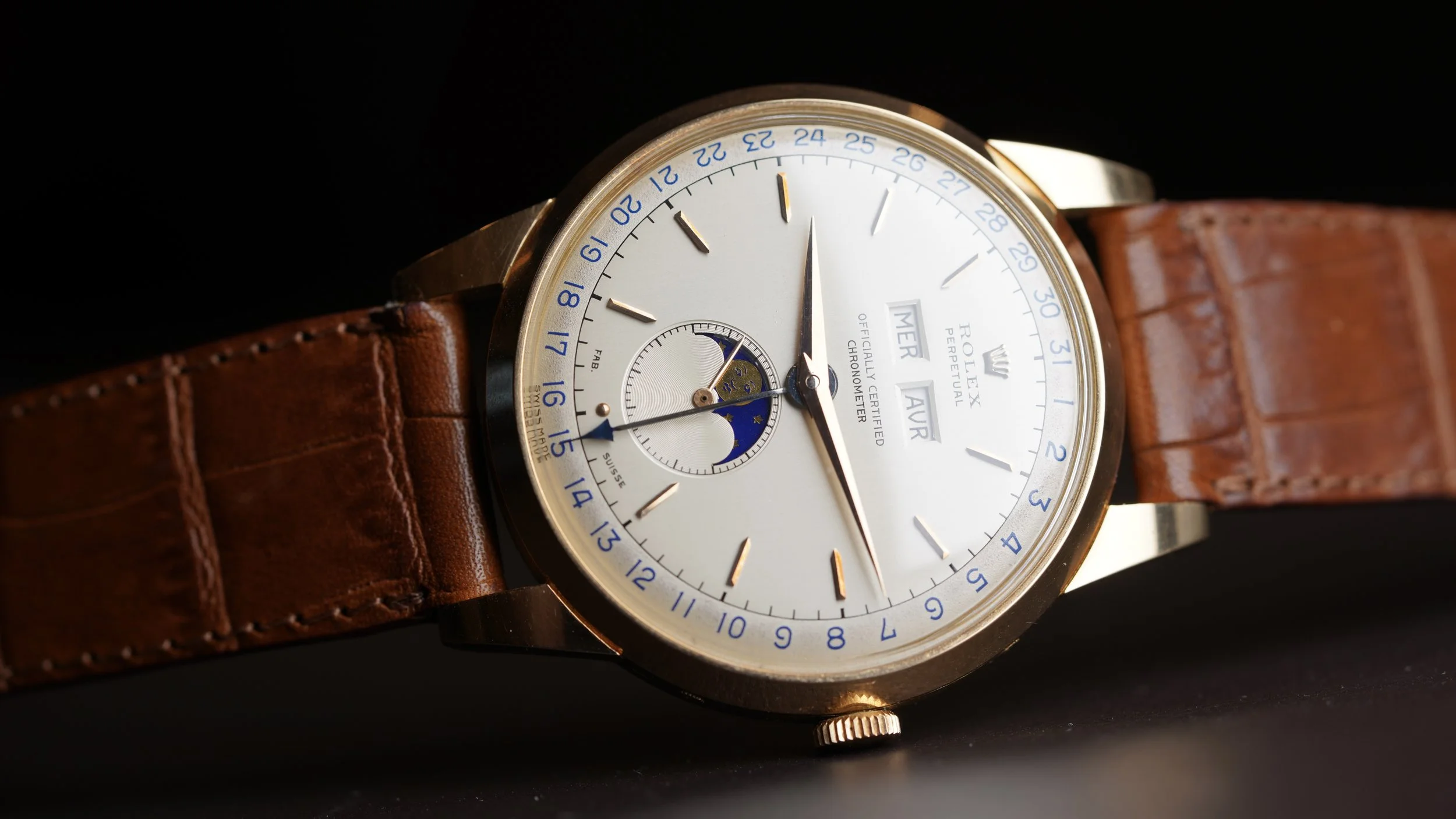
It is a massive timepiece for the late 1940s-early 1950s measuring 38mm in diameter and 47mm lug to lug. This case size makes the Padellone regarded as among the best complicated timepieces to wear by today’s standards. The Padellone was shortly produced until circa 1952 and can be found in three metals - stainless steel, yellow gold and rose gold. While stainless steel is the rarest case metal for the likes of complicated Patek Philippe models of this era, The Rolex Padellone 8171 was produced most often in steel (not to say steel 8171s are unappealing). The yellow gold models appear to make up for a strong percentage, but rose gold is certainly the rarest of all case metals for the reference 8171. The vast majority across all metals have reprinted dials due to the fact that the cases were not Oyster water-resistant cases, and were thus susceptible to water ingress.
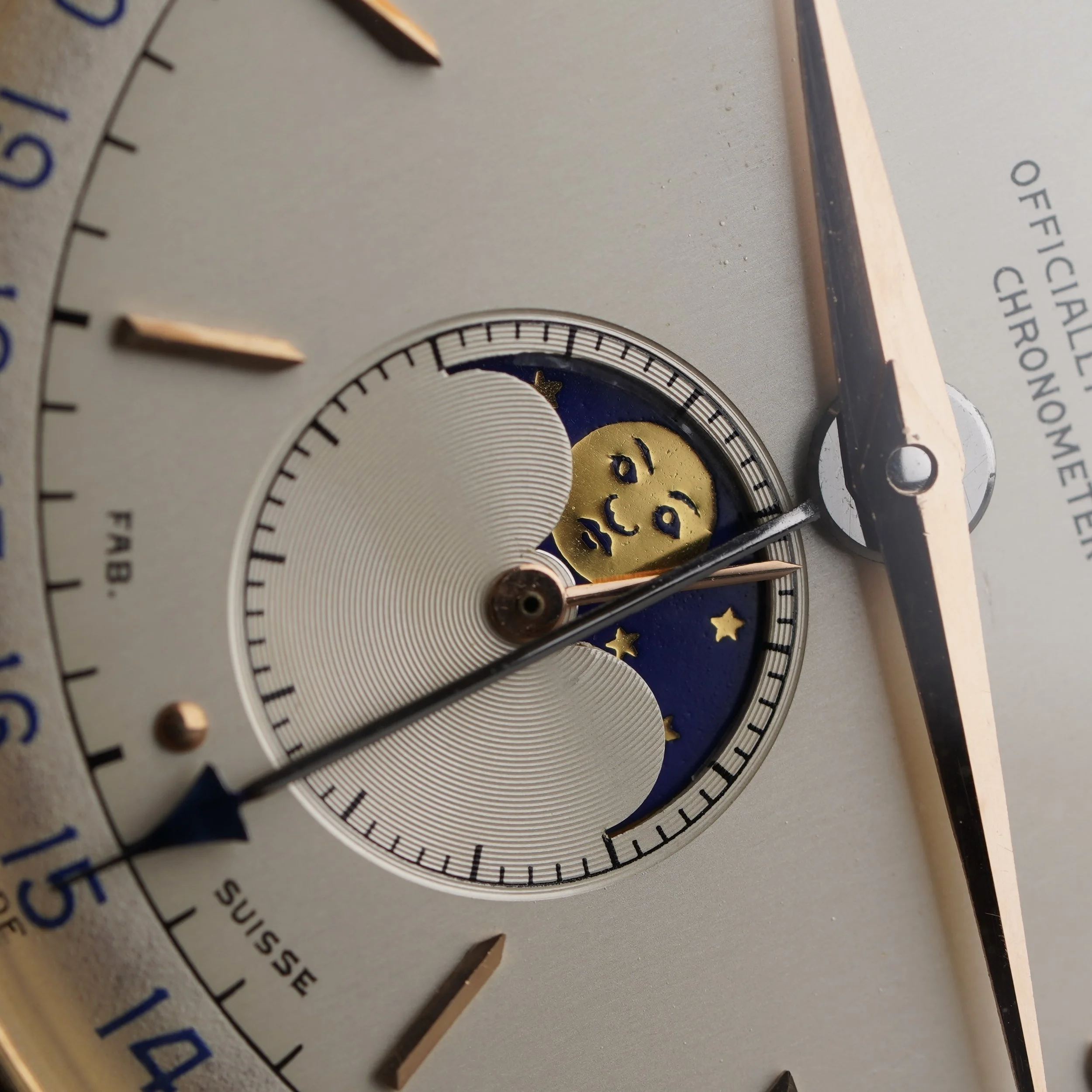
This particular example is a jaw-dropping example that Eric first encountered about a decade ago. It was made for the French market indicated by the “Fab. Suisse” on the dial and the French day and month discs. The moonphase disc weas made by Stern Frères out of hard enamel. Each disc is unique, and the Rolex discs are particularly compelling, due to the moon’s face. We call it the angry or stern moon, because it looks somewhat perturbed and serious. Interestingly, Patek Philippe and Audemars Piguet never had moonphase discs with a moon showing a face and that is one of the charismatic and fund details of the Rolex reference 8171 and 6062. Some say that the 8171 and 6062 are for the emotionally intelligent connoisseur!
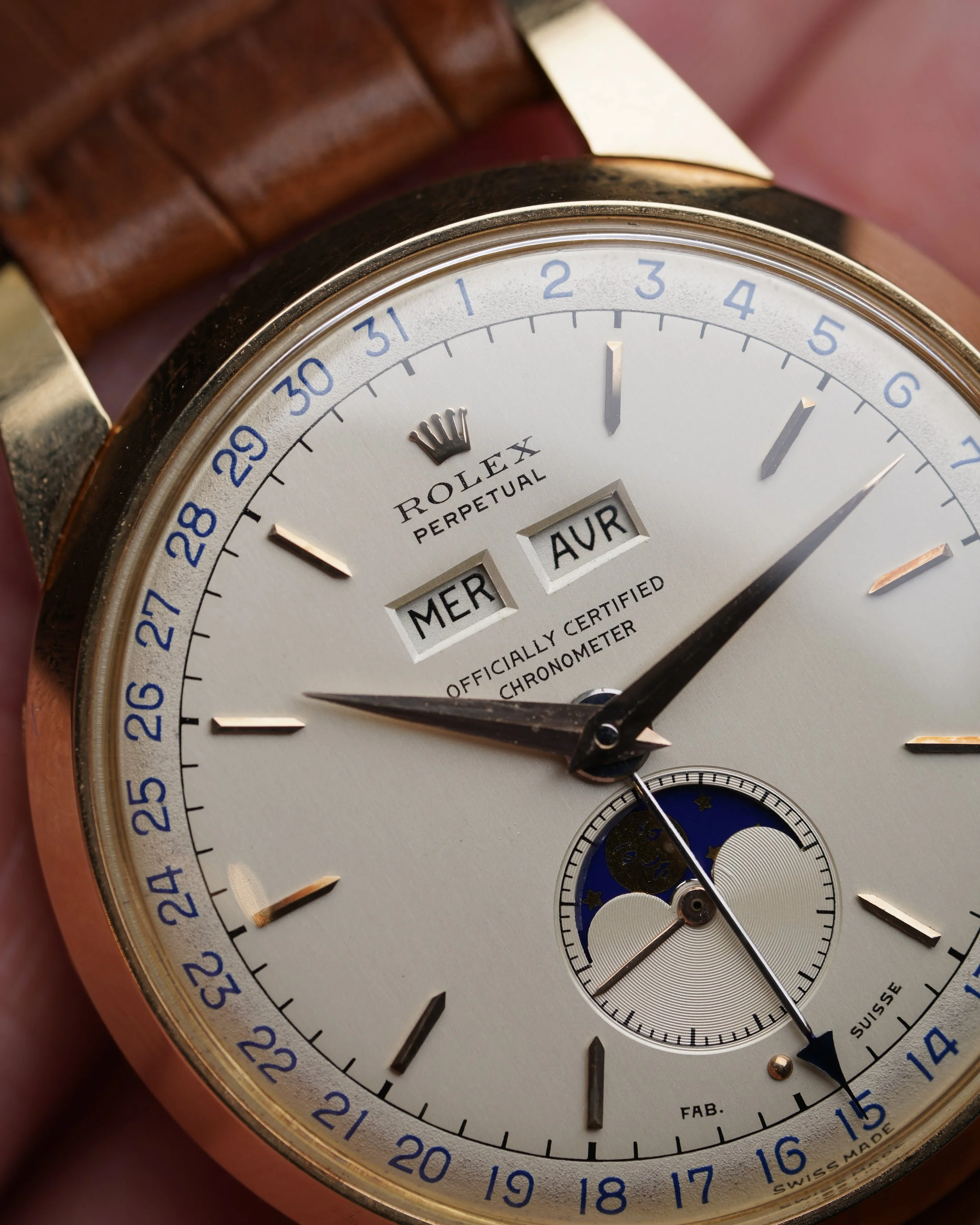
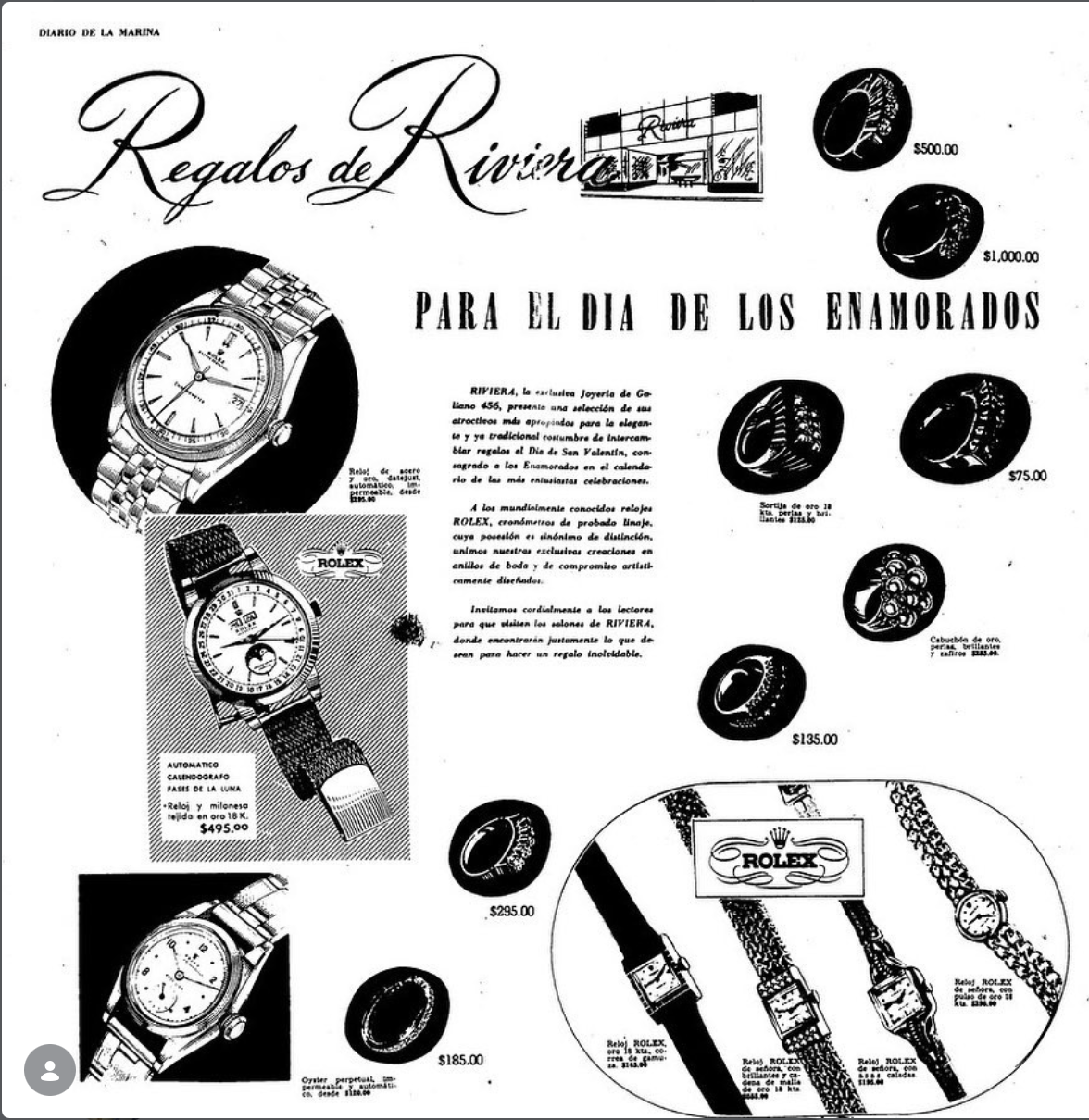
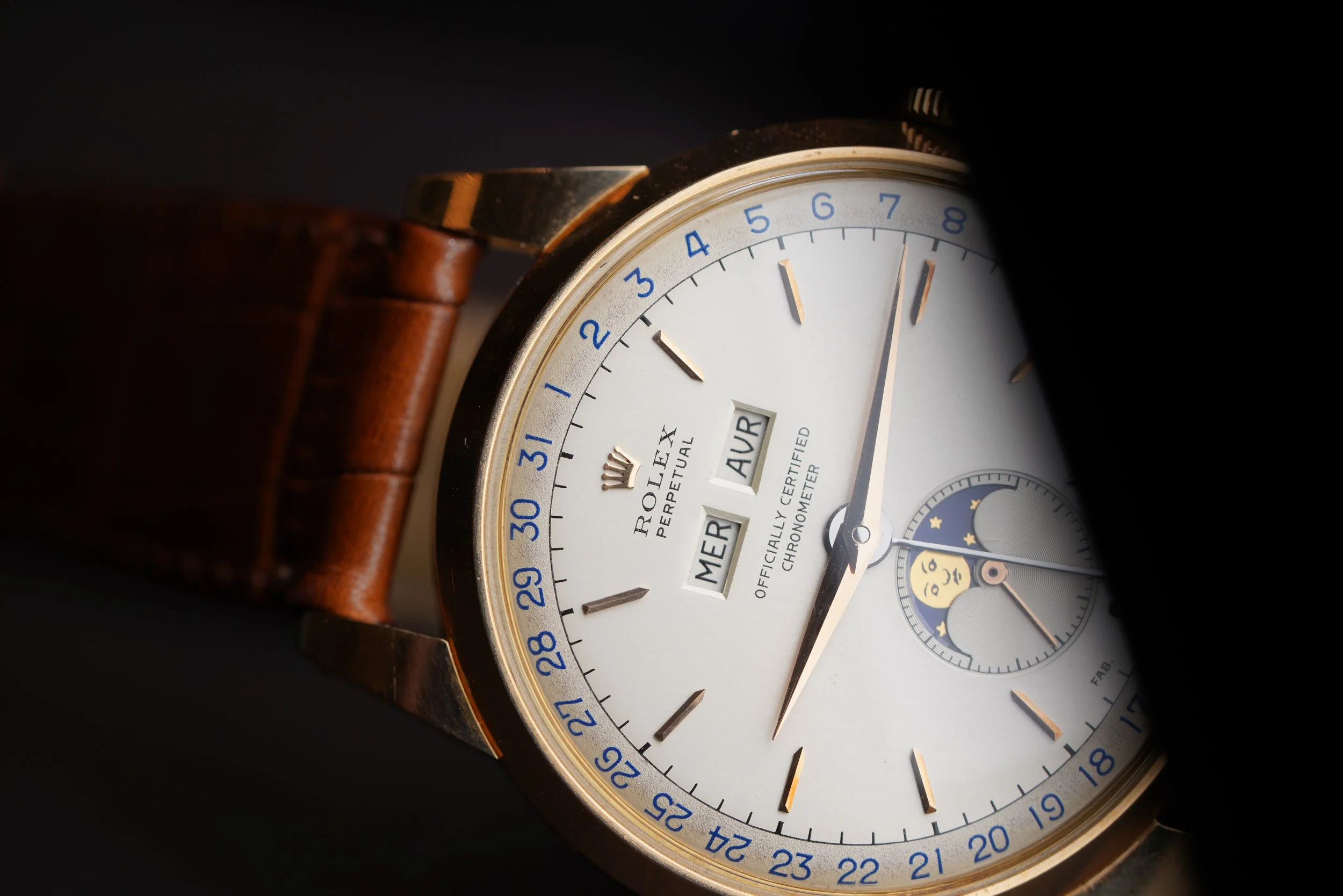
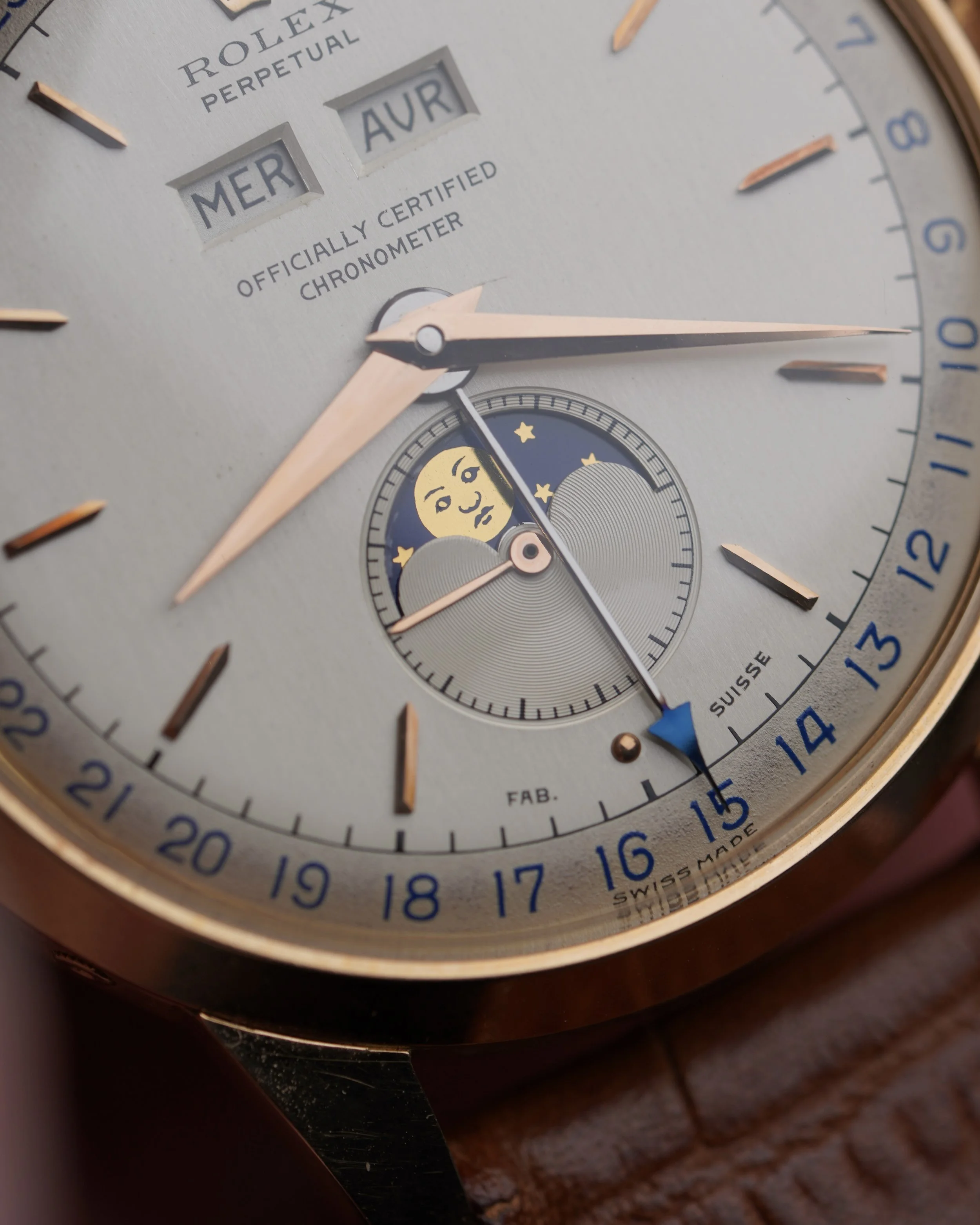
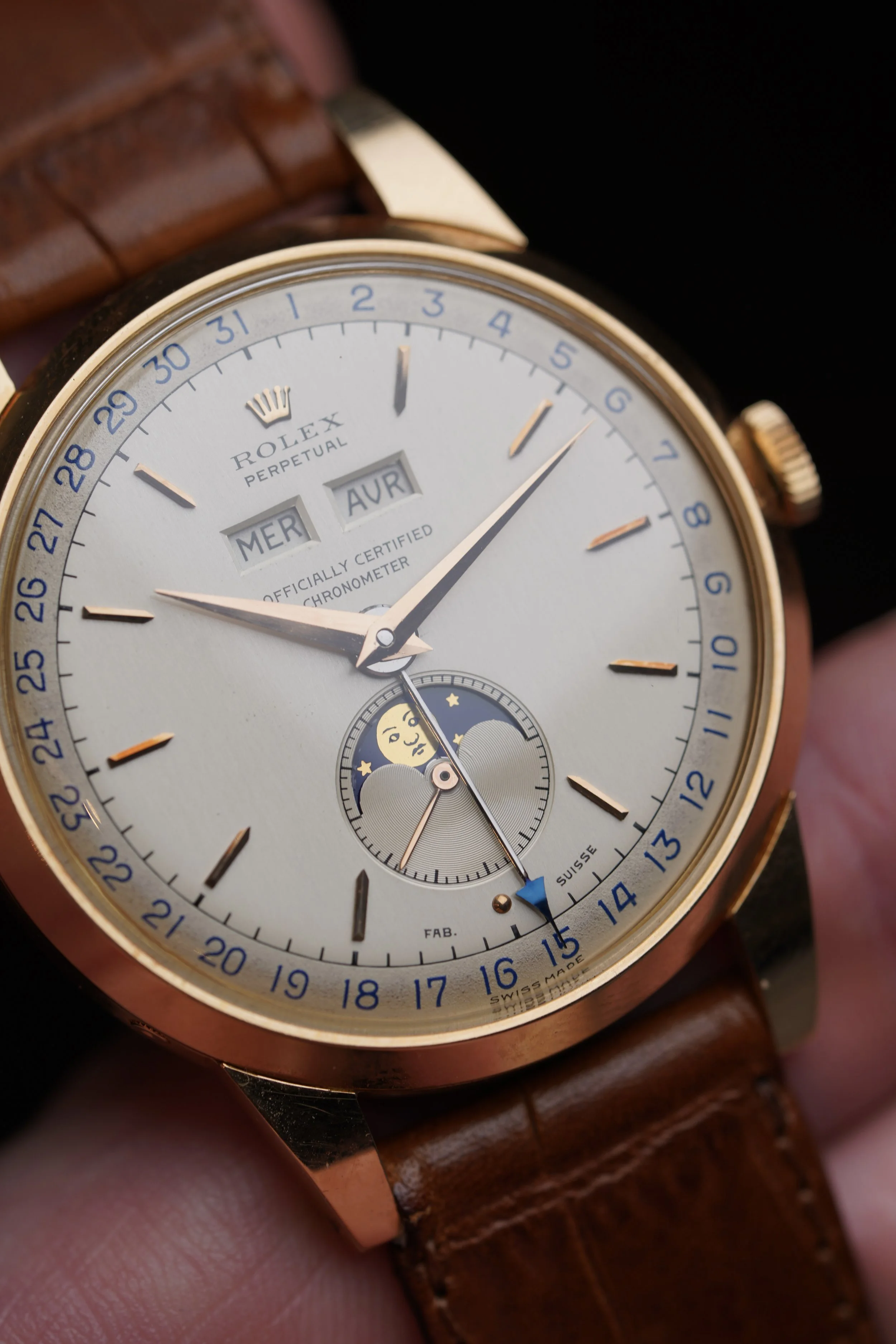
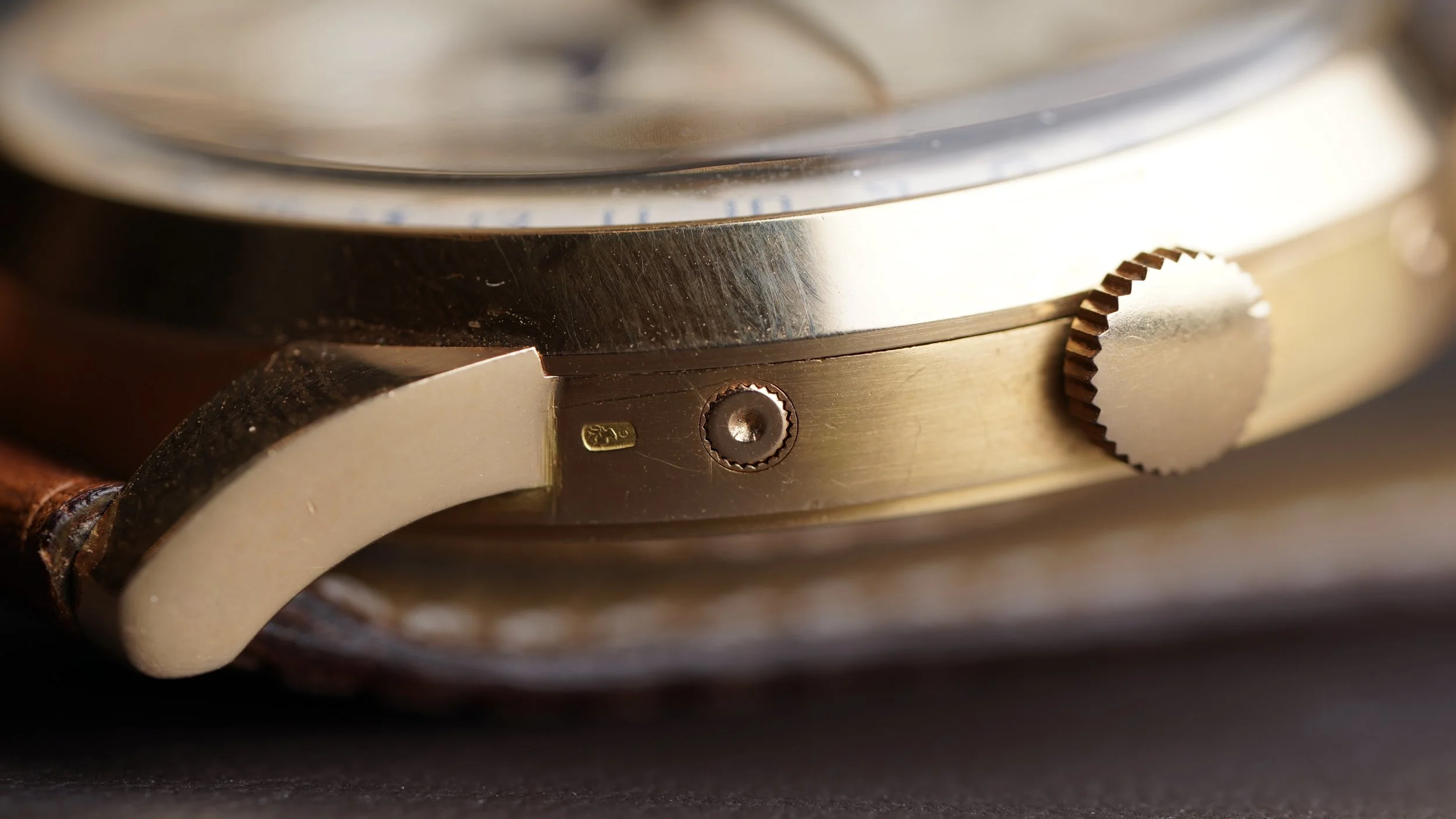
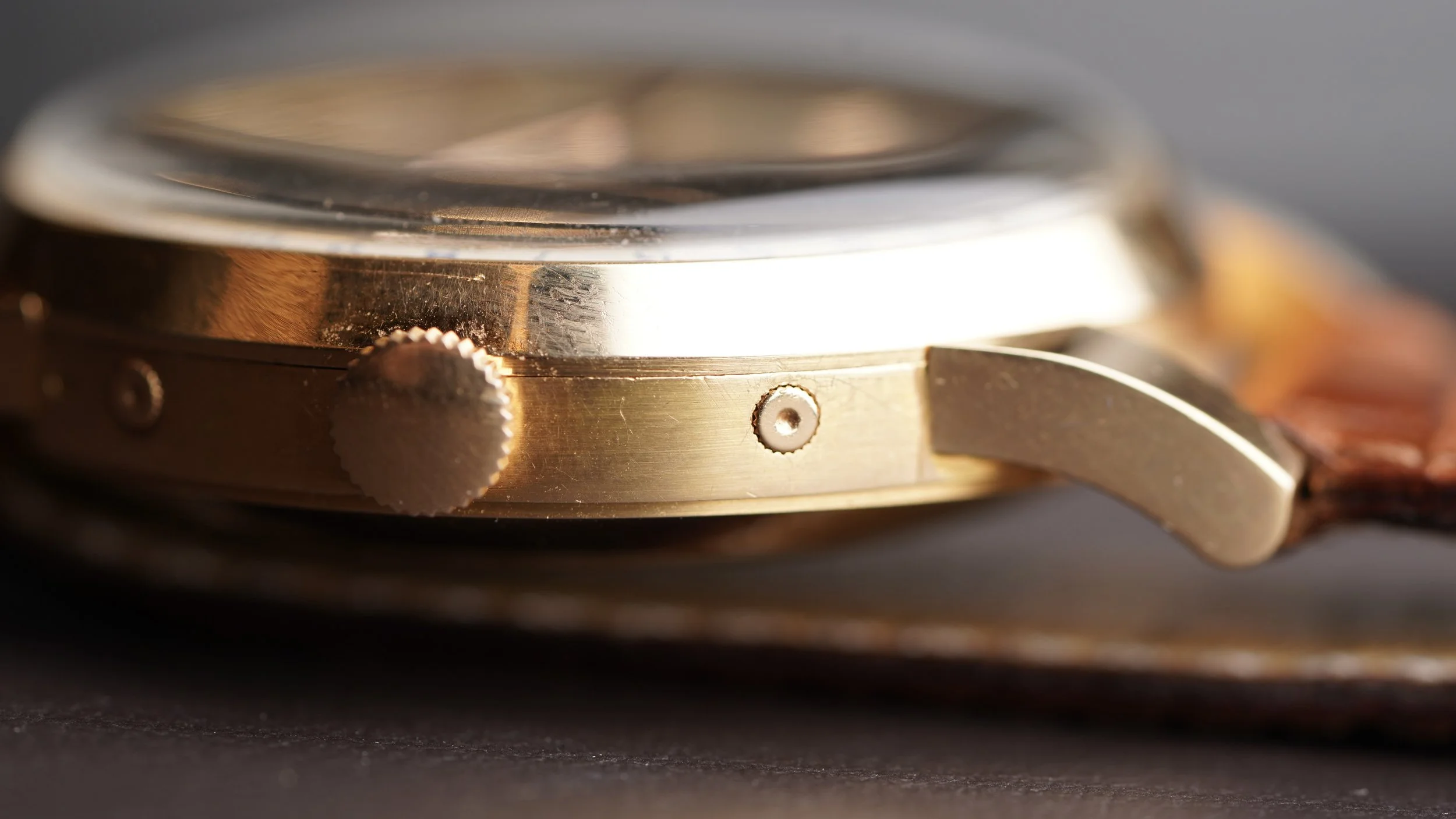
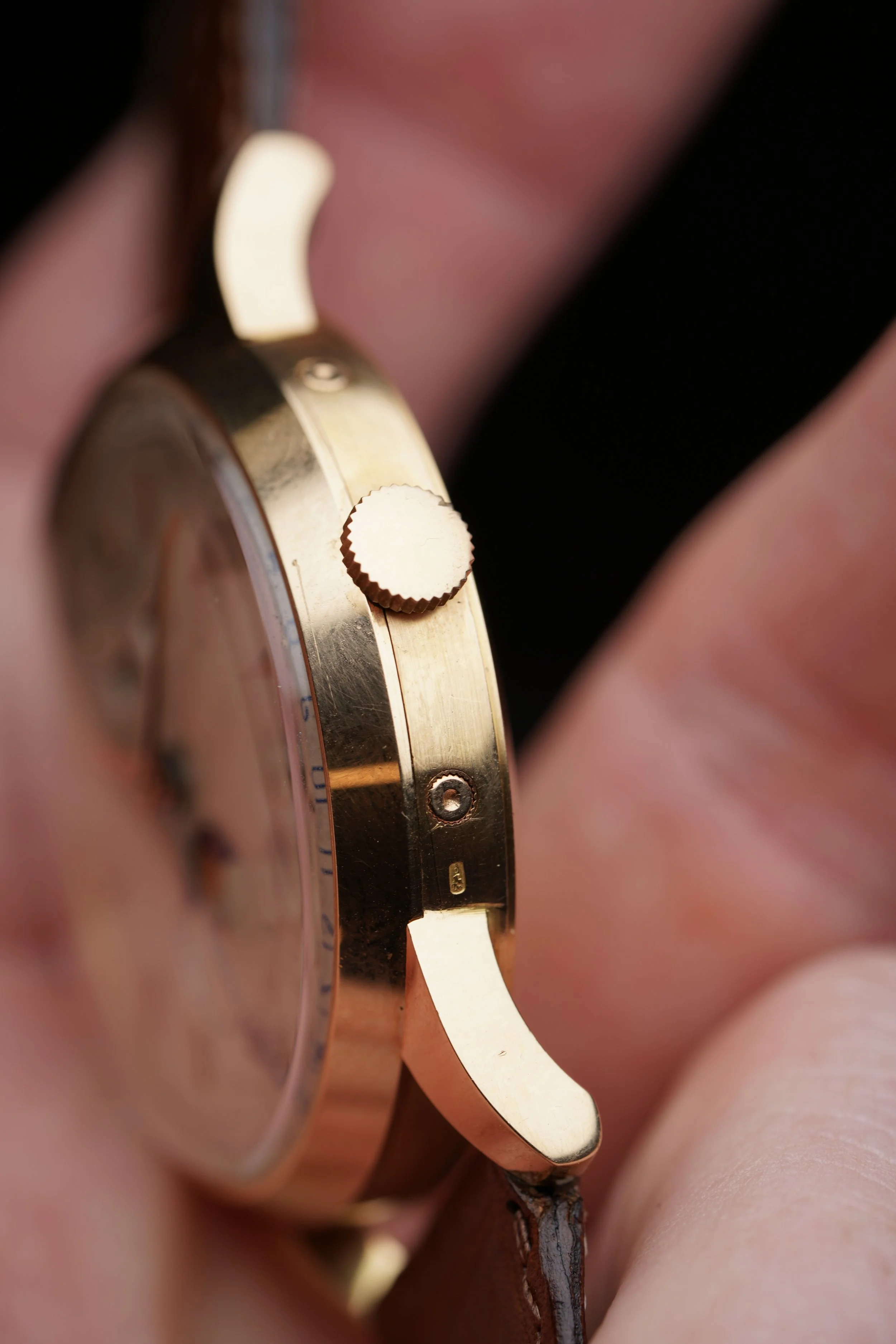
Some people downplay the 8171 because it's not a perpetual calendar at a time when Patek Philippe were making the reference 1518 and reference 1526. Rolex instead focused on an in-house, automatic caliber that was more inline with what they saw the future market wanted. Clearly no expense was spared in the production of the cases, dials, or moon phase discs. This was the crème de la crème of what Rolex offered at the time. Interesting to note, these watches have a month that advances as well at the end of the month, whereas the Valjoux 72C in the Rolex Jean-Claude Killy reference 6236 watches require manual changing of the month at the beginning of each month!
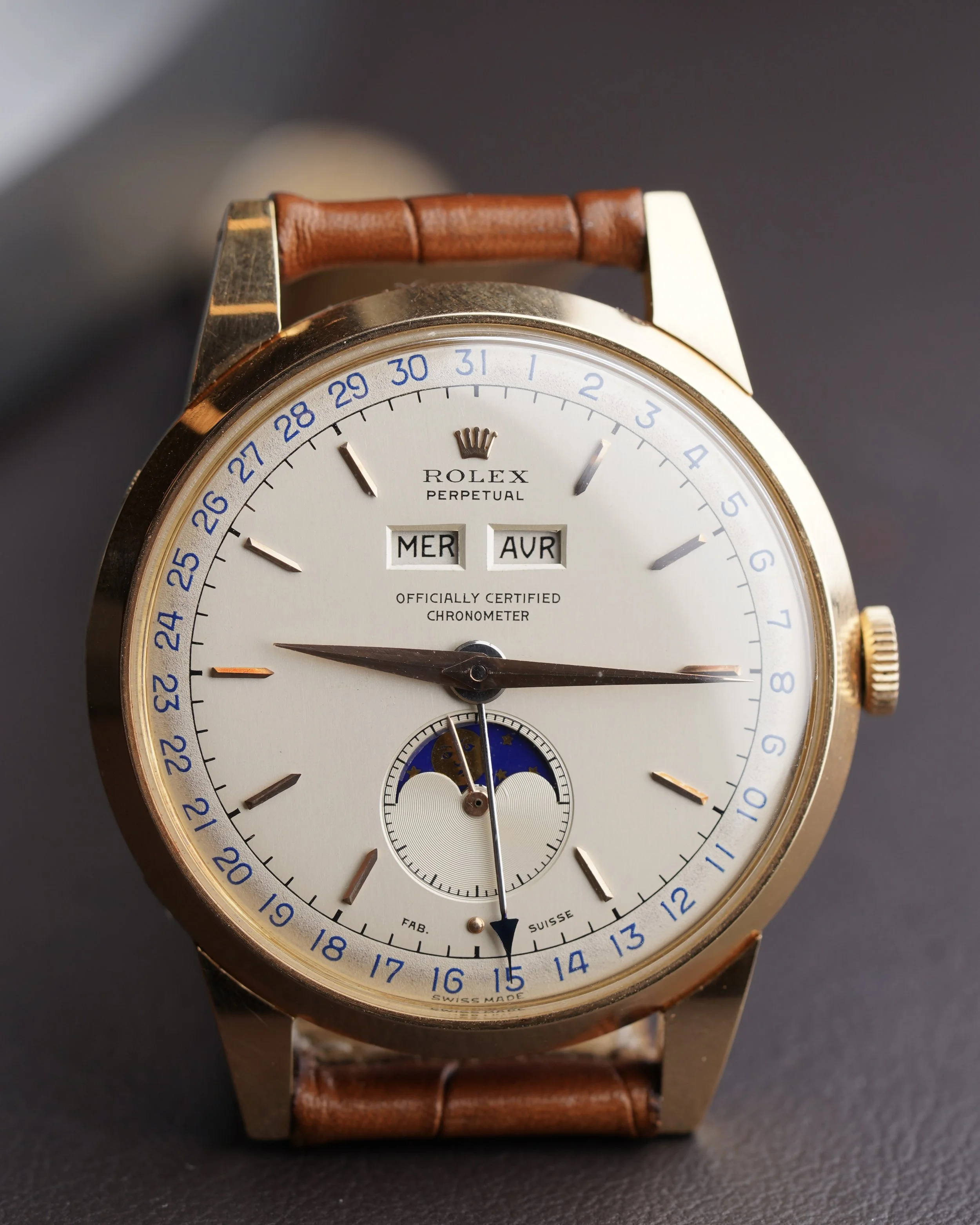
The opportunity to sell this watch is a professional highlight for the both of us. It's among my favorite watches ever made by Rolex to be honest, we prefer the reference 8171 to the reference 6062 because it wears so large on the wrist and the case is so interesting. We absolutely love this watch and we're excited to share this example with the collector community.