
The Rolex "Wide Boy" Datejust
By Charlie Dunne
The Rolex Datejust is one of the most recognizable models on the planet due to the fact it has largely maintained the same in design over the course of its production. Interestingly, the Datejust remains the longest watch in continuous production from Rolex since its debut in 1945. A great thing about collecting vintage Datejusts is the aesthetic has a healthy amount of variety over the years to keep you on your toes, but never steered too far away from the classic design. As one collector recently said, “If you’re going to get a Datejust you could get a timeless silver dial, or you could go for something a bit more obscure. Either way, you are going to be happy.” For those thinking about something a bit uncommon and a touch more sporty, you should weigh the option of a “Wide Boy”.
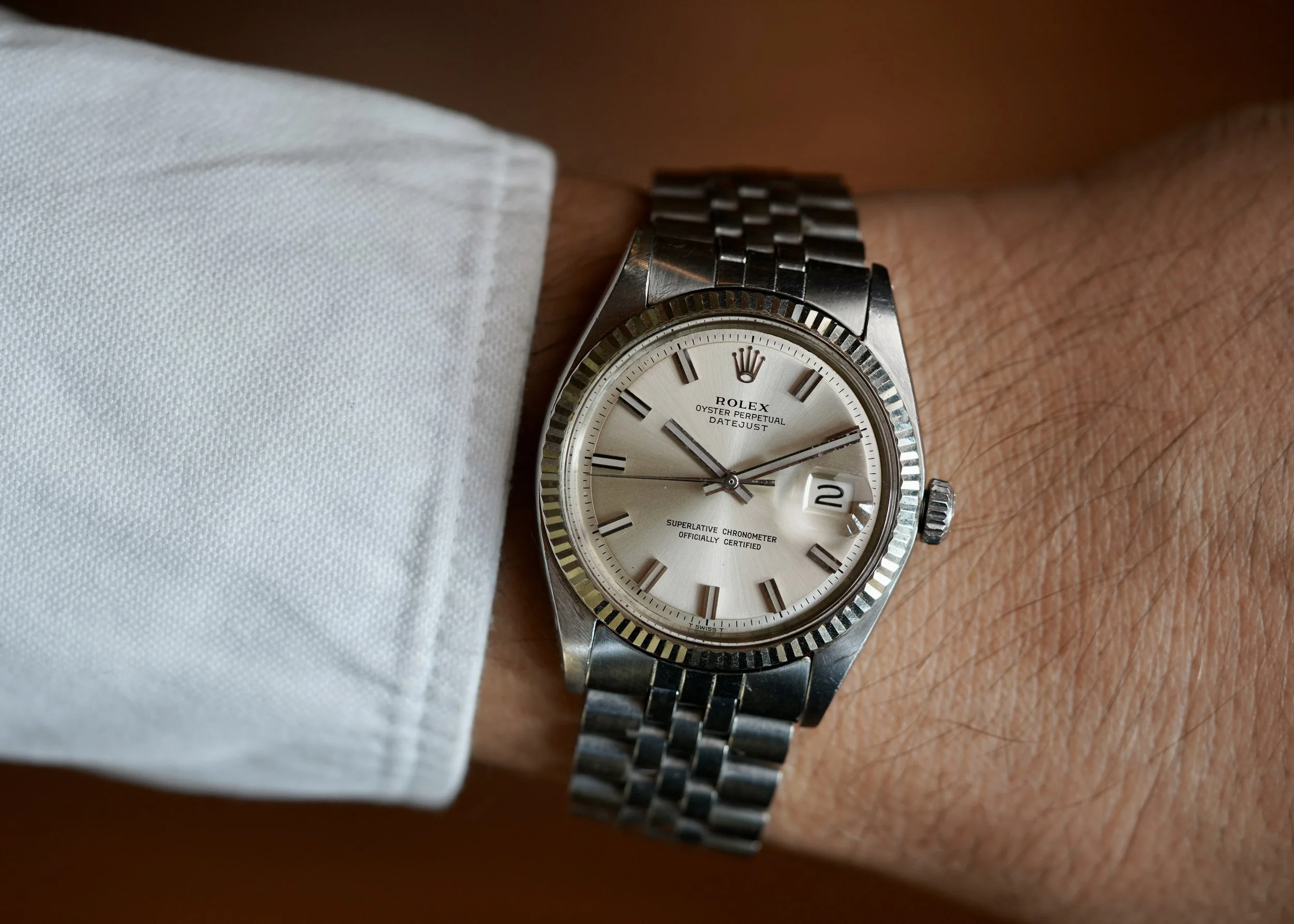
What is A Wide Boy Dial?
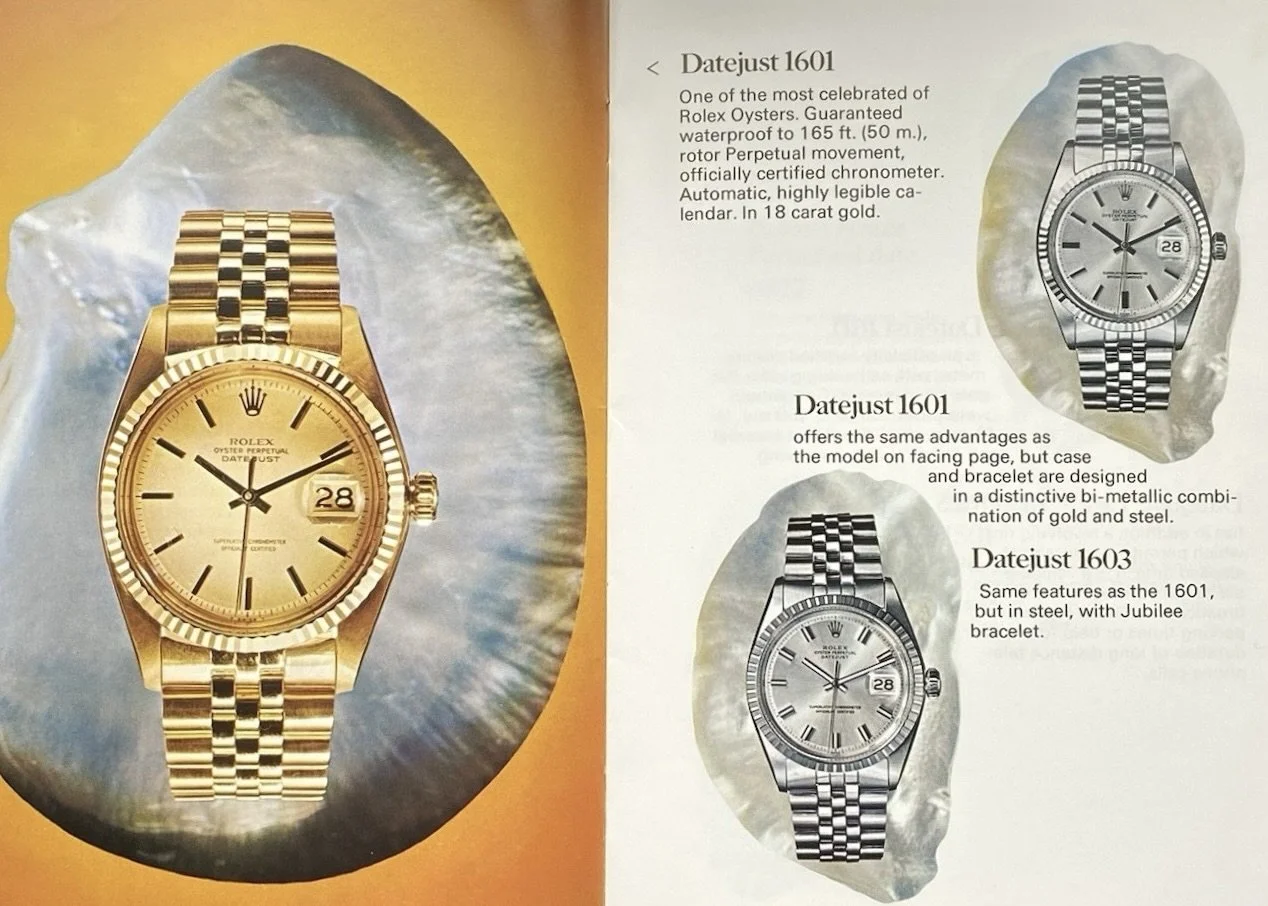
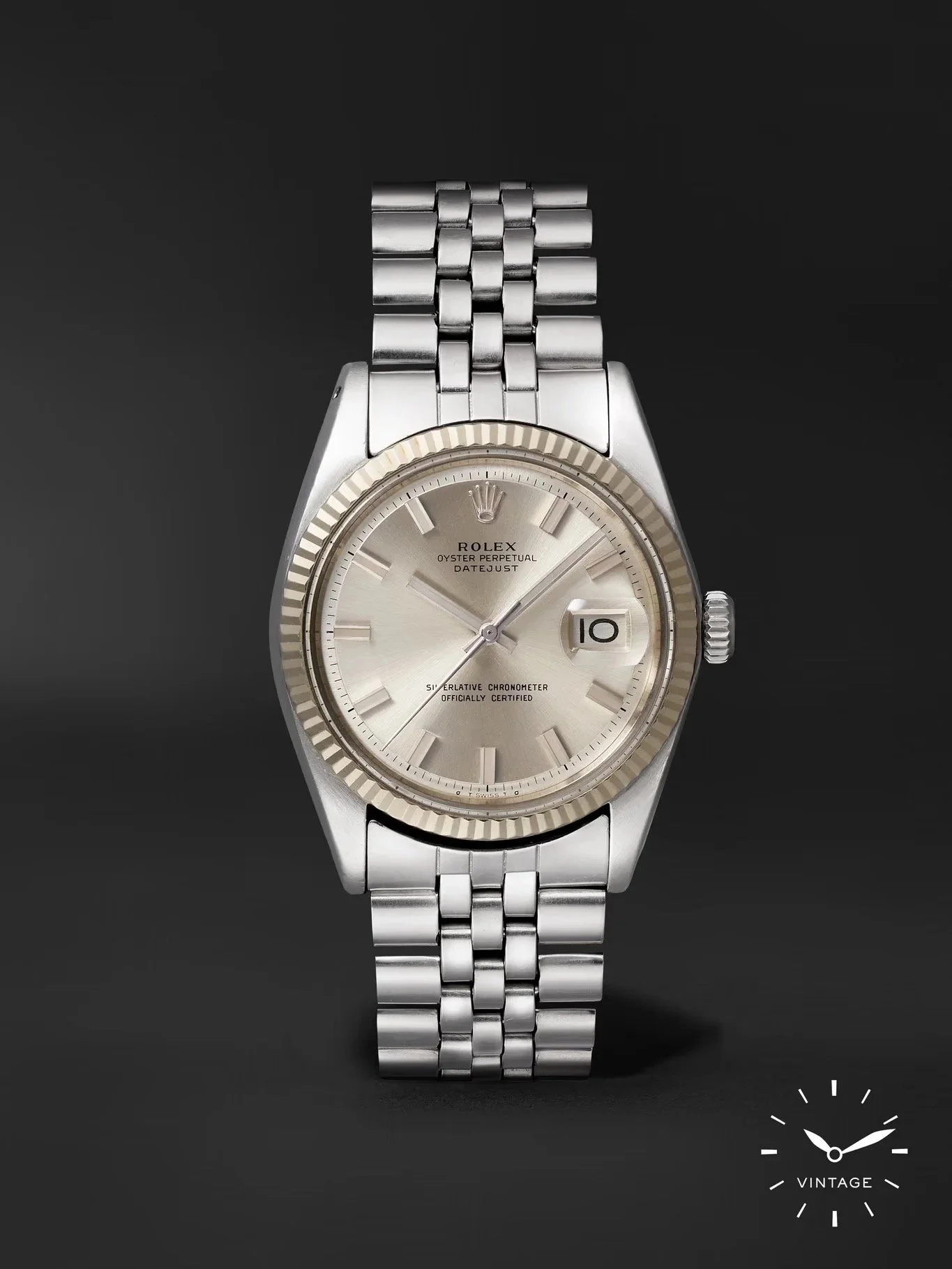
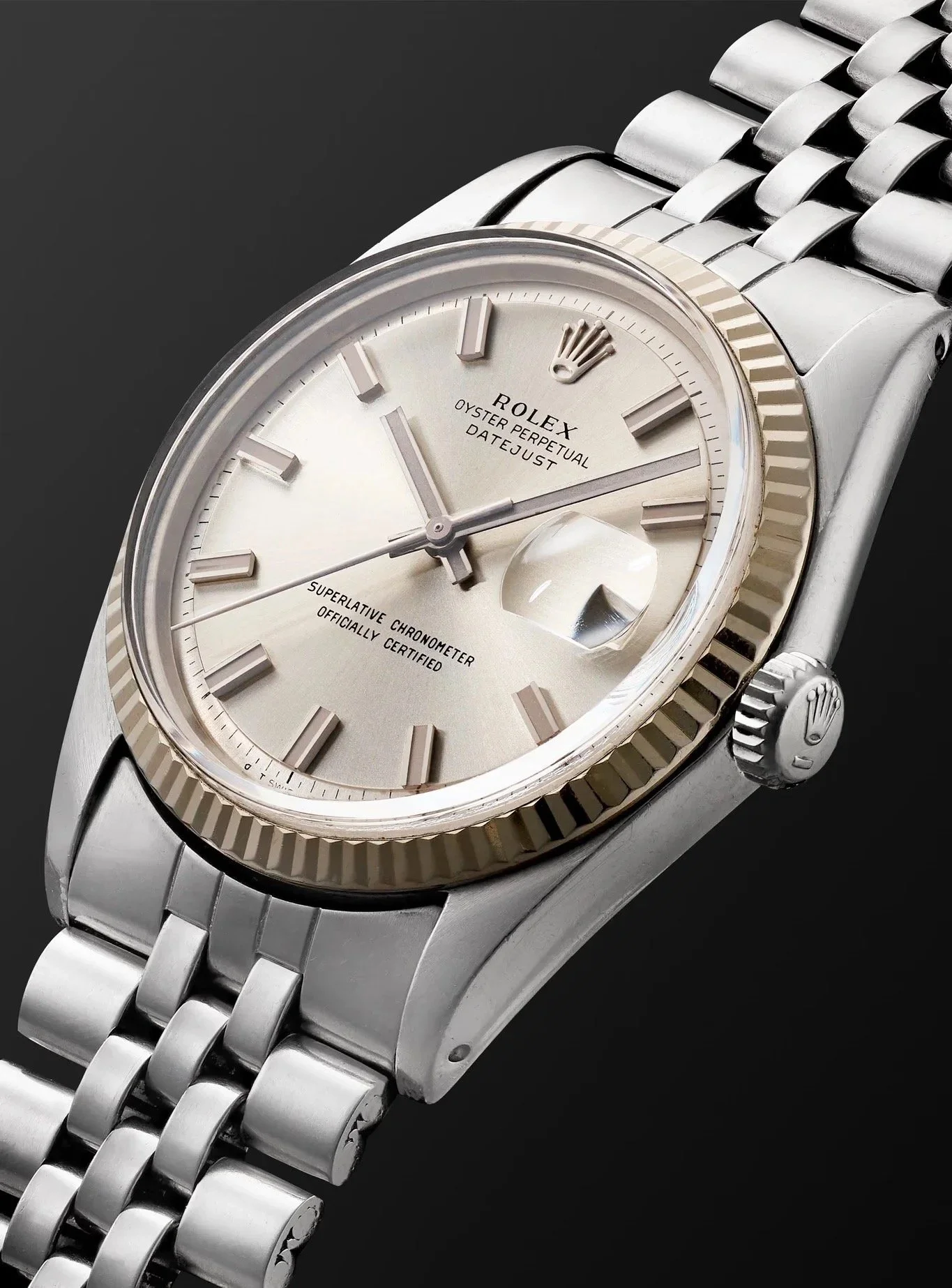
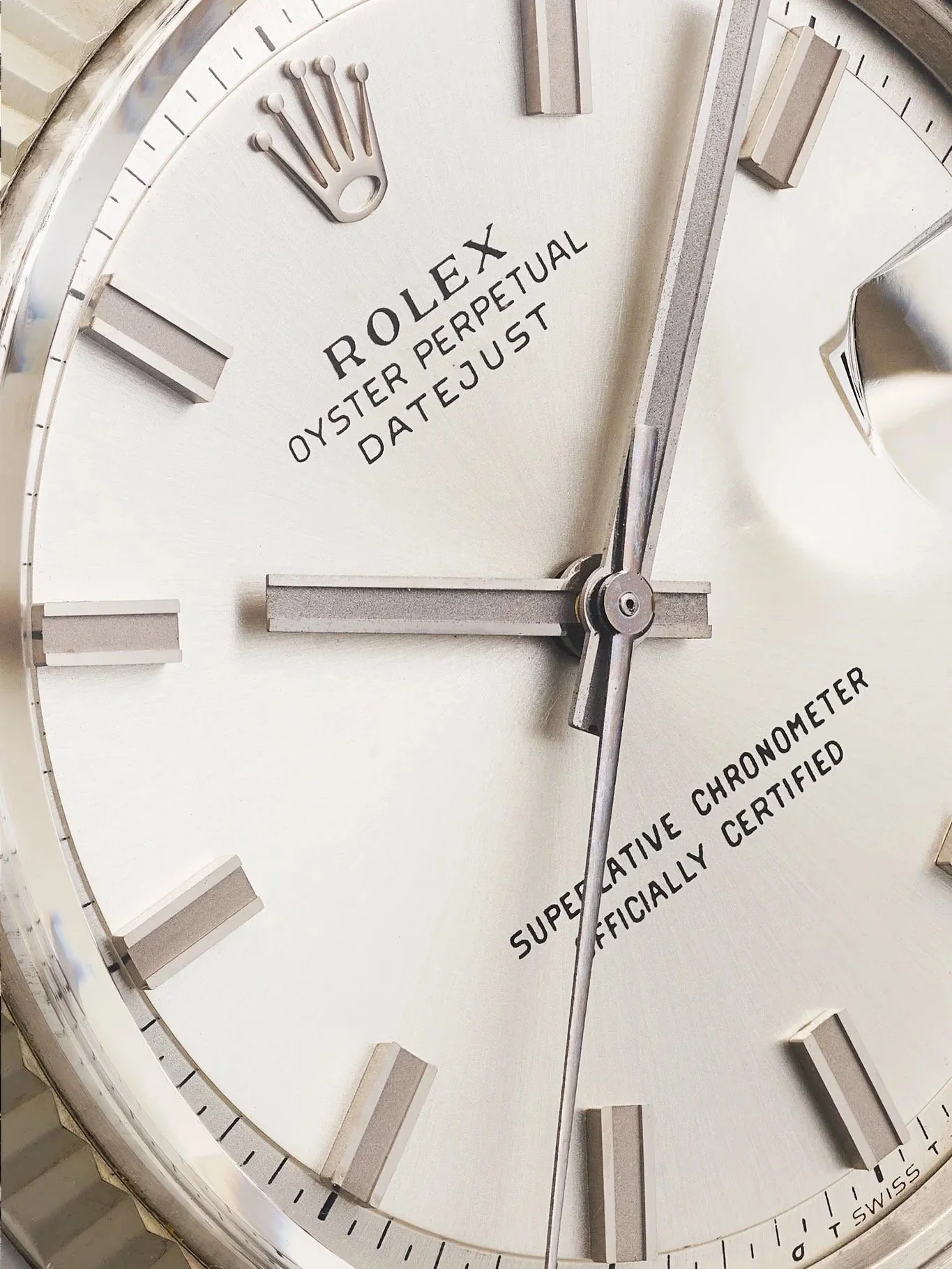
The Rolex “Wide Boy” generally refers to the stainless steel Datejust reference 1601 with a fluted white-gold bezels, and the Datejust reference 1603 with an engine-turned steel bezel (and 1600s with smooth bezels). These generally feature silver, grey and occasionally blue soleil (sunburst) pie-pan dials. While the dials are nothing rare, they can be extremely good looking. Vintage Datejusts, Oyster Perpetuals, and Daytonas all share these appealing sunburst dials, and in some examples they can have incredible color and vivid lines.
These models can be worn on leather strap, but they were sold on 62510H Rolex Jubilee bracelets and 555 end links (and on occasion American-made JB (Jacoby-Bender) Champion oval link Jubilee bracelets. There are also two-tone reference 1601s (or 1601/3s) with champagne, grey and silver dials. Additionally, there are 1601/8s which features 18k yellow gold cases! When it comes to the Wide Boy Day-Date, you will see the reference 1803 in yellow gold with silver or champagne dials (as well as 1803/9s in white gold with silver dials). In each of these models and variants there are luminous and non-luminous versions.
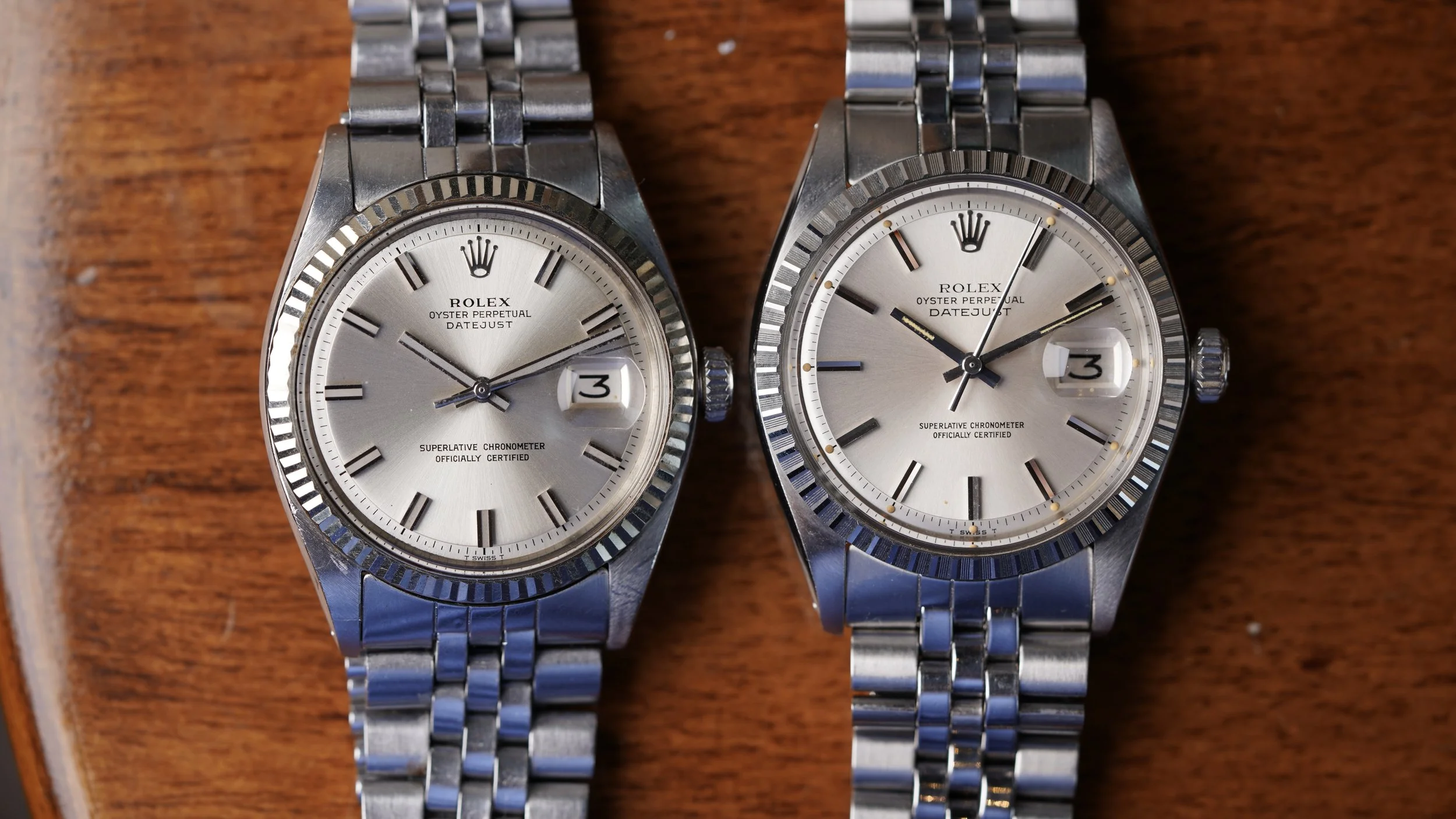
Rolex Non-Luminous Wide Boy 1601 circa 1971 vs Rolex Standard Silver Dial reference 1603 circa 1975
These dial variants are seen from circa 1969/1970 (around the 2M serial range) until the mid-1970s. Most Wide Boy dials are “Sigma” dials, however there are early examples with “T SWISS T” dials. These do not command a premium, and compared to Daytonas it is seemingly an irrelevant detail that many would not get caught up on. Somewhat of an anomaly, Wide Boys are not really seen within advertisements or catalogs (If anyone will share examples, I’d appreciate it!). The design was totally opaque from Rolex, so we are not sure the origin of this style. Although, I am inclined to spread a little rumor on forums that Gerald Genta came back from a purported hiatus with Rolex as the Wide Boy designer to get a conversation percolating. Or maybe that Gilbert Albert was secretly contracted by Rolex to revitalize the DJs look. This will undoubtedly spike the market.
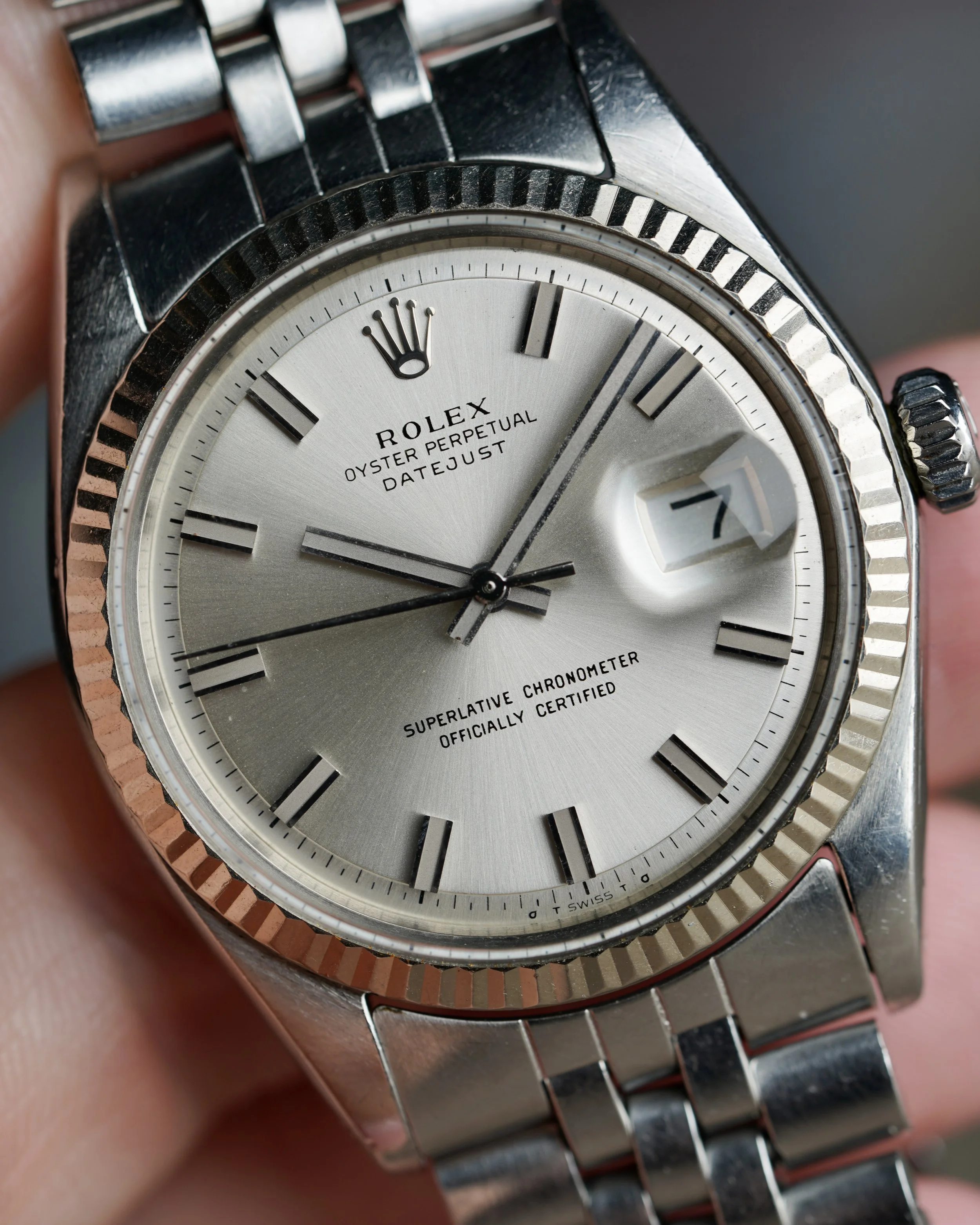
Rolex Non-Luminous Wide Boy 1601 circa 1973
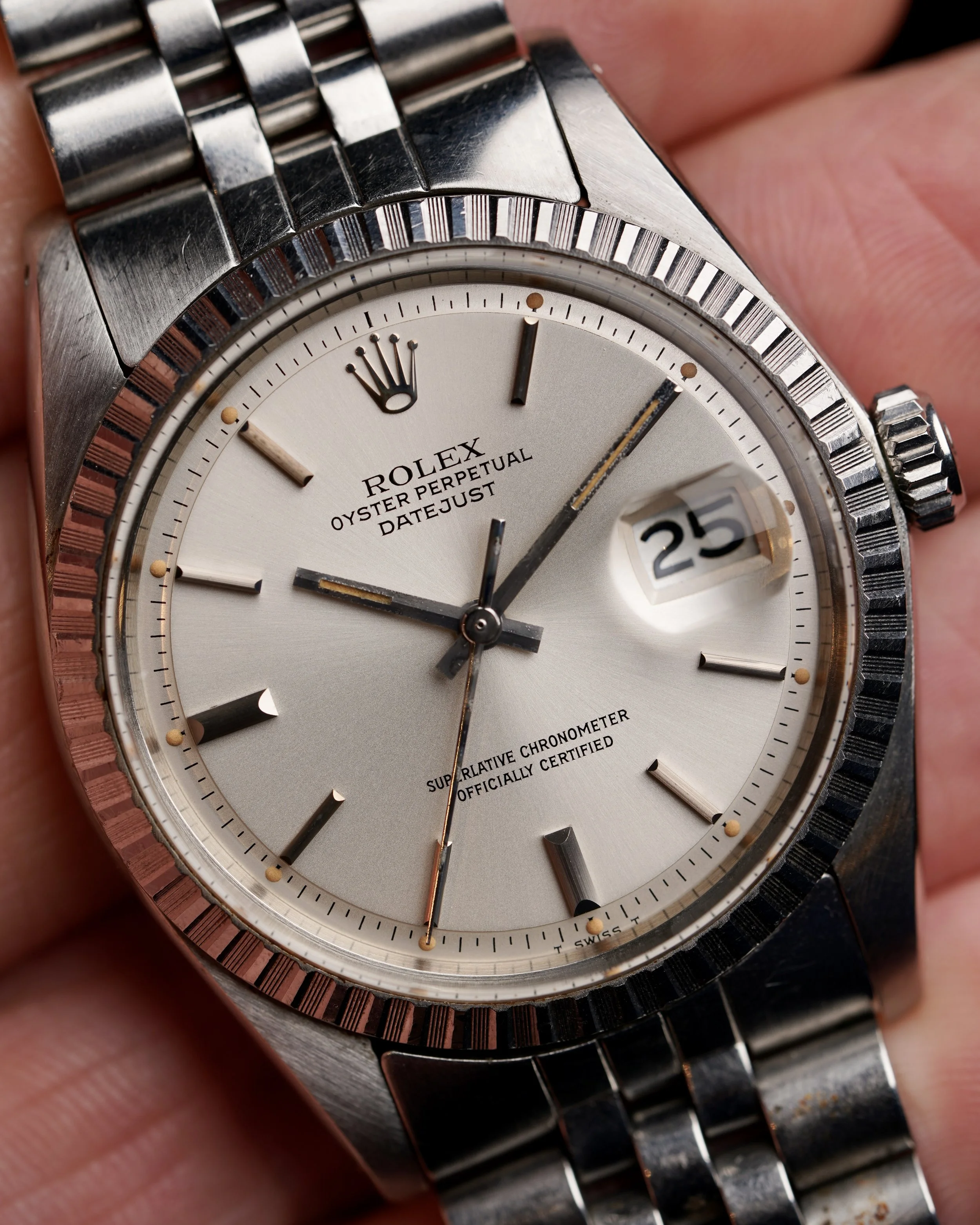
Rolex standard silver dial reference 1603
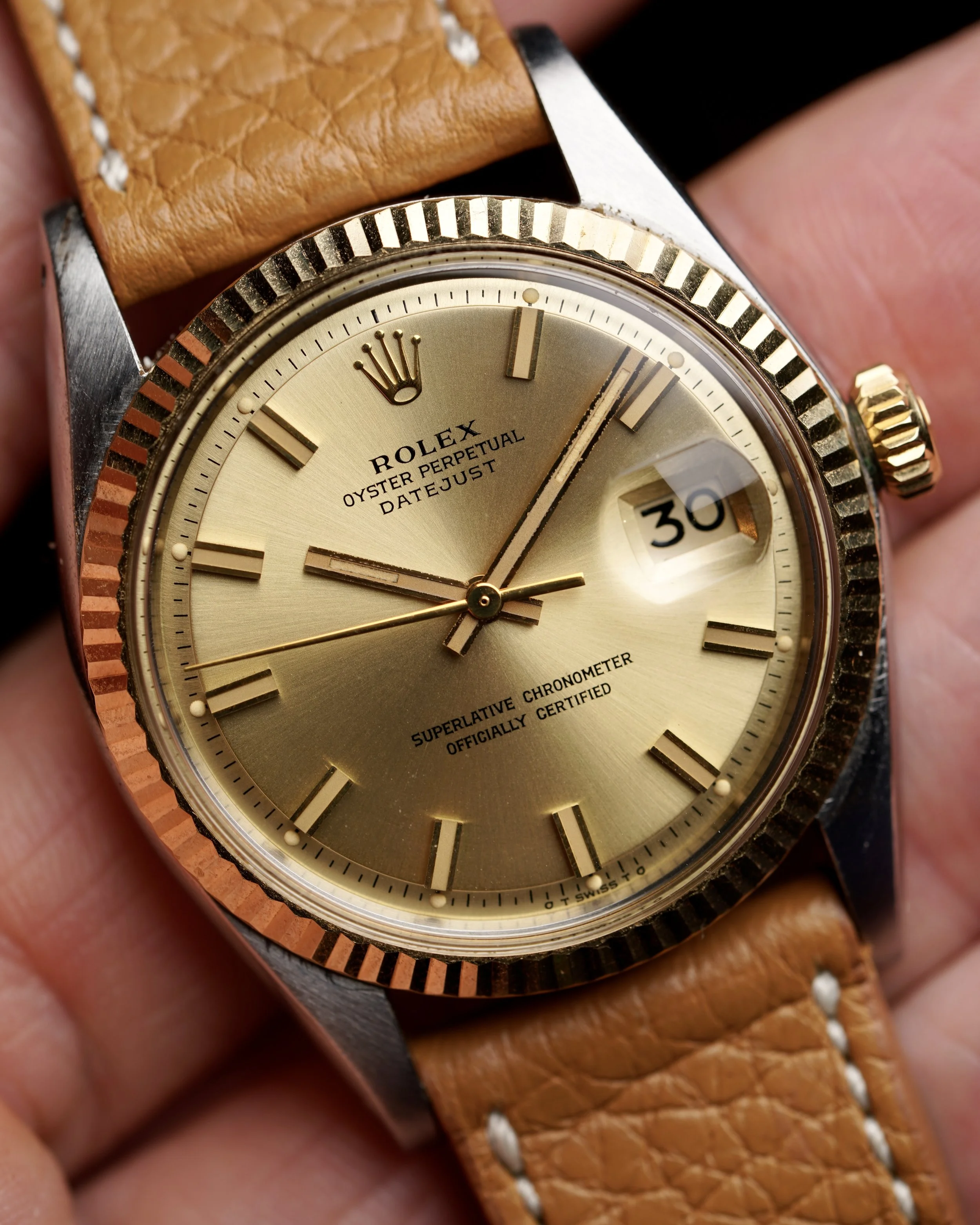
Rolex Two-Tone Wide Boy Datejust dating to circa 1974.

Rolex "Wide Boy" Day-Date Reference 1803

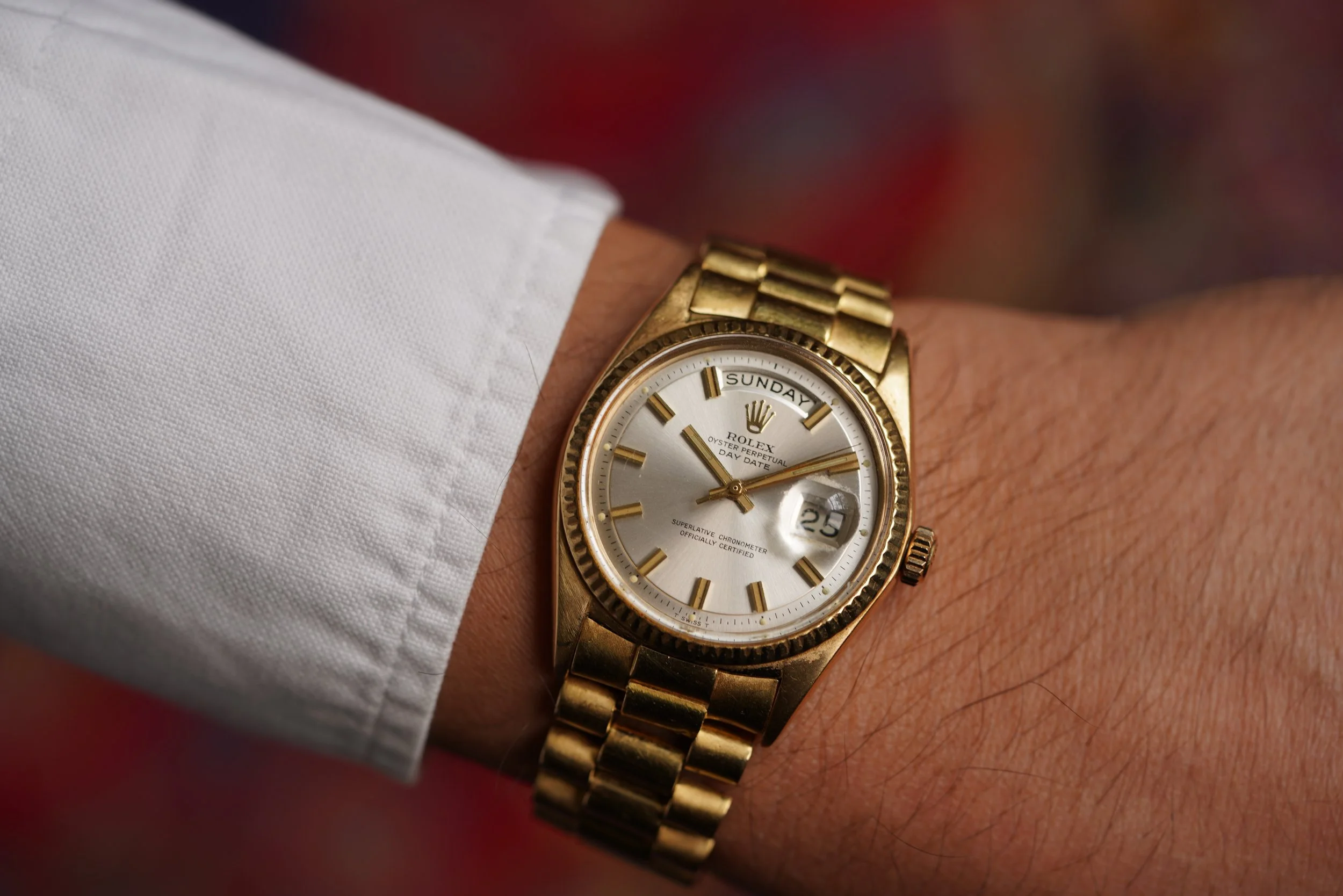
Rolex Wide Boy Day-Date 1803 circa 1969.
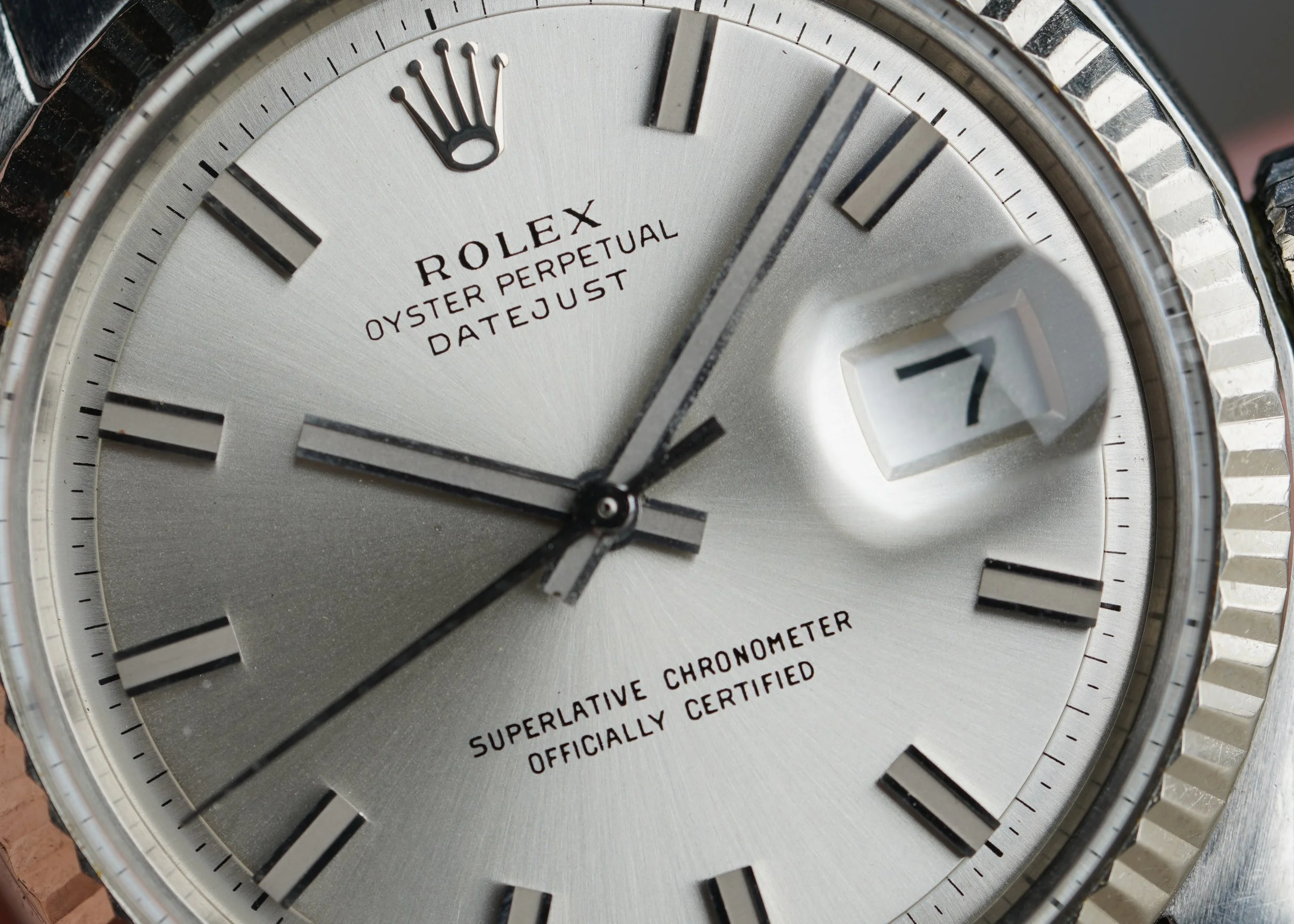
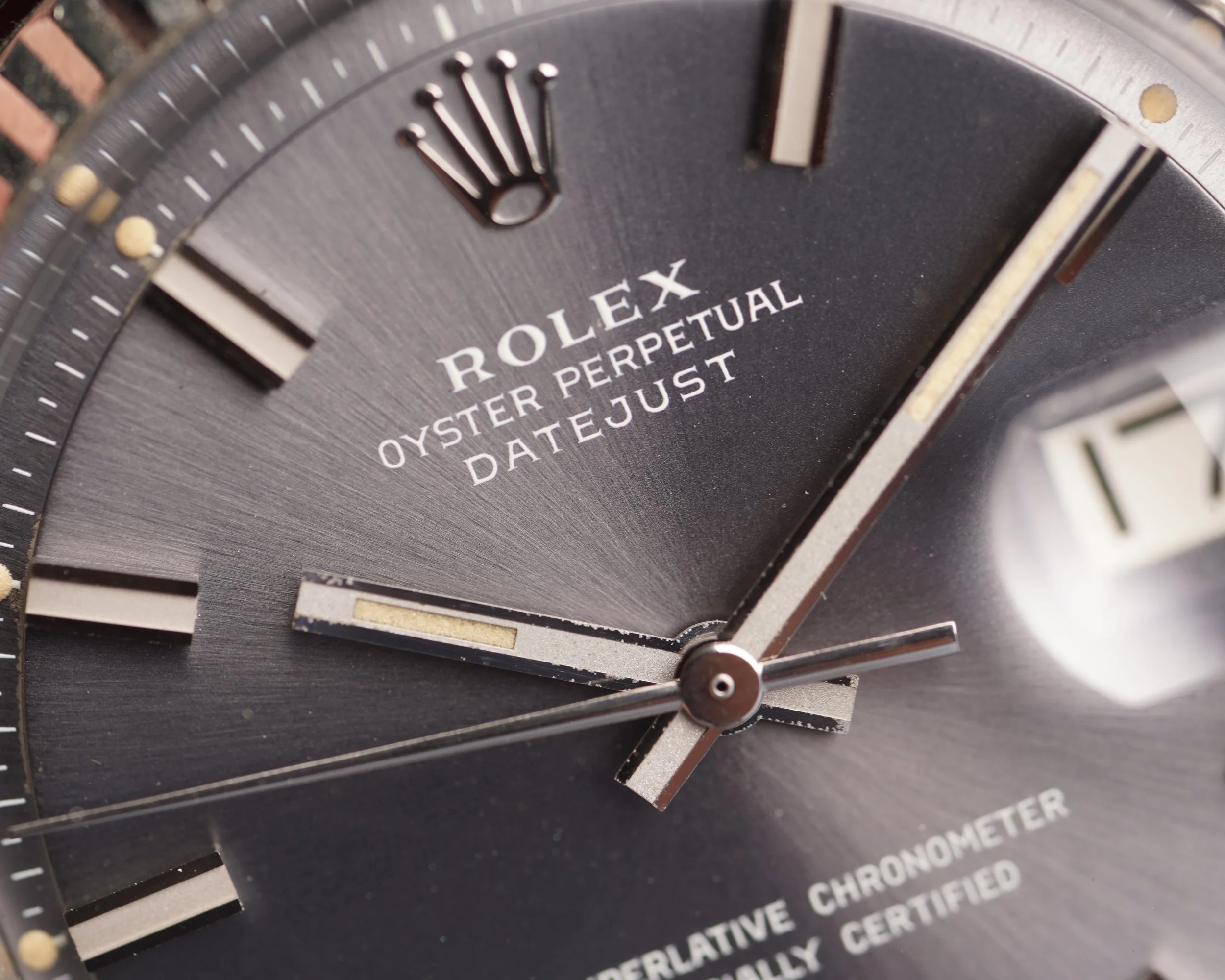
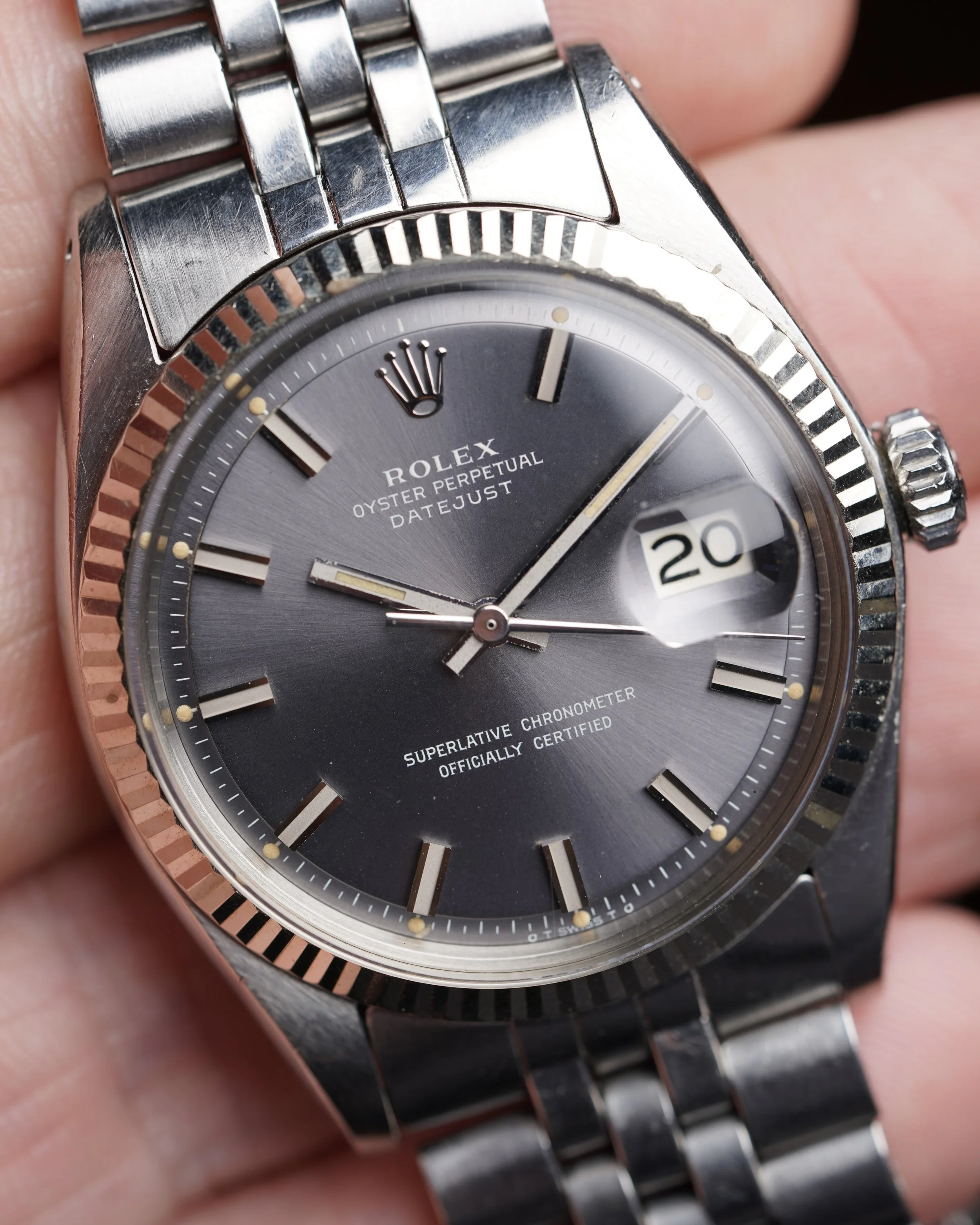
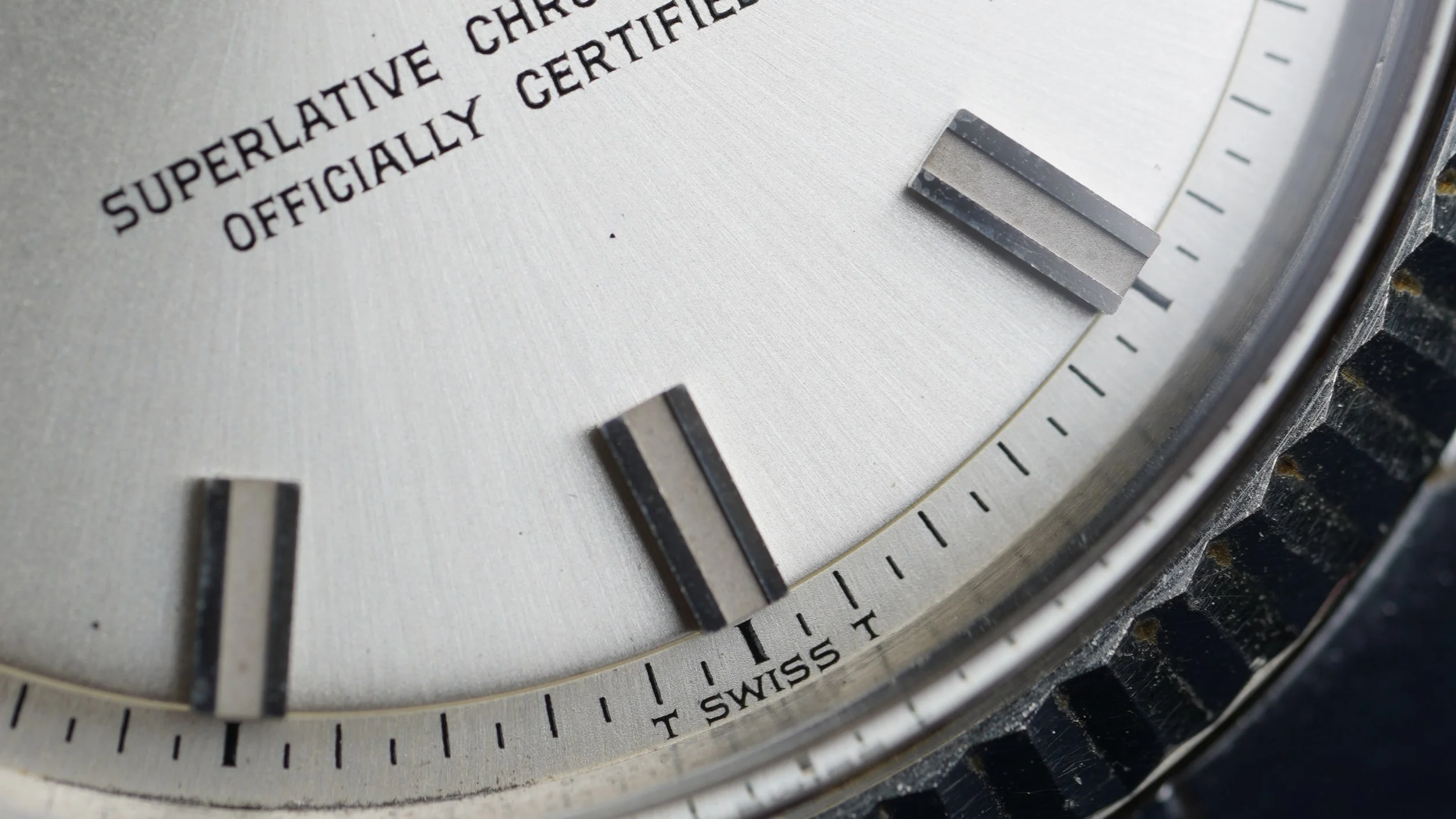
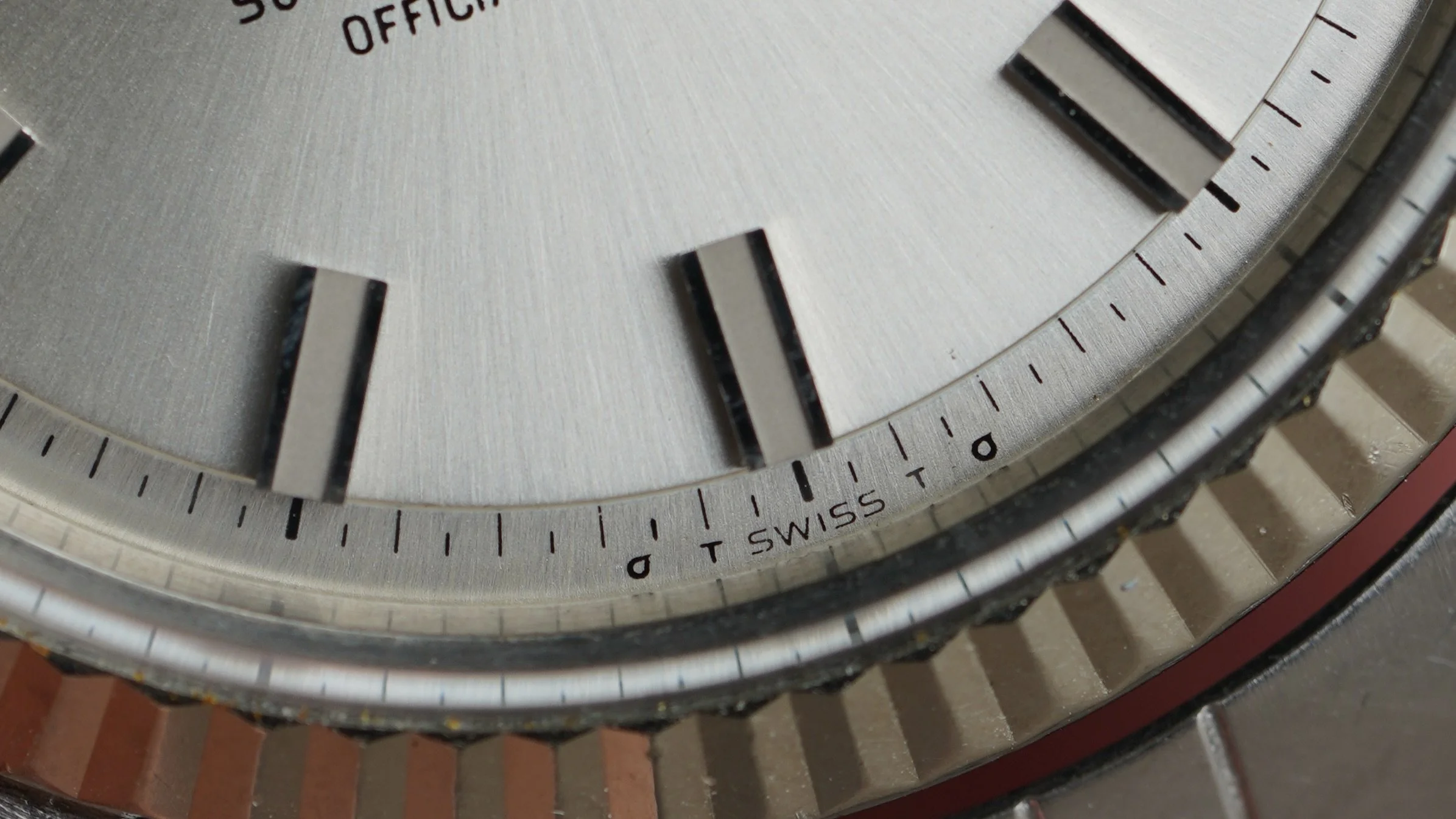
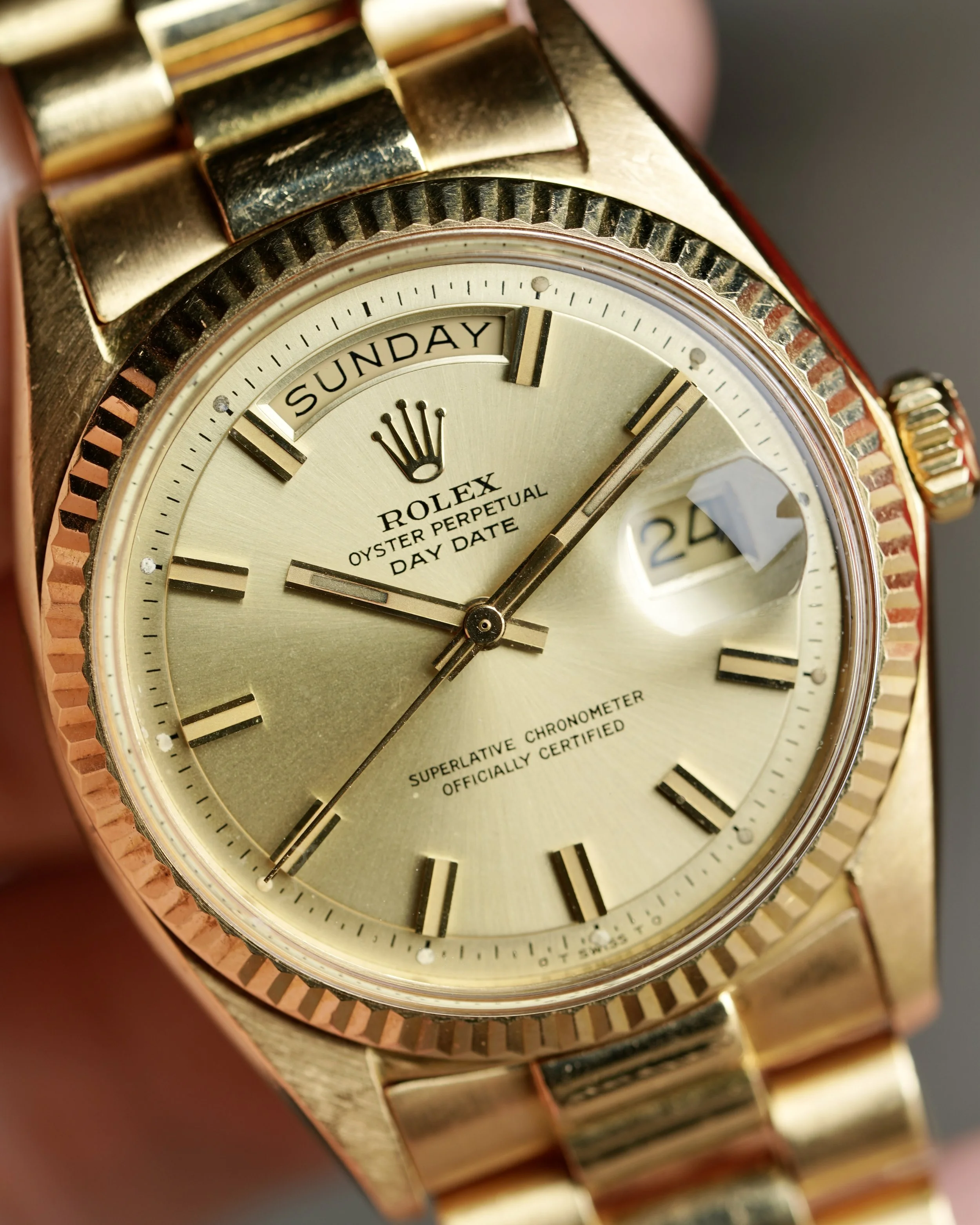
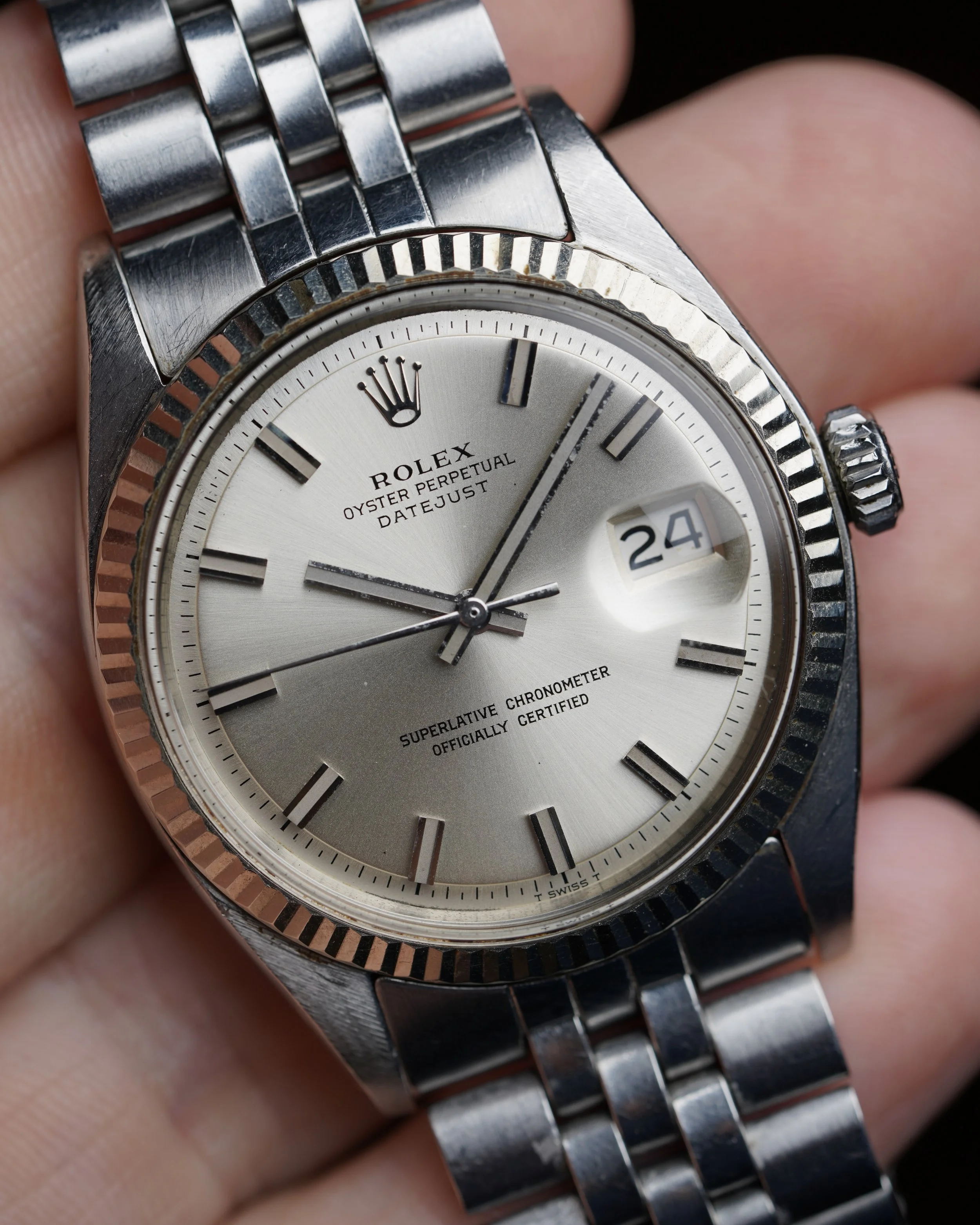
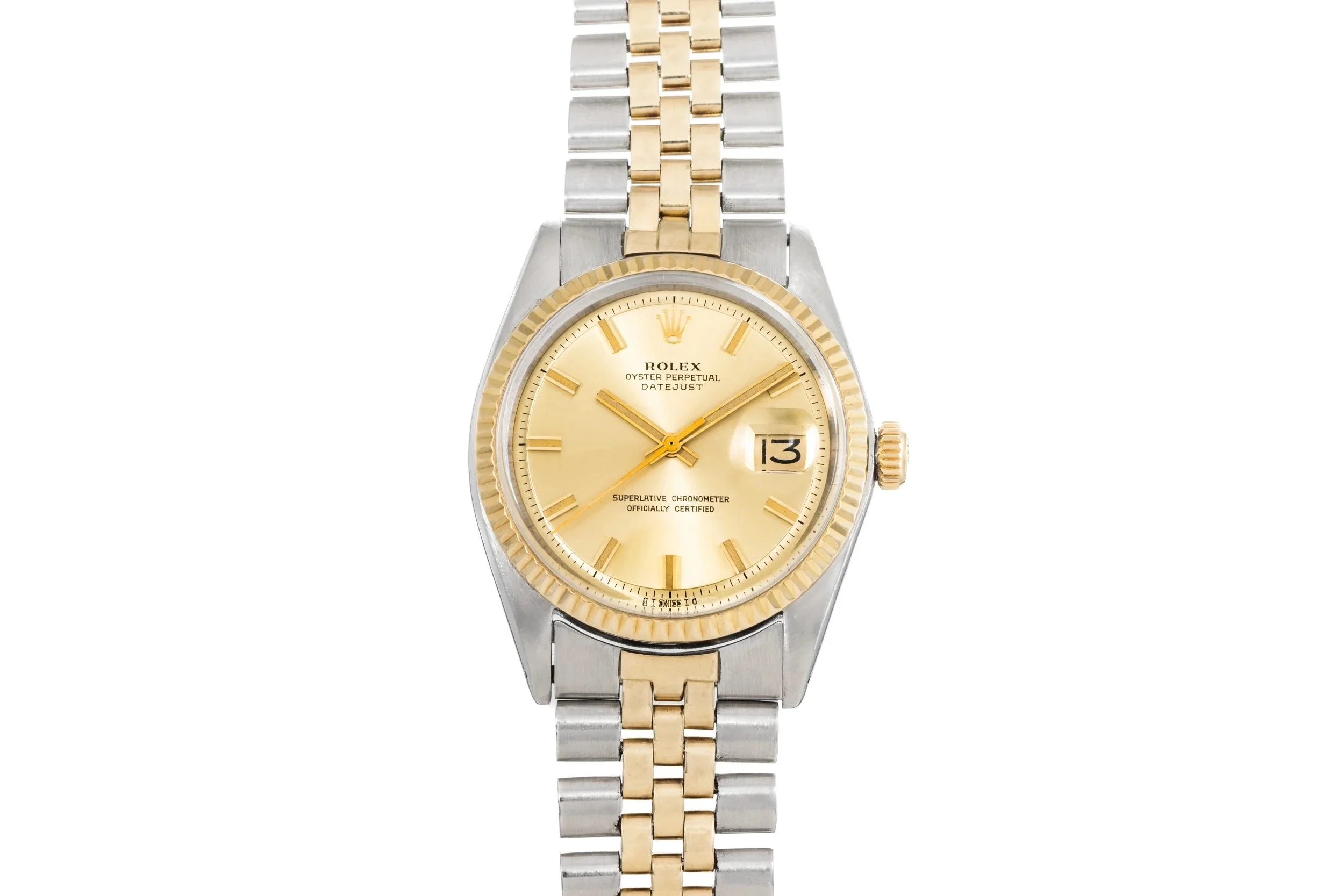
Image credit: A:S
Play That Funky Music Wide Boy!
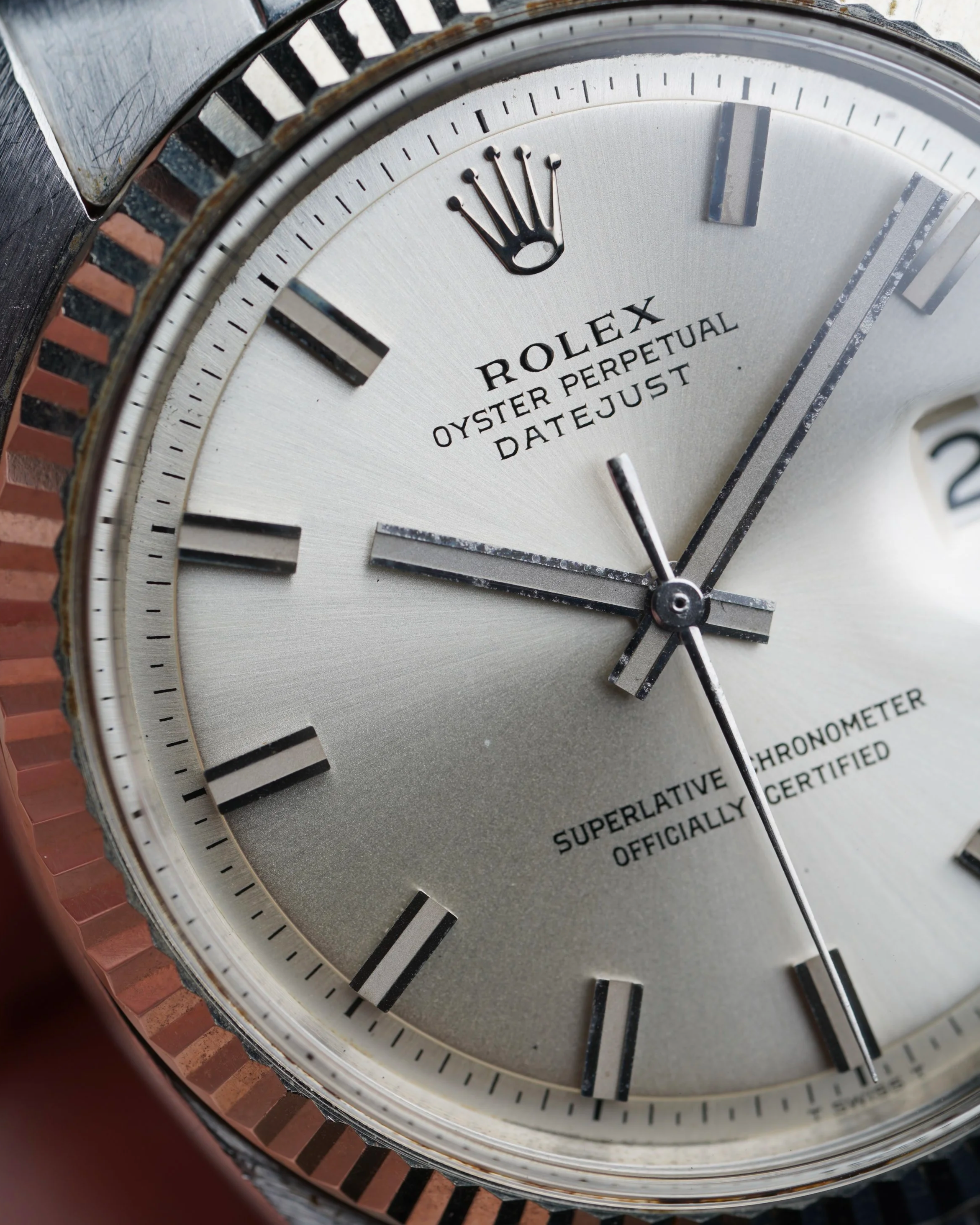
The first impression of a “Wide Boy” dial is pretty easy to identify. It is relatively twice the width of the standard hour markers. Although you typically see discrepancies in the handset not matching the dial. It is quite common that a Wide Boy dial will be in a Datejust with a standard luminous Datejust handset. The Wide Boy dial is a different animal from the “Buckley” dial in that they were not necessarily offered as loose dials at point of sale, but they were often swapped out of Datejust for the thinner markers. Interestingly, these appear to have a higher ratio of non-luminous dial/hands than found in other Rolex models. Rarely do you see non-luminous Datejusts, but with Wide Boys it is a bit less rare.
What Do Collectors Think of The “Wide Boy” Datejust?
Wide Boys are not mainstream dial variants nor is it a super obscure model. A collector generally chooses the traditional silver-dial Datejust. Perhaps a rarer a grey/blue. A Wide Boy is one of those watches that receives enthusiasm for being known, but is just less of an obvious watch to seek out. I asked Scott Sawaya of 10thWATCH for his opinion on the dial variant. Sawaya’s response was profound, stating: “It is widely regarded as special!”
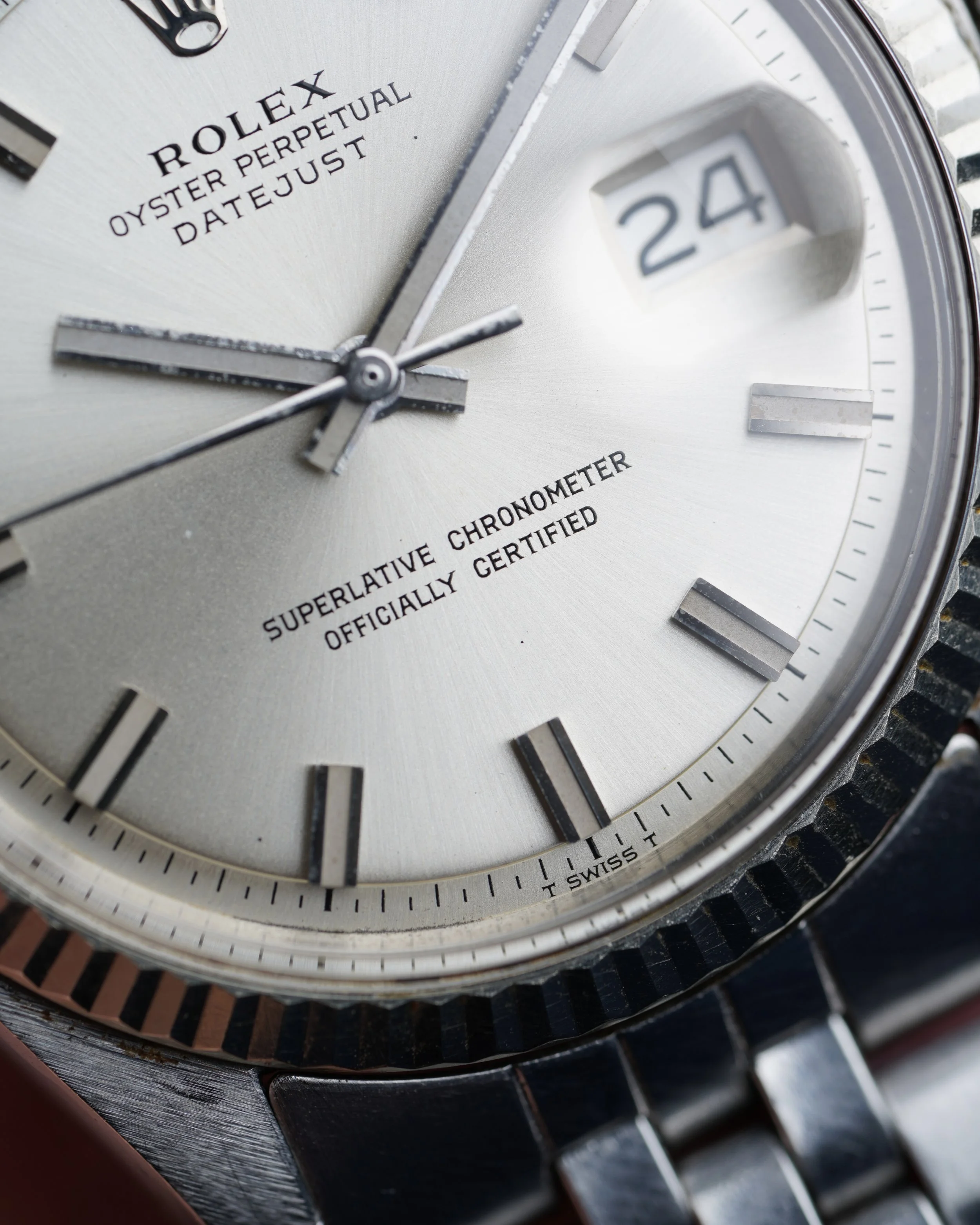
The model lives somewhere in the middle of a dress and sports Rolex. Every vintage Datejust is a 36mm diameter watch, however this changed around 2009 when the Datejust II was offered in 41mm (GROSS!). The wider handset and hour markers give an impression that the watch wears larger on the wrist. With the traditional hour markers, the watch can appeal to the dressier side, whereas the Wide Boy wears a bit more aggressive. It is also extremely legible. When the minute hand aligns with the marker, it is a bit more emphasized and a fun thing to glance down and notice. The center or each hour marker and hand appear to have a frosted texture that appears to be sandblasted. This detail is quite attractive and distinct from many Rolex watches.
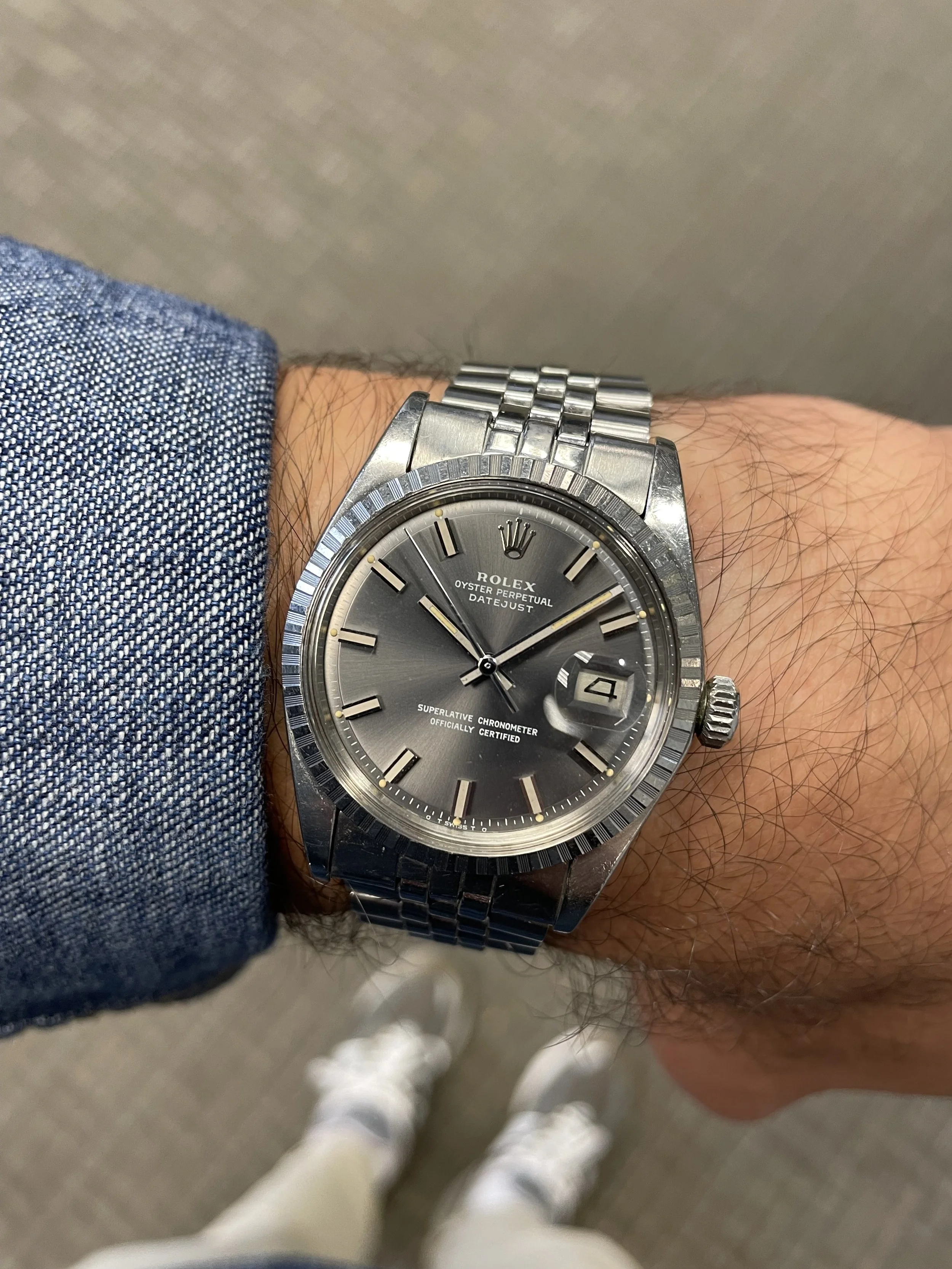
Brandon Frazin (@brandonfrazin1680) Director of Vintage at Bob’s Watches is also a fan of the Wide Boy Datejust, citing his love for the model.
“It is one of my favorite, if not my favorite Datejust variations because it’s such a subtle detail that once you notice you can’t unsee it.”
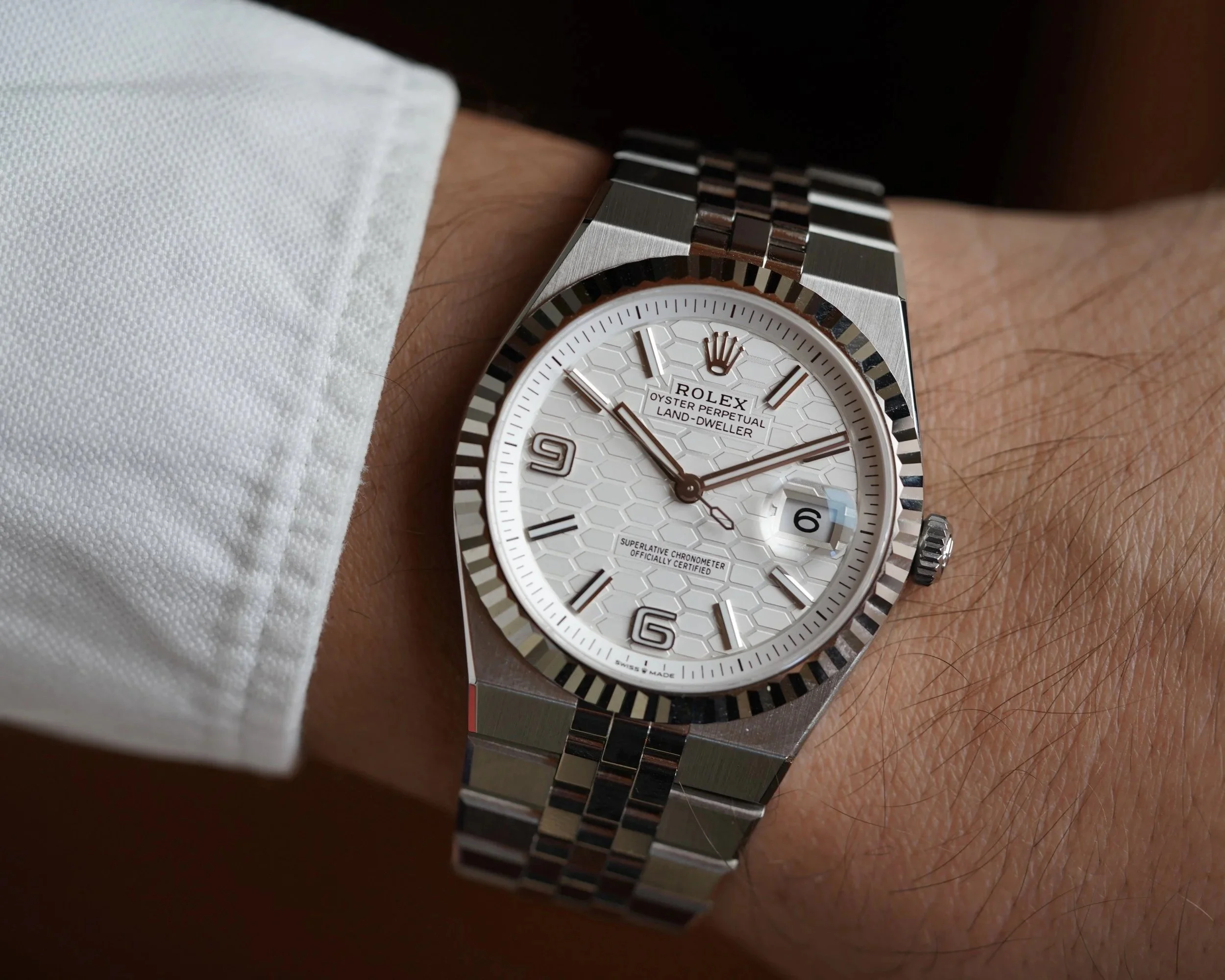
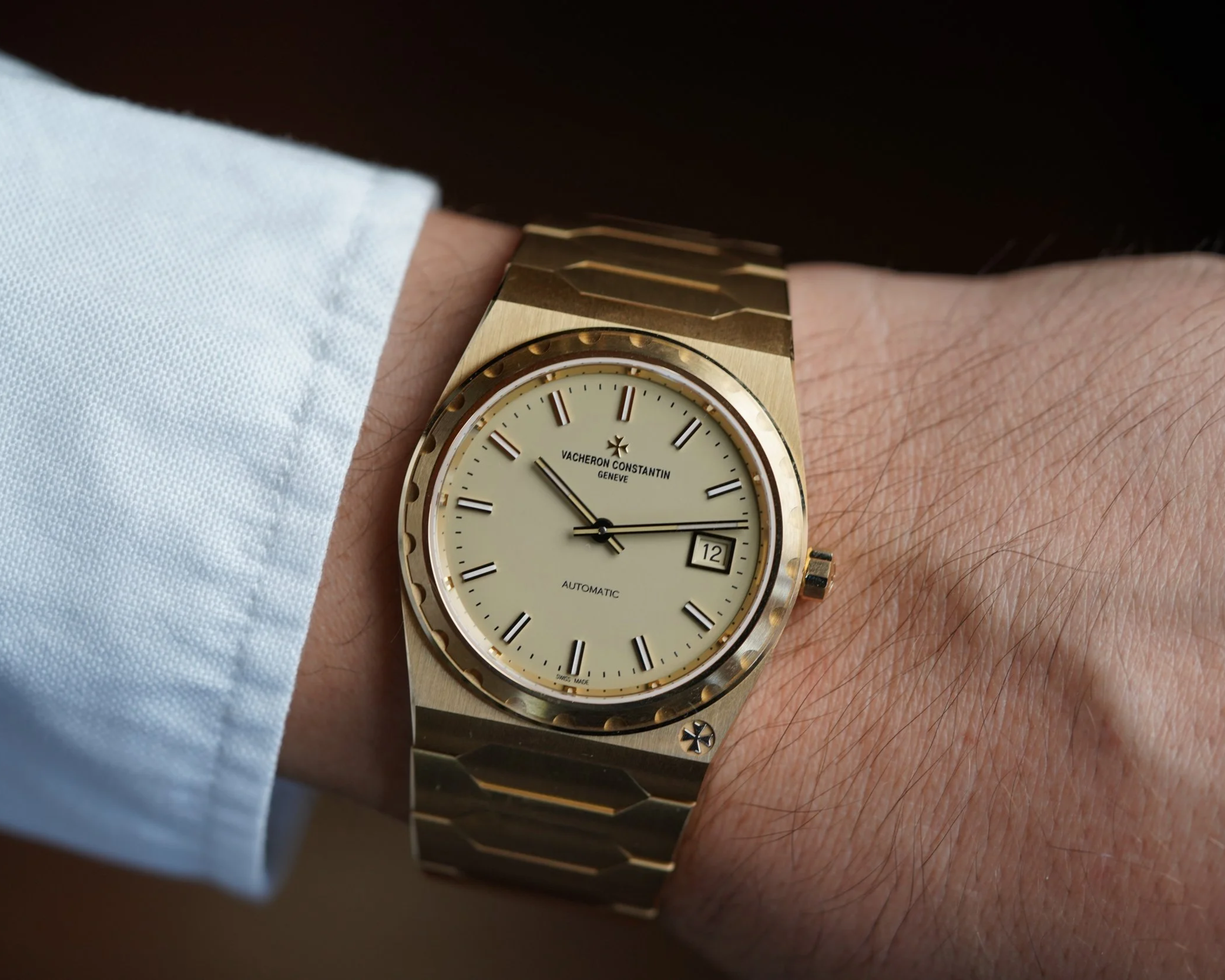
While the Wide Boy may feel like a dated look, it is in no means isolating to Datejust enthusiasts as an Oysterquartz may be. The Wide Boy design really only lasted in the 1970s for all manufacturers. The Heuer Camaro, Rolex Datejust, Memovox and various other watches incorporated these wide dial markers, but the look was short lived. On the flip side, the wider handset sometimes appears back in the picture with newly released models such as the Vacheron Constantin 222 and Rolex Land-Dweller which take this subtle design cue in the hands. Personally, I quite like the far out aesthetic of the Wide Boy dial, as it is an instantaneous conversation starter with collectors. It is not loud and not too daring. While not the focal point of these watches, the soleil/sunburst finish on these dials is incredibly, and the serifs/font are an attractive note when you look closely. One small note, the “Superlative Chronometer Officially Certified” font will be the slightly longer format which can be seen on some 4-digit Datejusts from the period.
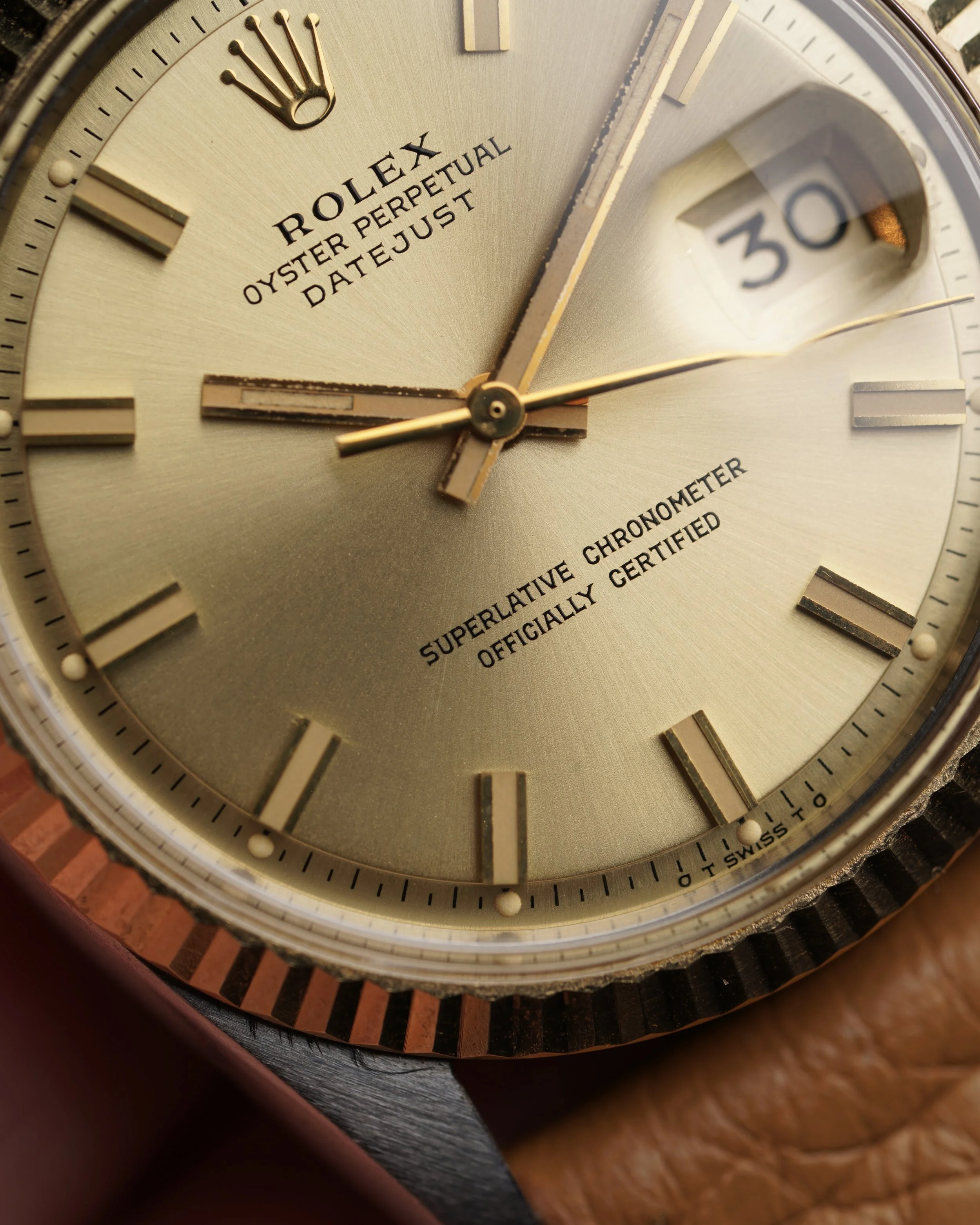
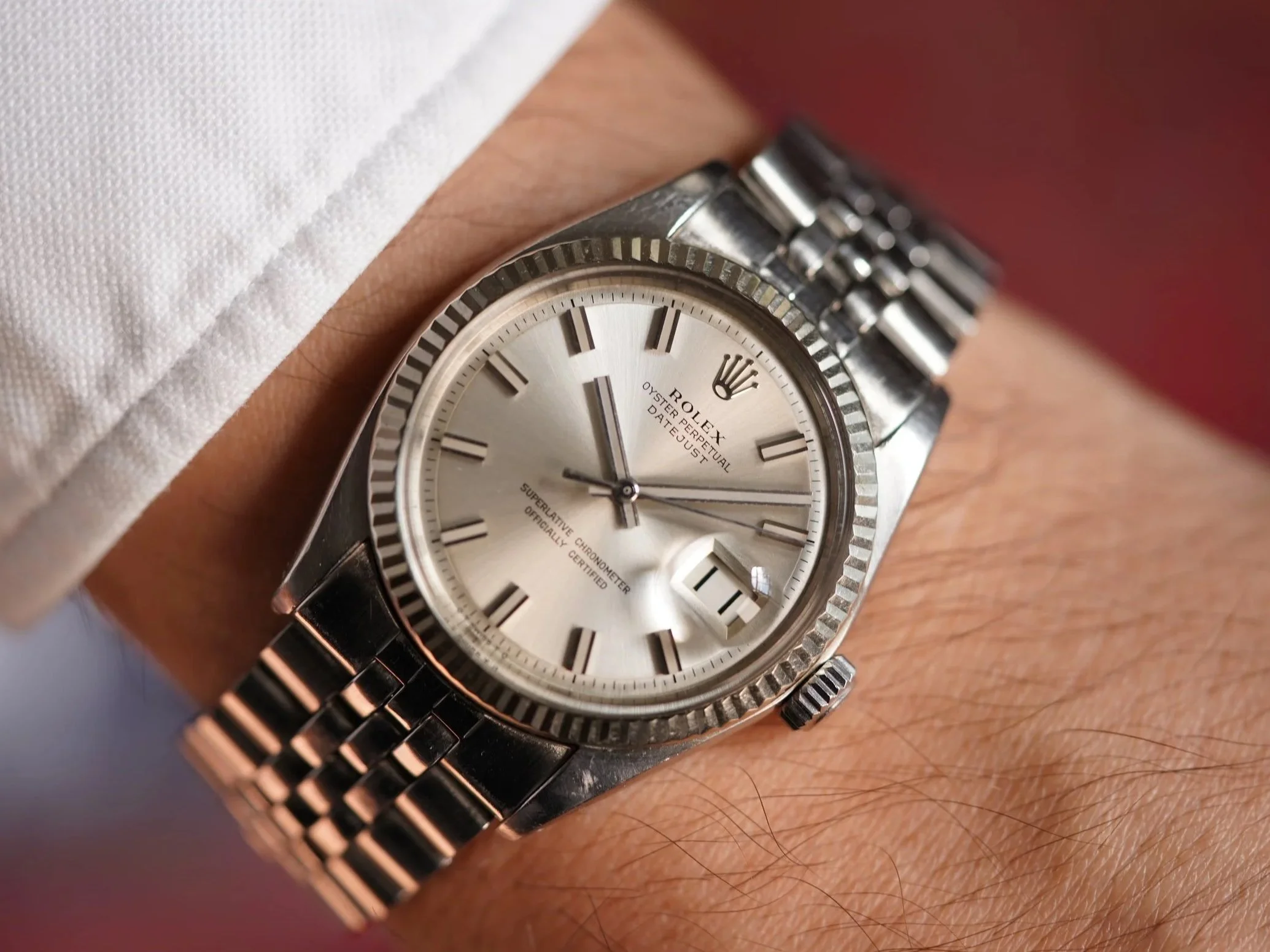
Rolex “Wide Boy” Datejust reference 1601 dating to circa 1972
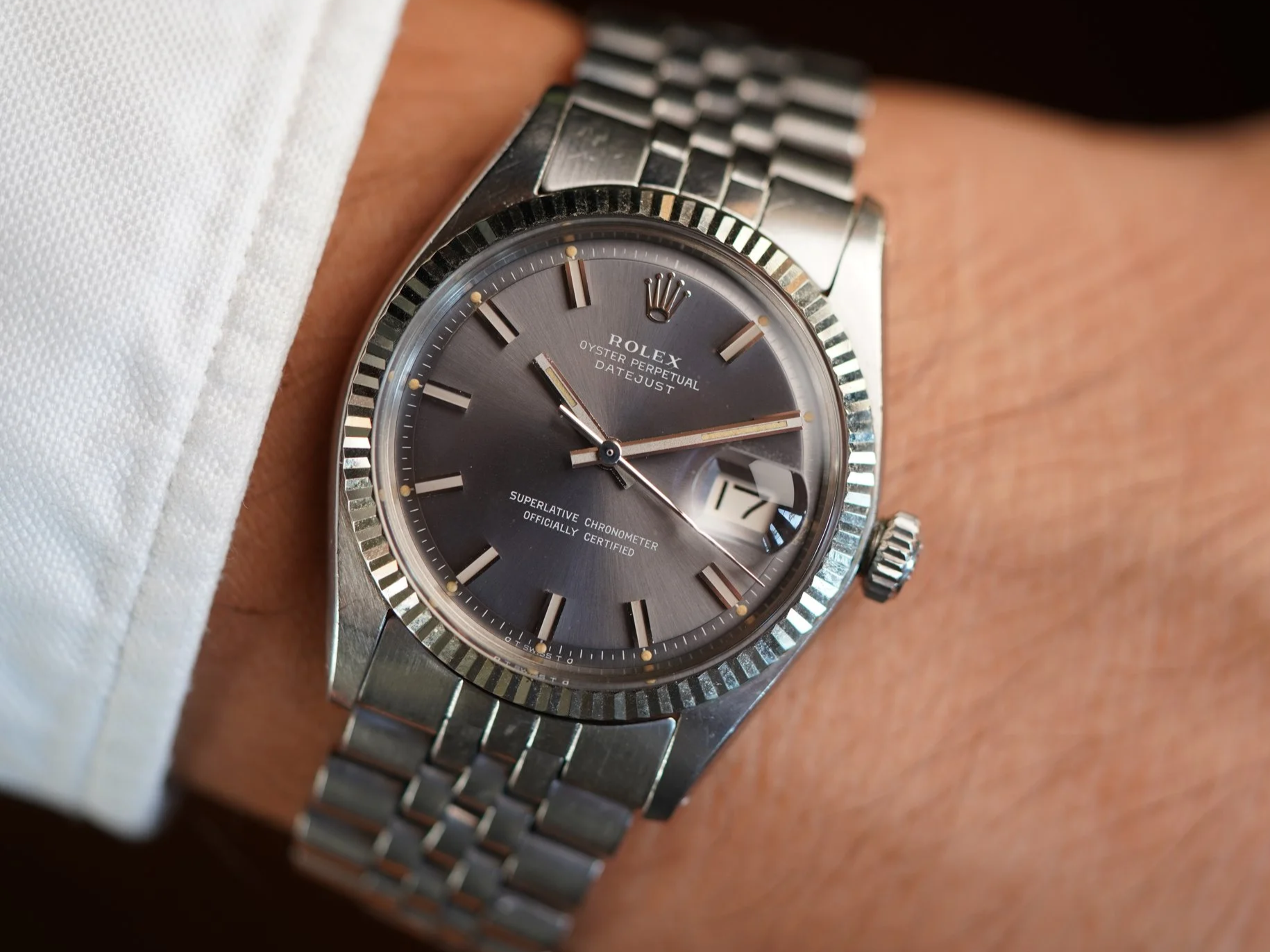
Rolex Grey Wide Boy Datejust Reference 1601 circa 1973
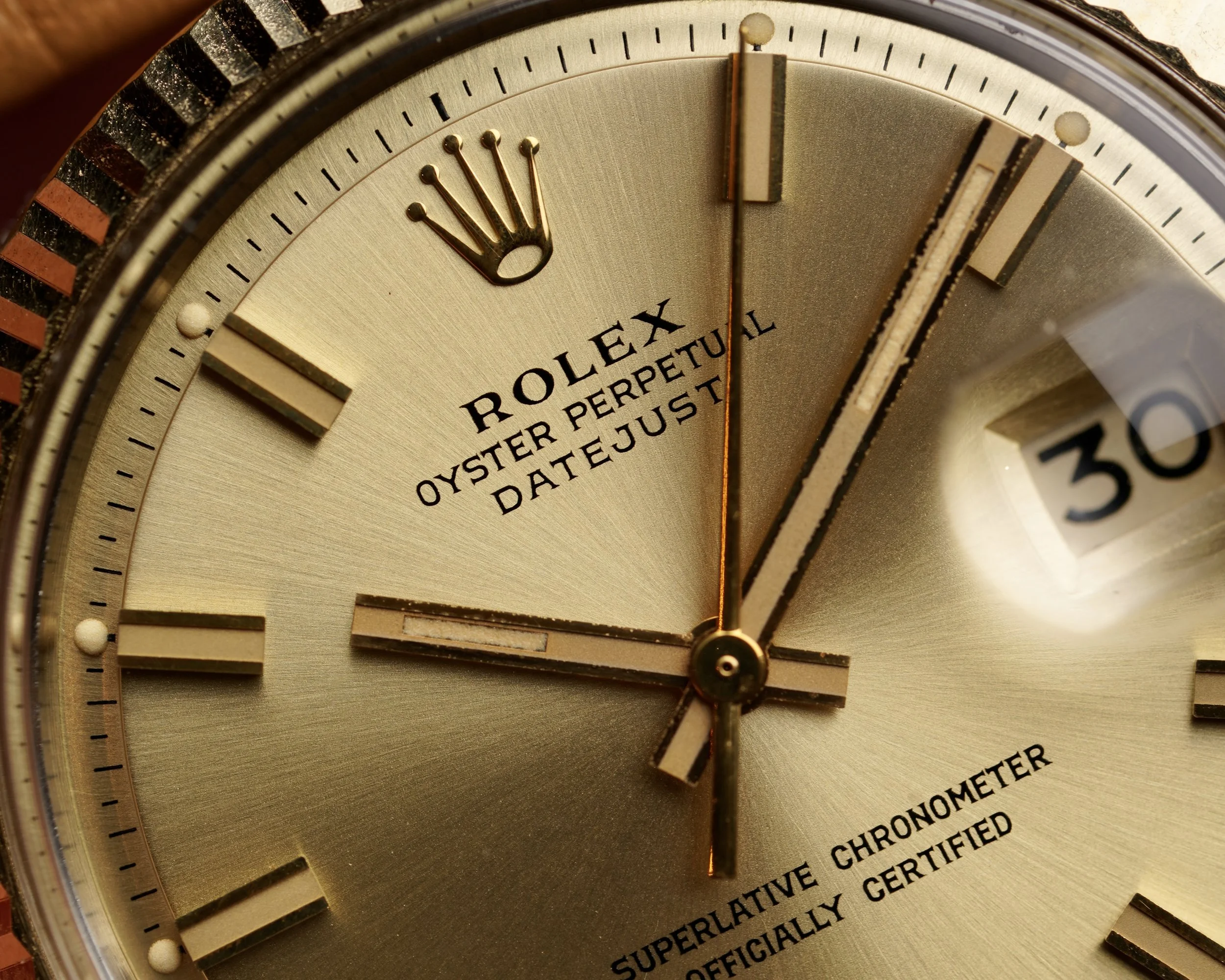
Pretty Fly For A Wide Guy
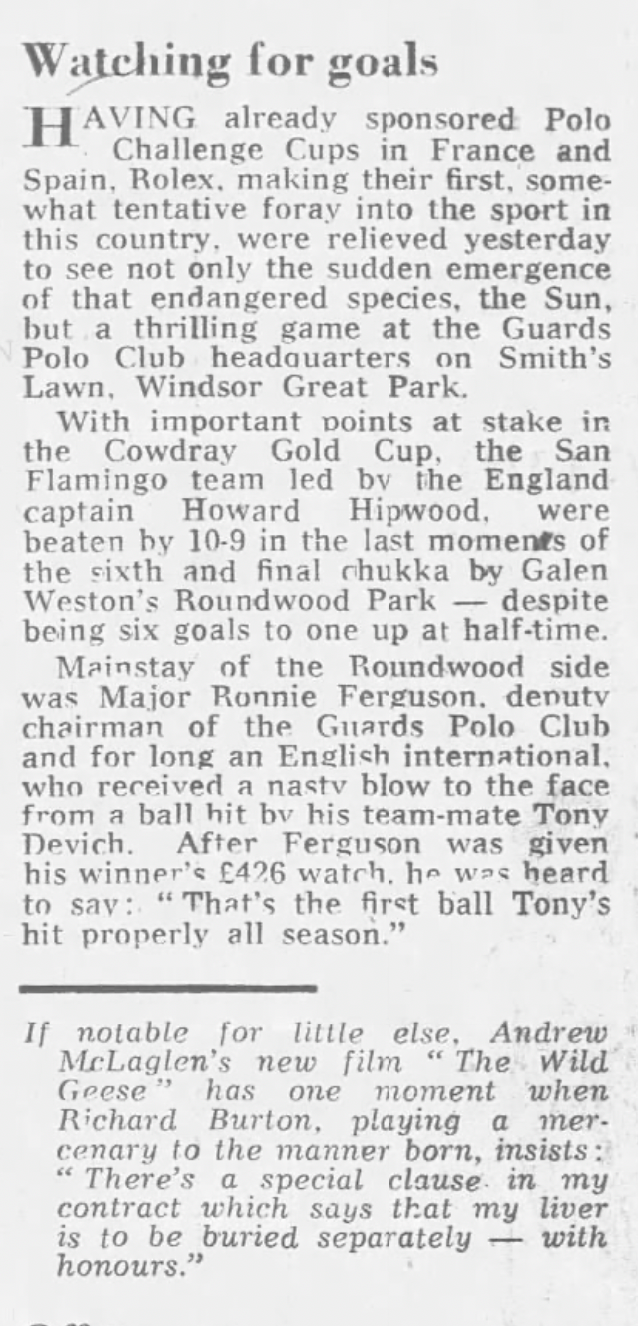
Like with many Rolex watches, these can be particularly exciting with a touch of provenance. One example that we recently found was a fantastic Datejust reference 1601 awarded at the Rolex Cup Guards Polo Club Windsor in July 1978. We learned the watch was presented by the then Prince of Wales and now King Charles to the winner!
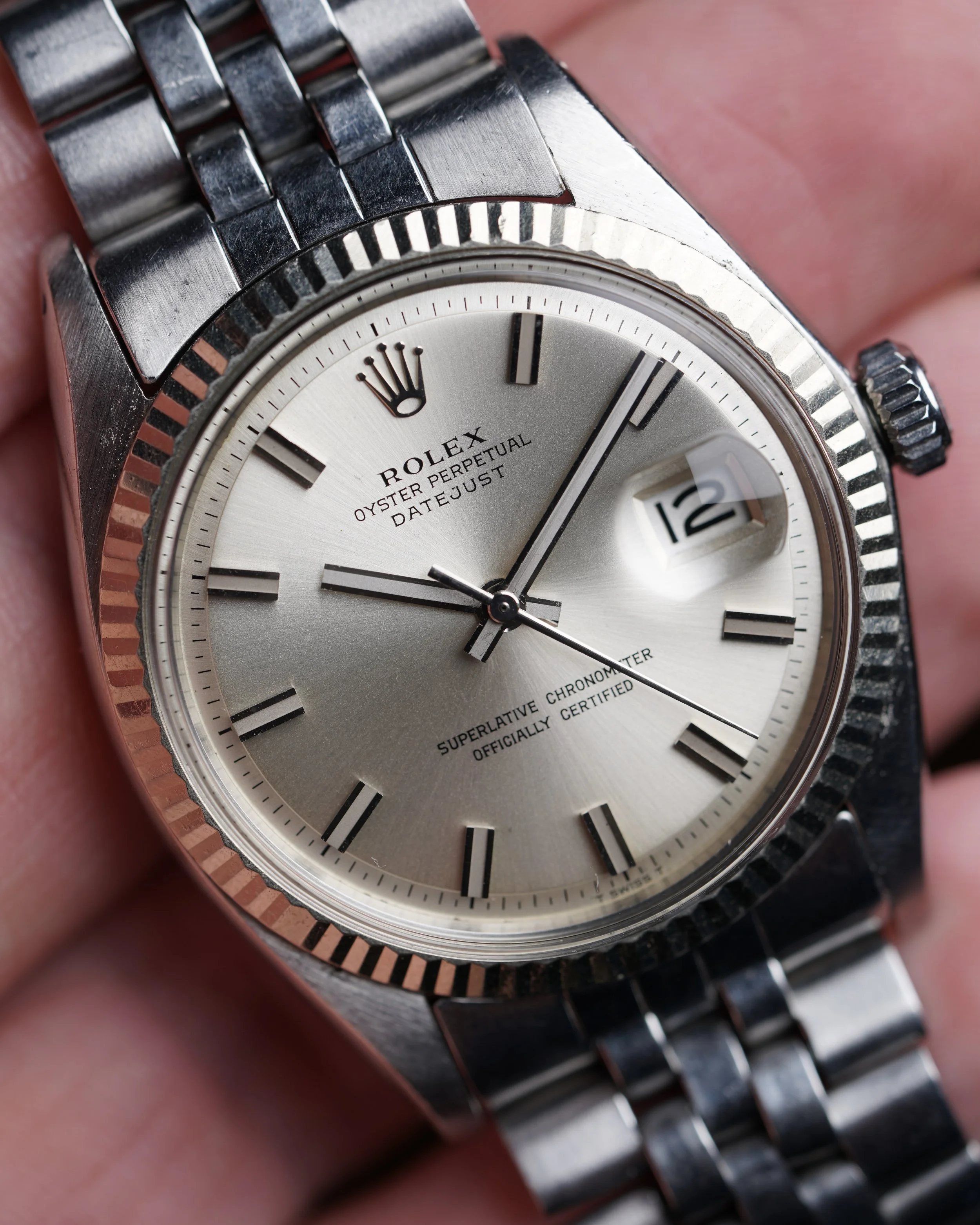
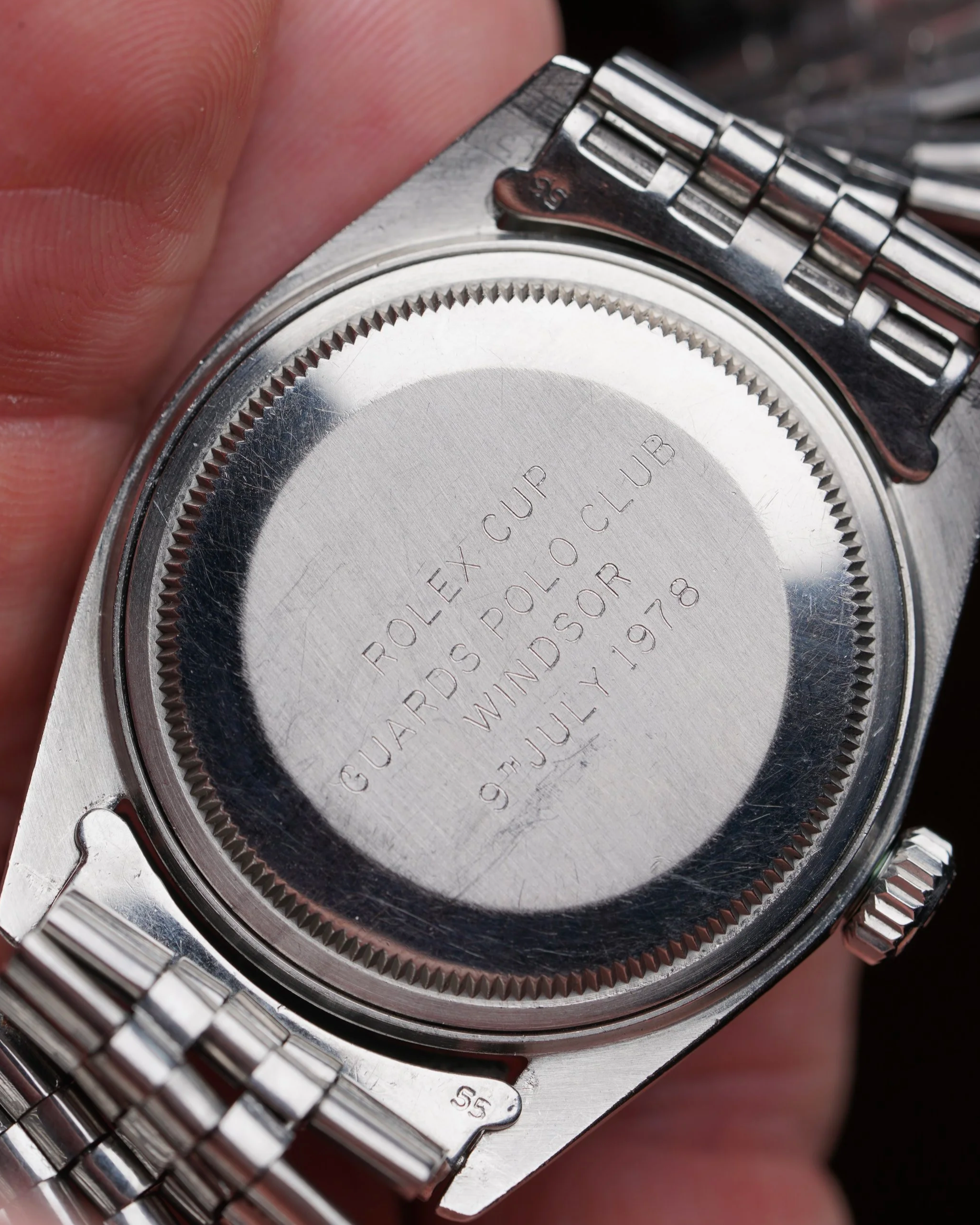
With the help of James Fisk (@jmsfisk), we discovered the recipient was Major Ronald Ferguson - a British Army officer and polo manager and father of Sarah, Duchess of York. Ferguson initially to the Duke of Edinburgh and later, for many years, to the then Charles, Prince of Wales!
Fisk also found photos of Major Ferguson with Princess Diana and Prince Charles on the polo field. Addionally, photos of André Heiniger (the then Director General (CEO) of Rolex) with his wife, Odette Heiniger, Colonel Gerard Leigh and Price Charles of Wales at the Guards Polo Club in Windsor, U.K, as well as André Heiniger with HIH The Princess Napoleon at the exact Polo match! This was such a great example and excited many collectors when they learned about the backstory.
https://www.gettyimages.com/detail/news-photo/diana-princess-of-wales-wearing-a-white-shirt-with-pink-news-photo/1299099084
https://www.gettyimages.com/detail/news-photo/diana-princess-of-wales-wearing-a-white-shirt-with-pink-news-photo/180870827
https://www.bridgemanimages.com/en-US/unknown-photographer/prince-charles-future-charles-iii-and-major-ronald-ferguson-after-a-polo-game-1980s-photo/photograph/asset/1801148
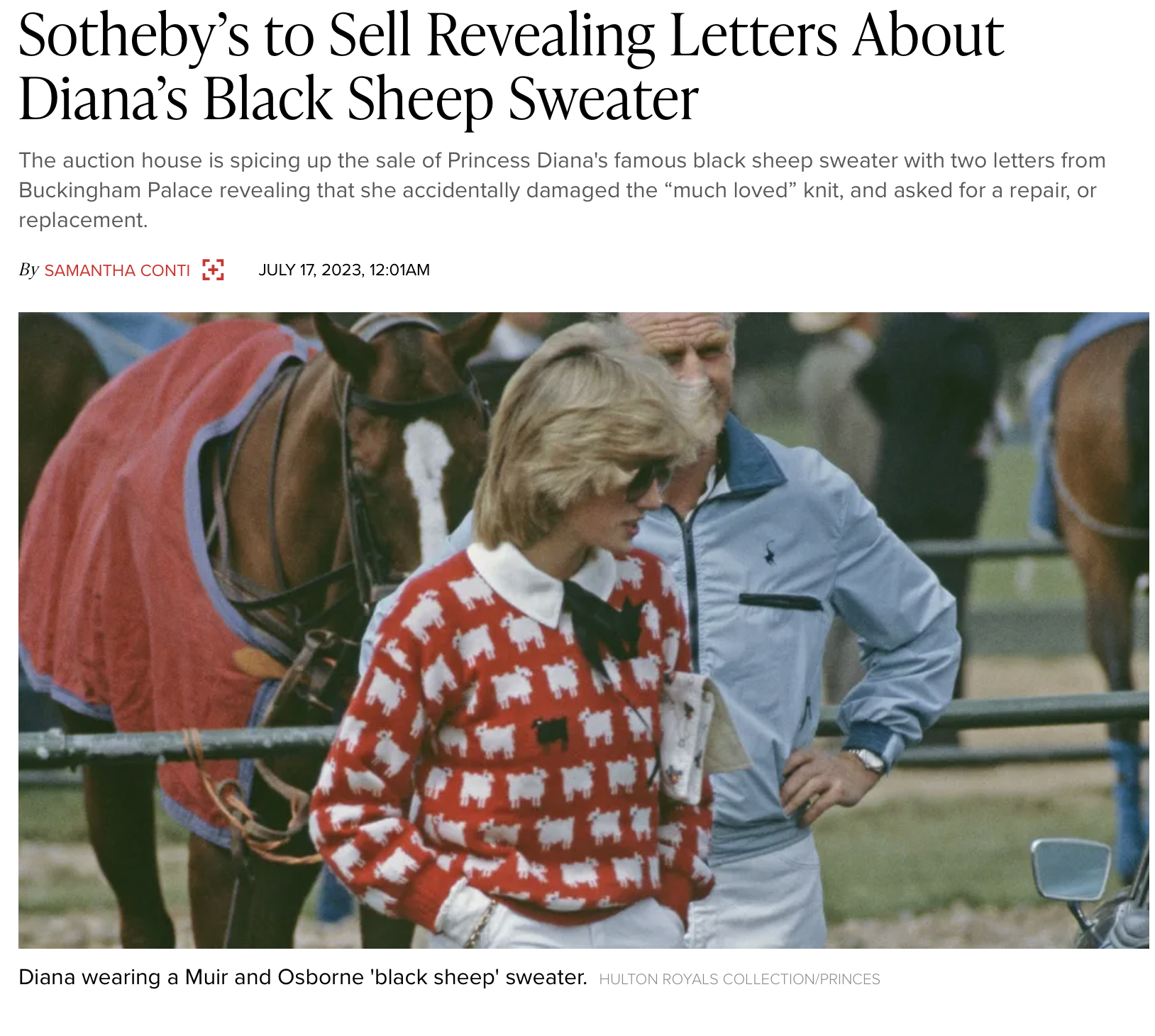
Image credit: wwd.com
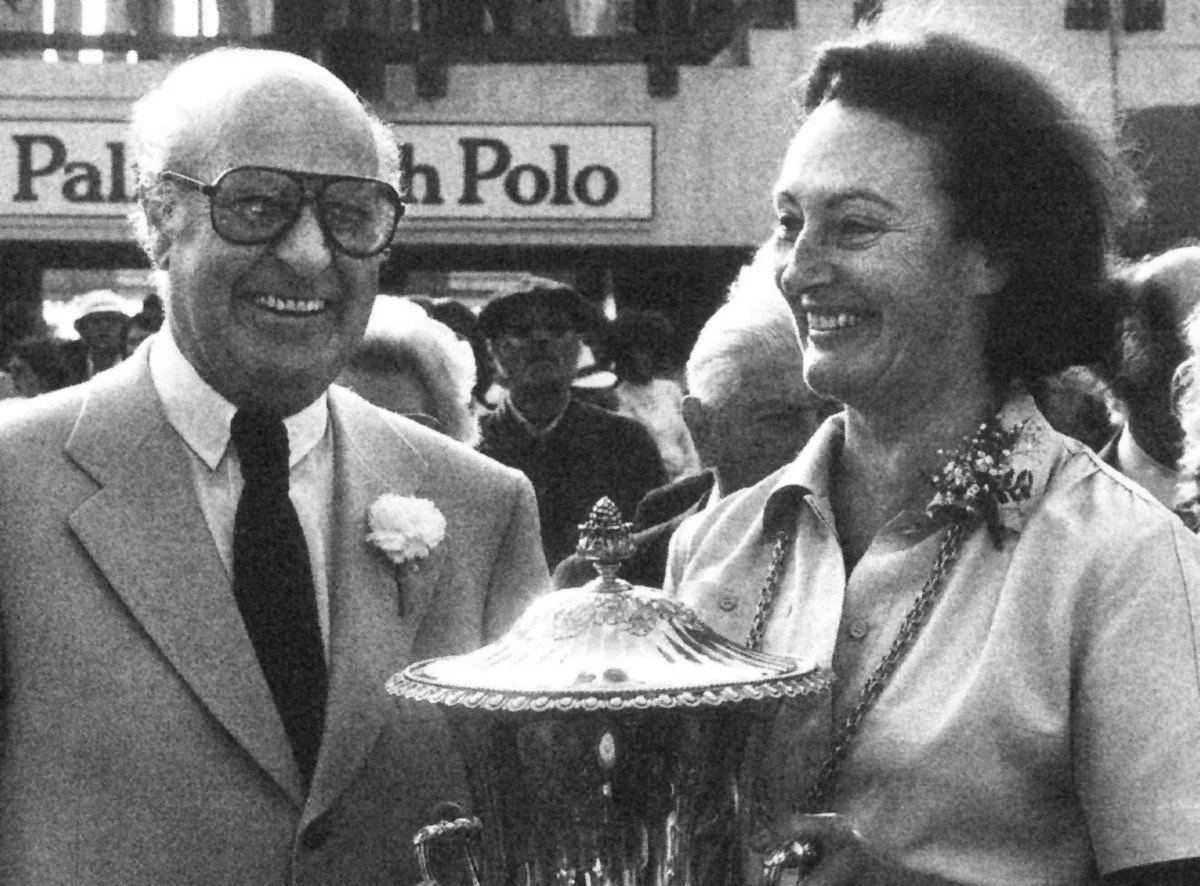
https://www.rolexmagazine.com/2011/12/complete-history-of-rolex-part-2-andre.html
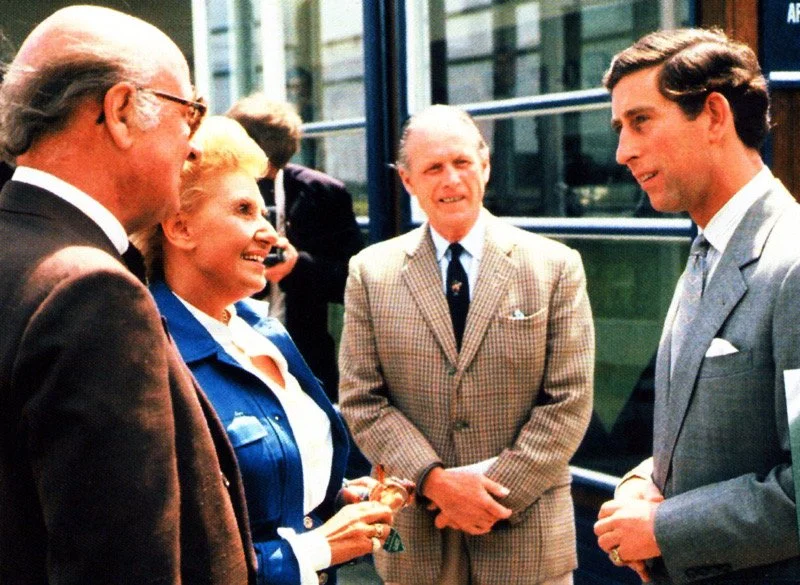
André Heiniger is pictured below with his wife, Odette Heiniger, Colonel Gerard Leigh and Price Charles of Wales at the Guards Polo Club in Windsor, U.K.https://www.rolexmagazine.com/2011/12/complete-history-of-rolex-part-2-andre.html
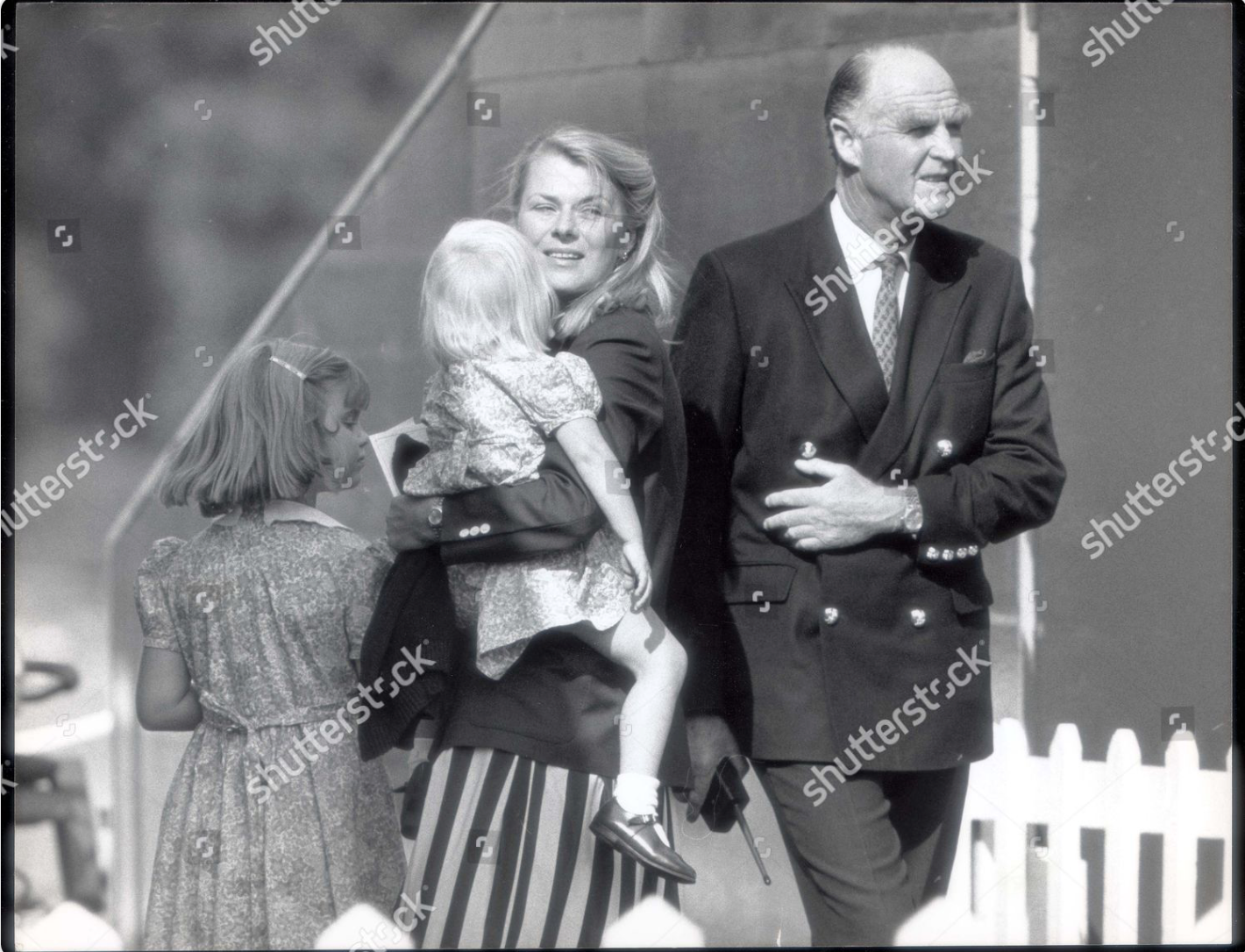
Major Ronald Ferguson Wife Susan Ferguson And Daughter Alice Ferguson. Ron Yesterday Bade An Emotional Farewell To The Polo Club He Has Built Up Over The Past 33 Years. He Was Close To Tears As He Was Given A Standing Ovation On His Final Public Day
https://www.shutterstock.com/editorial/image-editorial/major-ronald-ferguson-wife-susan-daughter-alice-3413717a
I recently became an owner of my own Wide Boy - a reference 1601 non-luminous example found by Eric Wind. I’ll be honest, a Wide Boy, let alone a Datejust, was not on my radar at this time. My personal example is also engraved. It does not feature any royal association - although Eric has claimed relation to Napoleon according to 23andMe, so maybe there is something there. Instead, it has arguably one of the funniest engravings on a Rolex ever. Please be sure to ask me to see it if we are ever hanging out!